Property CSS Value
height-card-lg

Become a Part of the National Disaster Medical System!

Become a Part of the National Disaster Medical System!

Take on New Challenges. Join an Amazing Team. Protect Health and Save Lives.


Join the thousands of health and medical professionals who have made a commitment to protect health and save lives when disaster strikes. From decompressing an overtaxed emergency department to providing the fatality management services that bring closure for friends and families to moving patients out of harm's way and into hospitals that can care for them, there are many ways that NDMS team members serve communities across the nation, providing the best of care during the worst of times.

Are you ready to make the commitment to serve during disasters and emergencies? Here's how you can join!
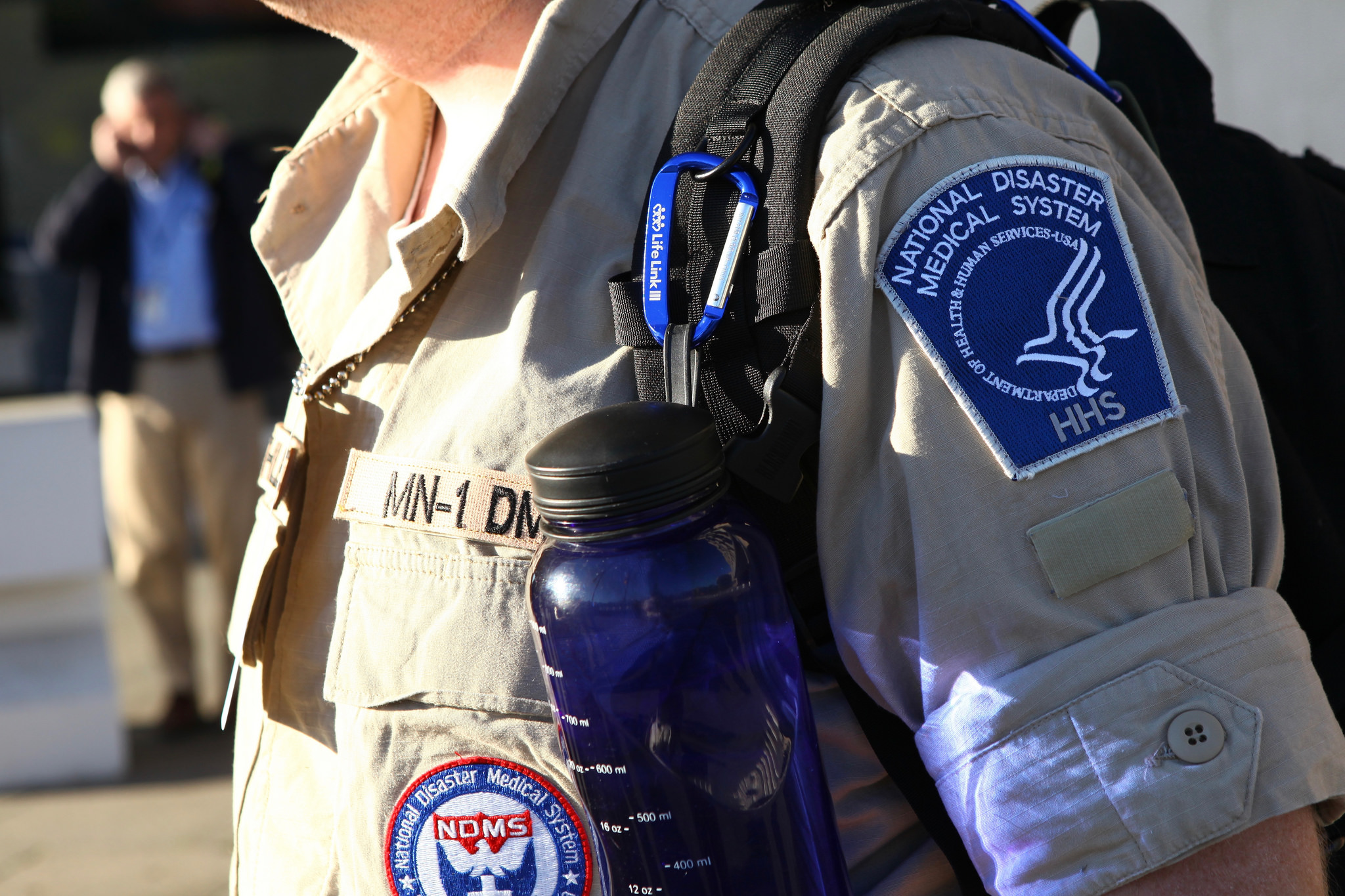
NDMS responder


NDMS Seal

Victim Identification Center Team

Victim Identification Center Team

Office of the National Disaster Medical System

After a fatality or mass casualty incident, members of the Victim Identification Center (VIC) team help communities and families find closure. VIC teams support local authorities in the aftermath of a natural or man-made disaster or public health emergency by helping to identify the victims and serving as a liaison to the victims' families or other responsible parties in support of another NDMS team.

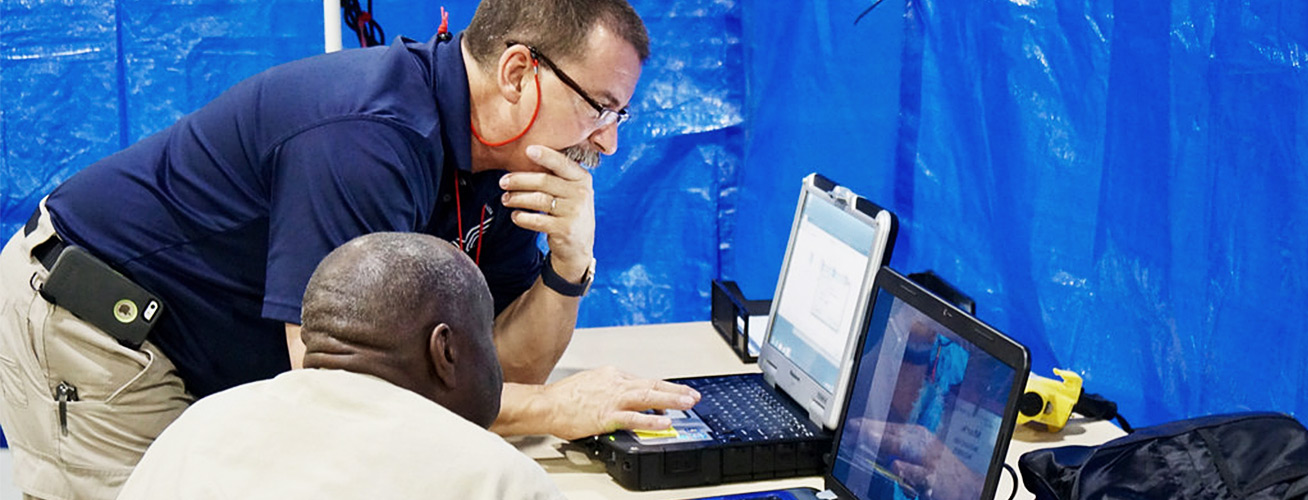
VIC team-member leaning over laptop

VIC team members include:

  • Information collection coordinators

  • Call center specialists

  • Interview specialists

  • Volunteer training specialists

  • Behavioral health specialists

  • VIC records coordinators

  • Dental and medical records acquisition specialists

  • Data entry specialists

  • Records management specialists

  • VIC documentation specialists

VIC Capabilities:

Often working in demanding conditions supporting local authorities and other NDMS teams, VIC team members focus on gathering vital details on individual fatalities to help families find closure so they can move forward and start the healing process.

VIC team members provide technical assistance and consultation on the collection and management of information and related issues concerning people who have lost their lives in a public health emergency or disaster. The VIC may be called on to perform a wide range of functions, such as:

  • Collecting dental records, fingerprints, medical records, DNA, and other ante-mortem data

  • Providing subject matter expertise in mass fatalities management and victim information procurement

  • Conducting interviews with family members to gather ante-mortem information, including DNA samples, to assist in identifying human remains

  • Training partners to appropriately gather the information required for victim identification during the family interview process

  • Coordinating and sharing data with morgue and forensic staff on a regular basis

  • Coordinating with federal, state and local law enforcement agencies by gathering ante-mortem data to facilitate victim identification and manage the missing persons list

  • Explaining the HIPAA Privacy Rule Exemption for Medical Examiners and Coroners (45 CFR 164.512(g)(1)) to the medical and dental providers of the victims to facilitate obtaining these records

  • Updating the Victim Identification Program (VIP) database

  • Coordinating the release of remains


Trauma and Critical Care Teams

Trauma and Critical Care Teams

National Disaster Medical System

NDMS Trauma and Critical Care Teams (TCCTs) provide critical, operative, and emergency care to help people in the wake of natural and man-made disasters and public health emergencies. TCCT members ar e medical professionals deployed at the request of local authorities to supplement federal, state, local, tribal and territorial resources. Whether they are deploying in the wake of a tornado or responding to a terrorist attack, TCCTs provide people the life-saving or life-sustaining care the community needs.

TCCT

Often deployed to catastrophic situations, TCCT team members work tirelessly in harsh conditions to provide medical care and support when it is needed most.

TCCT team members include

  • Critical care physicians

  • Surgeons

  • Emergency medicine physicians

  • physician assistants

  • Nurse practitioners

  • Registered nurses

  • Nurse anesthetists

  • Paramedics

  • Respiratory therapists

  • Radiology technologists

  • Surgical technologists

  • Pharmacists

TCCT Capabilities

TCCT teams deploy as 9, 10, 28, or 48-person units each with the capacity to conduct specific trauma related actions, including but not limited to:

  • Providing critical care

  • Providing operative care

  • Providing emergency care

  • Providing advanced trauma life support

  • Supporting patient transport

  • Augmenting a Disaster Medical Assistance Team (DMAT)

  • Augmenting existing medical facilities

  • Establishing stand-alone field hospitals

  • Providing support and augmentation to the Department of Defense (DoD) Disaster Air Staging Facility (DASF) located at an Aerial Port of Embarkation (APOE)

MRC Unit Training, Recruitment, and Administration

MRC Unit Training, Recruitment, and Administration

Every Medical Reserve Corps (MRC) unit leader plays a key role in helping their unit grow and evolve to meet the needs of your community before, during, and after a disaster. The resources below can help you recruit and train new volunteers, recognize exist.

Meet Our MRC Network

Meet Our MRC Network

The MRC was created in 2002 and established local units of medical and non-medical volunteers capable of supporting public health needs in communities and to assist in responding rapidly to disasters and public health emergencies in their communities. Since then, the network has grown; originally supporting 42 units the MRC network now reaches approximately 717 units nationwide including in 48 states, Washington D.C., and Puerto Rico.

Units across the country have dedicated more than 3 million volunteer hours in response to the COVID-19 pandemic, but that isn't all that MRC has accomplished over the past 20 years. The network has been instrumental in responding to other national emergencies like hurricanes, wildfires and even the opioid crisis. Volunteers have even helped respond to infectious disease outbreaks, including H1N1 in 2009, Ebola in 2014, and Zika in 2016, and Hepatitis A in recent years.

Hear from volunteers, unit leaders, and other members of the MRC network to get their firsthand accounts of what it has been like be a part of the MRC - especially during the COVID-19 response.

Inspired by their stories? Find out how you can become a volunteer in your own community!

Are you an MRC Network Volunteer and have a story to share? Contact us at MRCcontact@hhs.gov

MRC Recruitment and Recognition Toolkit

MRC Recruitment and Recognition Toolkit

Recruiting volunteers is a critical function for the leader of a local MRC unit. With a deep understanding of your community and your team, your outreach is focused on those volunteers who can best fill the skills gaps in your unit and effectively contribute to specific local needs, public health initiatives, and emergency response activities.

To aid your recruitment efforts, below are an MRC program history fact sheet, an MRC informational brochure, and MRC recruitment flyers that you can distribute at community events and conferences as well as a presentation you can use to build awareness of the MRC and generate potential public interest in volunteering.

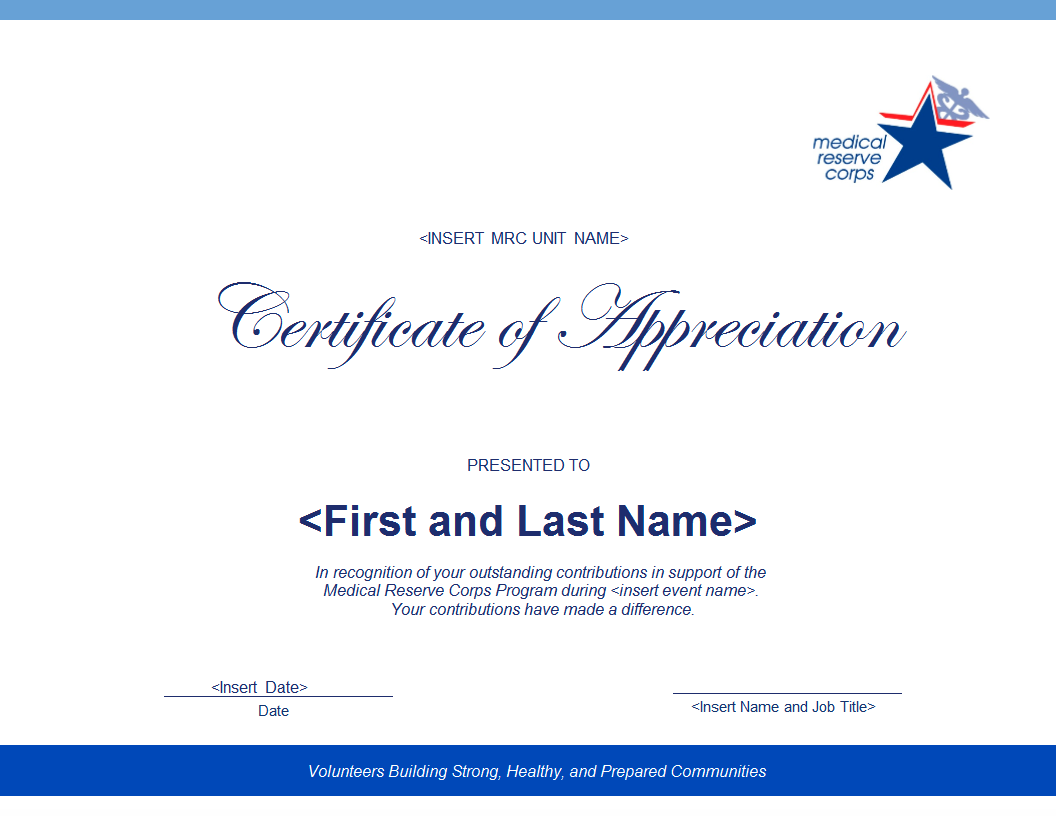
Also provided is a template certificate of appreciation for recognizing your volunteers, which is critical to retaining volunteers: volunteers who feel valued will be more motivated to continue with your unit.

Finally, MRC logo guidelines and instructions for requesting and using the logo are included in this toolkit. The use of the MRC logo helps strengthen the identity of the MRC nationwide and that of local units. The MRC logo is a trademarked logo; therefore, units must request logo authorization prior to using the logo on items. Some examples of where to use the MRC logo include: local unit website, signage, brochures, letterhead, apparel, and items such as pens, pins, and coins.

Recruitment Toolkit

MRC Fact Sheet: The History of the Medical Reserve Corp Program

MRC Brochure (Bi-Fold)
 

MRC Fact Sheet: Promising Practices for Social Media Use - A Communications Resource for Medical Reserve Corps Units

MRC Brochure (Bi-Fold)
 

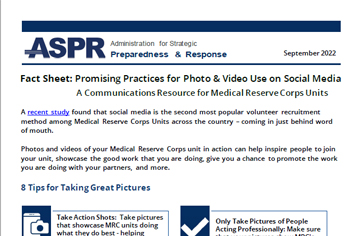
MRC Fact Sheet: Promising Practices for Photo & Video Use on Social Media - A Communications Resource for Medical Reserve Corps Units

MRC Brochure (Bi-Fold)
 

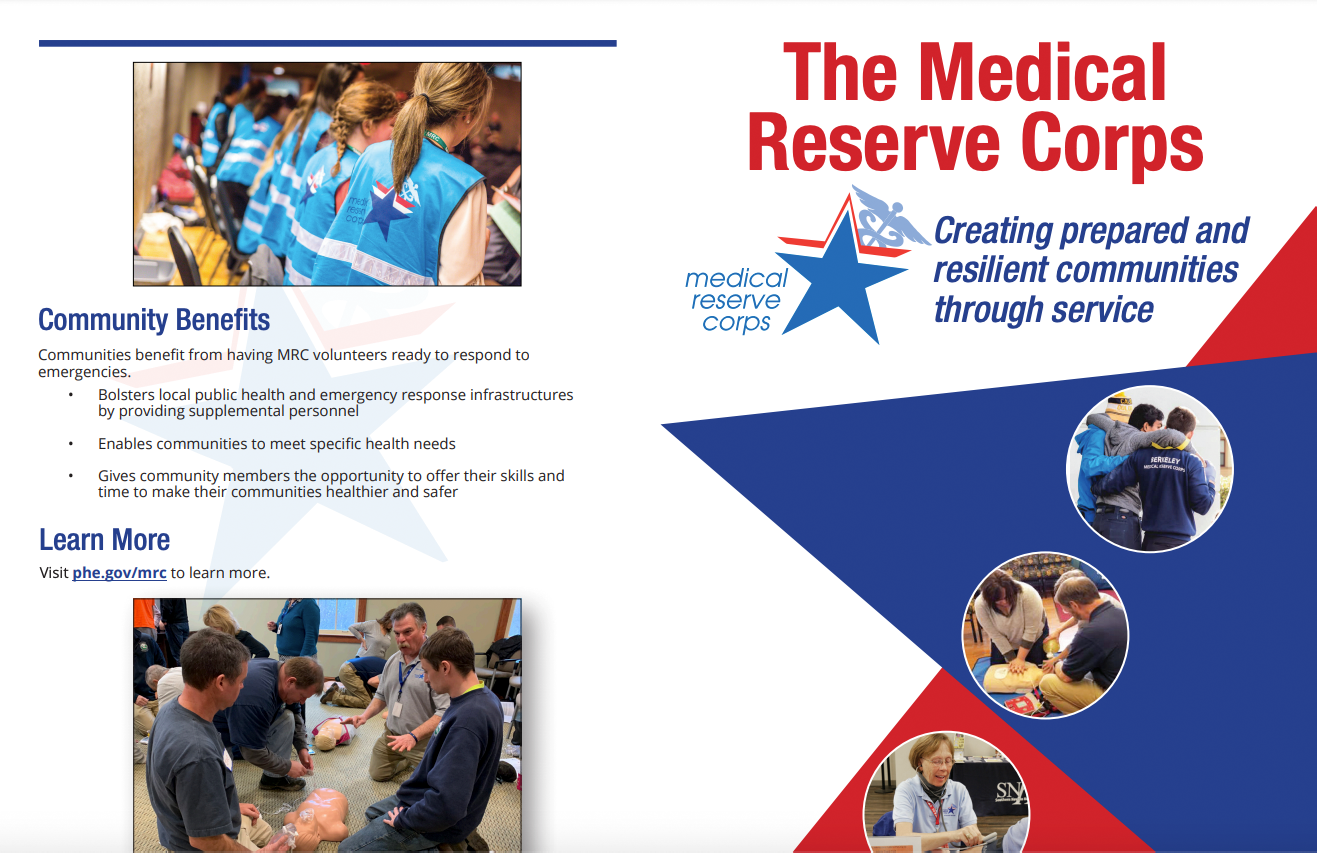
MRC Brochure: Creating Prepared & Resilient Communities Through Service (Bi-Fold)

MRC Brochure (Bi-Fold)
 

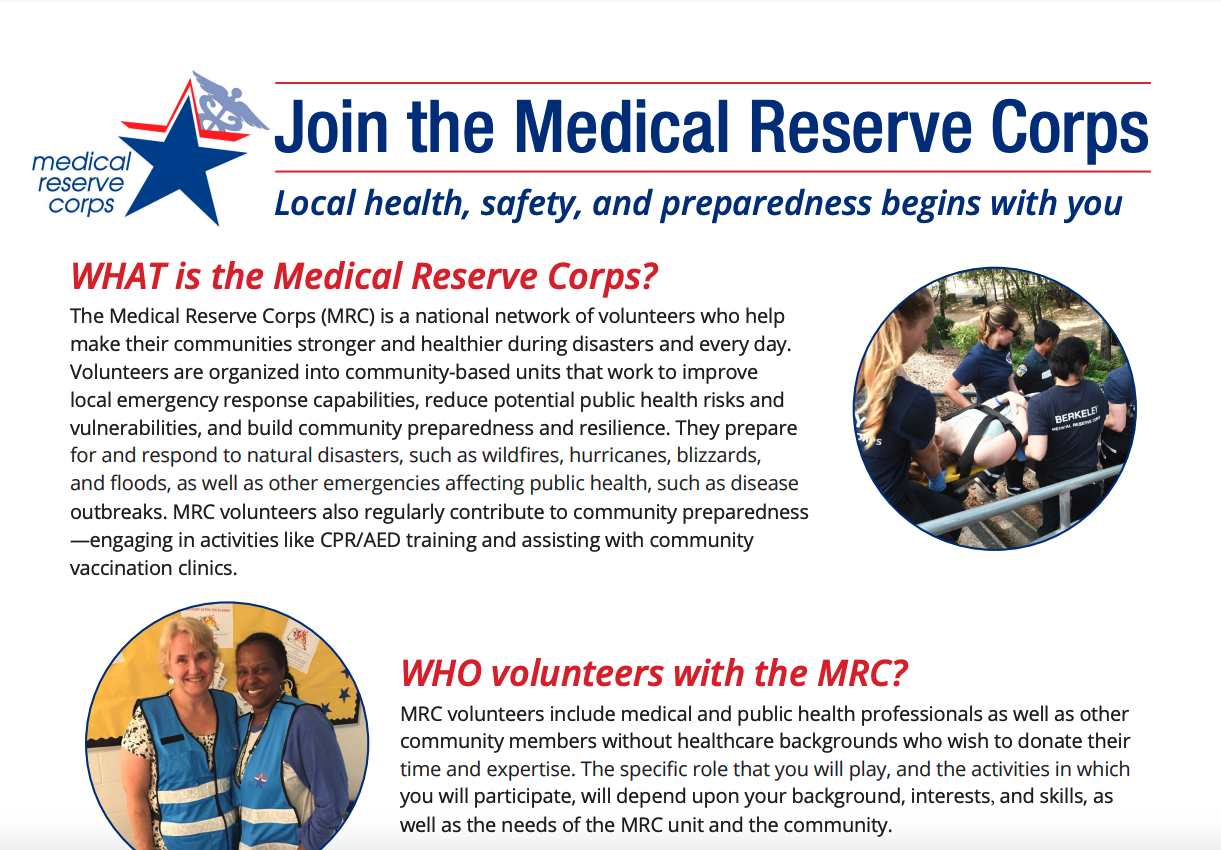
MRC Flyer: Local health, safety, and preparedness begins with you

COVID-19 Response Report
 

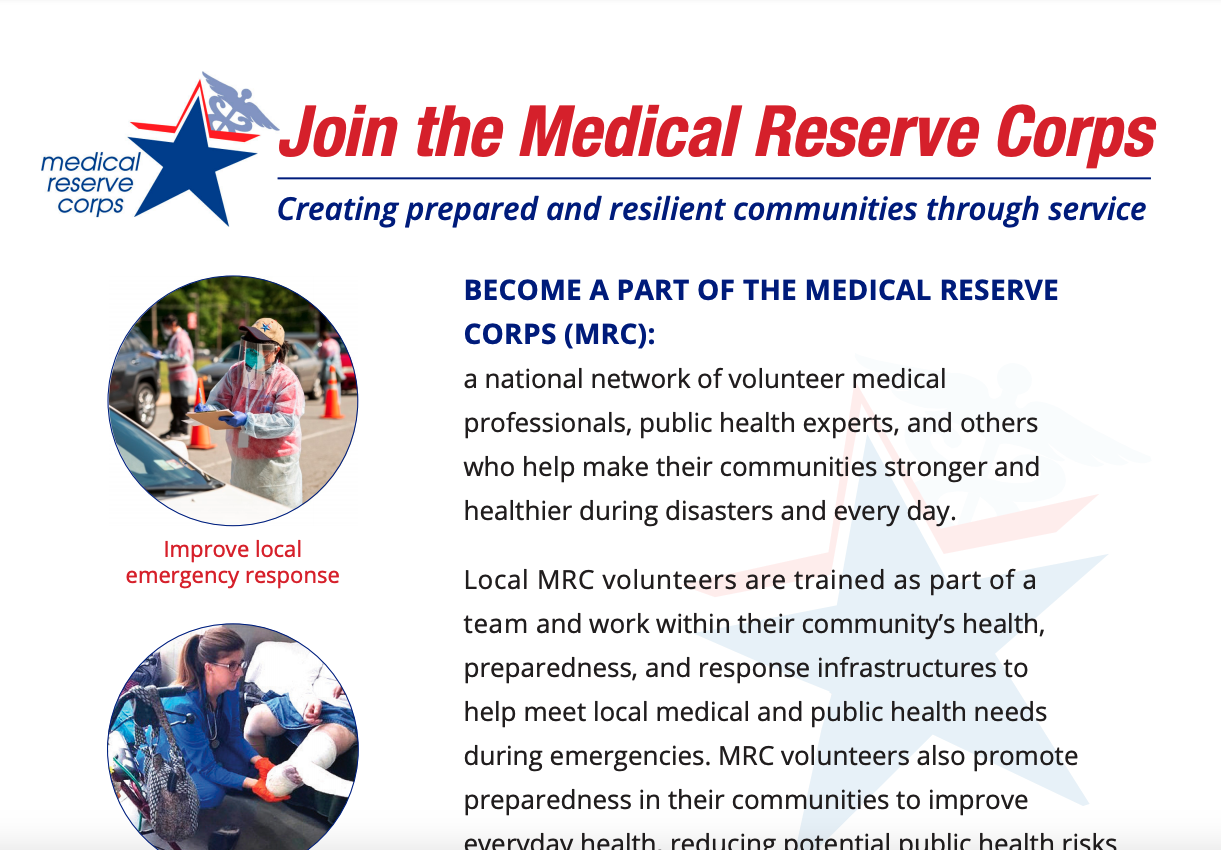
MRC Flyer: Creating prepared and resilient communities through service

MRC Fiscal Year 2020 US State and Territory Highlights
 

MRC Videos: The Medical Reserve Corps 20th AnniversaryPlaylist

MRC 20th Anniversary Videos<span> (YouTube Playlist)</span>
 

MRC Certificate: Volunteer Appreciation

COVID-19 Response Report
 

MRC Guidelines: Logo Use and Promoting the Medical Reserve Corps Identity

MRC Logo Use Guidelines andIdentity Guide
 

MRC STTRONG Grants

MRC STTRONG Grants

ASPR Awards $50 Million from the American Rescue Plan to 33 States or Jurisdictions

Thirty-three awardees in states and jurisdictions across the country have just received a total of $50 million under the MRC State, Territory and Tribal Nations, Representative Organizations for Next Generation (MRC-STTRONG) grant program. Funding for the first-ever MRC-STTRONG is from the American Rescue Plan.

States and jurisdictions will use these funds to strengthen the MRC network - focusing on enhancing emergency preparedness and response. The awardees have all proposed projects that will bolster community response capabilities around the nation.

  • Arizona

    $2 million

    The Arizona Department of Health Services (ADHS) will utilize the funds to increase the number of volunteers across the state by 25%, and to expand MRC units by establishing six MRC units including three new units in tribal jurisdictions.

    Arizona Icon
  • Arkansas

    $575,000

    Arkansas Department of Health (ADH) will use the funds to expand the number of MRC units statewide from five units to 14 units to help ensure that all regions of the state have MRC units. Additionally, ADH will provide equipment and training for new units so that they have the resources and capabilities to respond to public health emergencies and disasters.

    Arkansas Icon
  • Colorado

    $969,140

    The Colorado Department of Public Health and Environment (CDPHE) will build and strengthen the Medical Reserve Corps (MRC) units in Colorado communities by providing funding for the MRC unit coordinators and the purchase of supplies so that MRC units are prepared for public health emergencies, such as a disease outbreaks and natural disasters.

    Colorado Icon
  • Commonwealth of the Northern Mariana Islands

    $1.7 million

    The Commonwealth Healthcare Corporation (CHCC) will utilize the funds to expand community partnerships with a focus on those that address at-risk populations. CHCC will engage partners and communities on assessments, outreach, recruitment, and volunteer planning.

    Commonwealth of the Northern Mariana Islands Icon
  • Georgia

    $2.1 million

    The Georgia Medical Reserve Corps will utilize this funding to upgrade, advance, and reconstitute the recruitment of new MRC members and sustain existing skilled volunteers statewide. This will be accomplished by increasing skills through training for volunteers and expanding a mentorship program.

    Georgia Icon
  • Hawaii

    $376,287

    The Hawaii Department of Health will utilize MRC-STTRONG funds to build preparedness and response capacity throughout the state by providing education, training, and outreach to community members. Additionally, MRC will increase capacity through volunteer recruitment and build teams based on preparedness and response focus areas.

    Hawaii Icon
  • Illinois

    $2 million

    The MRC of Illinois in collaboration with the Illinois Department of Public Health will use the funding to strengthen MRC's capacity to response by developing and implementing standardized training, grow and develop 4 new MRC units throughout the state in areas with greatest need and offer subawards to 50 MRC units in Illinois.

    Illinois Icon
  • Kansas

    $1,658,644

    The Kansas Department of Health and Environment (KDHE) will utilize the funds to provide a robust volunteer management platform for local units, fund a full-time MRC state coordinator to support local units, and refine local plans based on best practices and successes.

    Kansas Icon
  • Kentucky

    $2.25 million

    Kentucky Cabinet for Health and Family Services (CHFS) will utilize the funding to increase overall capacity of Kentucky's MRC program to ensure long-term sustainability. This will be done by increasing recruitment and retention and strengthening the skills through innovative training and exercises.

    Kentucky Icon
  • Maryland

    $2 million

    The Maryland Department of Health (MDH) will use the funding to improve MRC readiness and capacity. MDH will accomplish this by volunteer recruitment and retention through targeted outreach to communities, including MRC response in existing response plans and implementation of regional training and exercises that are available to volunteers statewide.

    Maryland Icon
  • Massachusetts

    $838,680

    The Massachusetts Department of Public Health will use the funding to improve volunteer coordination and response capacity across the state by building a collaborative, comprehensive training program for both leaders and volunteers; developing recruitment and retention strategies and materials to strengthen MRC capacity. These activities will ensure that MRC units can meet the ongoing needs of the people of Massachusetts.

    Massachusetts Icon
  • Michigan

    $733,701

    The Michigan Department of Health will utilize this funding to standardize background checks statewide, make available training across the state, and expand recruitment and volunteer management at the unit level.

    Michigan Icon
  • Minnesota

    $2.44 million

    The Minnesota Department of Health (MDH) will utilize this funding to expand the disaster response and recovery capacity of Minnesota's MRC units and the volunteer management system called MN Responds. Additionally, MDH will update existing and develop new training materials to support the operational needs of the MRC units. Through this funding, local MRC units will be able to support recruitment, training and exercises.

    Minnesota Icon
  • Missouri

    $1.4 million

    The Missouri State Emergency Management Agency (SEMA) will use the funding for projects focusing on health emergency preparedness and response. They will strengthen the capacity of existing MRC units and build new MRC units in regions of the state with underserved populations. Additionally, SEMA will expand public health and related workforce development and recruitment efforts.

    Missouri Icon
  • New Hampshire

    $1,239,080

    The New Hampshire Department of Health and Human Services (DHSS) will use this funding to implement a volunteer training program, conduct exercises for medical surge and survivor and family assistance center planning.

    New Hampshire Icon
  • New Jersey

    $1.5 Million

    The New Jersey Department of Health (NJDOH) will use the funds to expand recruitment of volunteers, standardize core training curriculum for MRC volunteers, and provide funding to local MRC units to purchase equipment and supplies to strengthen preparedness and response capabilities.

    New Jersey Icon
  • New Mexico

    $750,000

    The New Mexico Department of Health (NMDOH) will use the funding to support current MRC unit leaders, expand services to less populated rural areas of the state, and extend services to frontier and tribal communities. Additionally, this funding will be used for training and equipment to better serve communities throughout the state.

    New Mexico Icon
  • New York

    $1.5 million

    The New York State Department of Health (NYSDOH) and Health Research, Inc. (HRI) will use the funding to enhance the state's existing system for volunteer registration and verification of credentialing medical professionals. In addition, they will provide existing MRC units with support for centralized background checks, building surge capacity and recruitment for long-term MRC growth and sustainability.

    New York Icon
  • North Carolina

    $1.8 million

    The North Carolina Department of Health and Human Services (NCDHHS) will use the funding to recruit and retain volunteers for North Carolina's MRC units, develop standardized training requirements, and provide psychological first aide and improved mental health resiliency for state medical response system staff.

    North Carolina Icon
  • Ohio

    $ 2.5 million

    The Ohio Department of Health (ODH) will utilize MRC-STTRONG funds to strengthen the state MRC program through the development of a pipeline of volunteers and specialist occupations, investment in data modernization for the state's volunteer management registry, and bolstering partner and volunteer engagement by enhancing existing skills. Training will include equipping local volunteers with community-informed interventions to support at-risk populations and providing opportunities for volunteer network-building.

    Ohio Icon
  • Oklahoma

    $1.2 million

    The Oklahoma State Department of Health (OSDH) will use MRC-STTRONG funds strengthen MRC statewide capacity and capabilities, and equip MRC units with the necessary supplies, resources, and training to best serve their local communities. OSDH will make subgrants available to local MRC units to carry out MRC-STTRONG goals of supporting activities that address the needs of individuals and areas impacted by more frequent or more severe disasters.

    Oklahoma Icon
  • Oregon

    $2.5 million

    The Oregon Health Authority will use the funding build a collaborative project management system to advance volunteer and MRC Coordinator readiness. As MRC units shift their focus from continued response into recovery and long-term volunteer engagement, there is a significant need for responder outreach and development, community outreach and education, and recovery initiatives.

    Oregon Icon
  • Pennsylvania

    $2 million

    The Pennsylvania Department of Health will use the funding to recruit and develop new MRC units in underserved areas where no MRC units exist. These funds will increase training and development opportunities and provide supplies for MRC units to ensure Pennsylvania's MRC capabilities and responses are ready for new and evolving situations.

    Pennsylvania Icon
  • Puerto Rico

    $1,392,644

    The Puerto Rico Department of Health will use MRC-STTRONG funds to continue providing leadership and necessary resources for volunteer recruitment, increase partnerships, and strengthen emergency response capabilities. Specifically, project activities will focus on addressing the needs of at-risk individuals; serving areas impacted by more frequent and or more severe disasters and expanding MRC of Puerto Rico capabilities through volunteer recruitment and specialized training.

    Puerto Rico Icon
  • Rhode Island

    $2.2 million

    The Rhode Island Disaster Medical Assistance Team will utilize MRC-STTRONG funds to provide a collaborative regional training center available to all learners in conjunction with increased mobile education and emergency medical response capacities that support community healthcare initiatives and enhance Rhode Island's ability to respond to emergencies and public health crises. The funding will also develop the units' emergency response and public healthcare capacity through medical equipment and mobile asset modernization and focus on culturally competent recruitment and retention of MRC volunteers.

    Rhode Island Icon
  • South Carolina

    $1.5 million

    The South Carolina Department of Health and Environmental Control will use the funding to build efforts to increase preparedness levels of persons with access and functional needs during natural or technological disasters as well as core public health emergencies. DHEC will also grow MRC units' capacity to support potassium iodide (KI) distribution following nuclear emergencies.

    South Carolina Icon
  • Texas

    $1.5 million

    The Texas Department of Health Services (DSHS) will utilize MRC-STTRONG funds to address gaps in volunteer management processes identified in the agency after action reviews. DSHS will enhance and streamline the registration process and improve the overall functionality of the volunteer management portal and provide funding to the local MRC units to support staffing, training, recruitment, and community outreach efforts.

    Texas Icon
  • Utah

    $1.65 million

    The Utah Department of Health and Human Services will utilize MRC-STTRONG funds to strengthen the overall readiness of MRC volunteers across the state of Utah. Statewide activities will focus on identifying new opportunities to engage with existing partners to promote the MRC, working with MRC to engage with large health systems, as well as providing overall administrative and technical support to the local MRC units within Utah.

    Utah Icon
  • Ventura County, CA

    $600,000

    Today, the Administration for Strategic Preparedness and Response (ASPR) announced $600,000 for Ventura County to strengthen the Medical Reserve Corps (MRC) network - focusing on emergency preparedness and response. Funding for the first-ever MRC State, Territory and Tribal Nations, Representative Organizations for Next Generation (MRC-STTRONG) grant program is from the American Rescue Plan.

    Ventura County, CA Icon
  • Vermont

    $1.2 million

    The Vermont Agency of Human Services will utilize MRC-STTRONG funds to expand statewide programming to include initiatives aimed at promoting public health preparedness. Efforts will focus on updating MRC training to support expanding needs and supporting local units by providing subawards to Vermont's 9 units to promote localized preparedness and response activities.

    Vermont Icon
  • Virginia

    $1.5 million

    The Virginia Department of Health will utilize MRC-STTRONG funds to increase recruitment, retention, and utilization of MRC volunteers in targeted health districts within the state and utilize MRC volunteers to address the needs of at-risk populations and reduce resource gaps throughout Virginia through targeted outreach events and provide ongoing training and professional development for MRC Coordinators and staff as well as MRC volunteers throughout Virginia.

    Virginia Icon
  • Washington, DC

    $1.5 million

    DC Health will use the funds to implement a robust recruitment campaign to increase the number of DC MRC volunteers, develop enhanced training materials for specific MRC response capabilities and ongoing training and exercises to ensure response readiness. Additionally, DC Health will partner with Serve DC to provide needed medically oriented train-the-trainer sessions in the community including Stop the Bleed, CPR/AED, and naloxone administration.

    Washington, DC Icon
  • Wisconsin

    $908,202

    The Wisconsin Department of Health Services will utilize MRC-STTRONG funds to place a renewed focus on building and expanding MRC unit preparedness and response capabilities and supporting MRC unit operational needs. This will be accomplished by providing funding and operational supplies to units to help in volunteer recruitment, engagement, and retention; engaging in outreach and promotion to recruit new MRC units. The result will be a strengthened and revitalized MRC program in the state that will be ready to prepare for and respond to future public health emergencies at the local level.

    Wisconsin Icon

About the Office of Medical Reserve Corps (MRC)

About the Office of Medical Reserve Corps (MRC)

NAVIGATION
MRC Volunteers

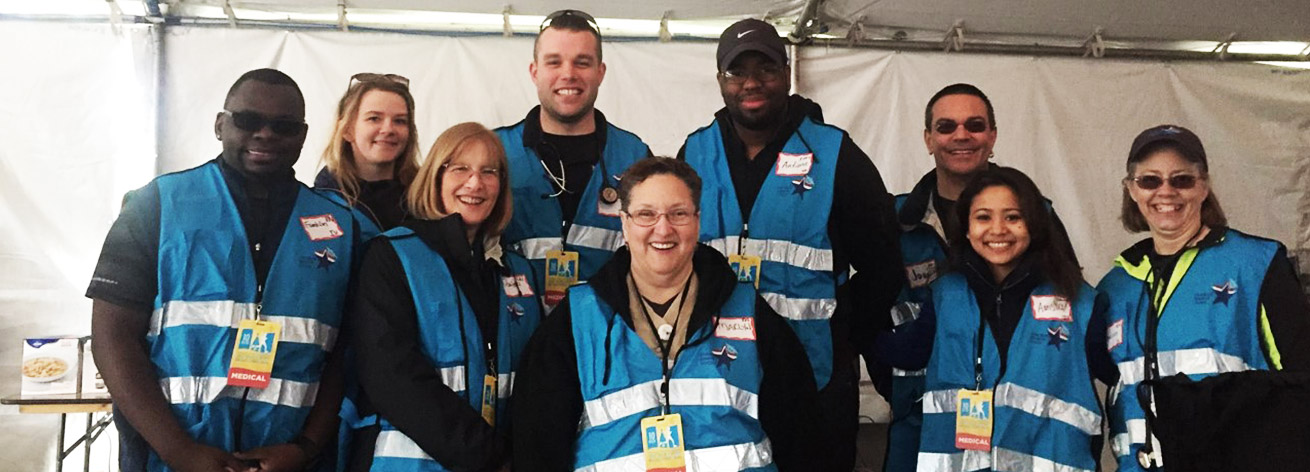
Bainbridge Island MRC (WA) volunteers work with partners at a testing site.


The MRC network comprises more than 268,000 volunteers in roughly 717 community-based units located throughout the United States and its territories. MRC units organize and utilize local volunteers who want to donate their time and expertise to prepare for and respond to emergencies and to support ongoing preparedness initiatives. MRC volunteers include medical and public health professionals as well as other community members without healthcare backgrounds who want to improve the health and safety of their communities.

Why the MRC is Needed

The need for the MRC became apparent after the September 11, 2001, terrorist attacks, when medical and public health professionals, eager to volunteer in support of emergency relief activities, found that there was no organized approach to channel their efforts. As a result, the MRC was established to provide a way to recruit, train, and activate medical and public health professionals and other volunteers to respond to community health needs during disasters and other public health emergencies.

MRC Activities

Examples of activities that MRC volunteers participate in and support include the following:

  • Emergency preparedness and response trainings and exercises

  • Emergency shelter operations and medical care

  • Disaster medical and behavioral health support

  • Medical facility surge support

  • Mass dispensing efforts (e.g., medication, water, other supplies)

  • Disease testing and surveillance

  • Community vaccination clinics

  • Veterinary care

  • Support services to disaster call centers, family assistance centers, and reception/evacuation centers

  • Emergency operations center and communications support

  • Patient movement support

  • Search and rescue operations

  • Disaster clean-up and recovery support

  • First aid and medical support during large public gatherings

  • Community education and outreach

  • Emergency preparedness and response planning, logistical, and administrative support

  • And more...

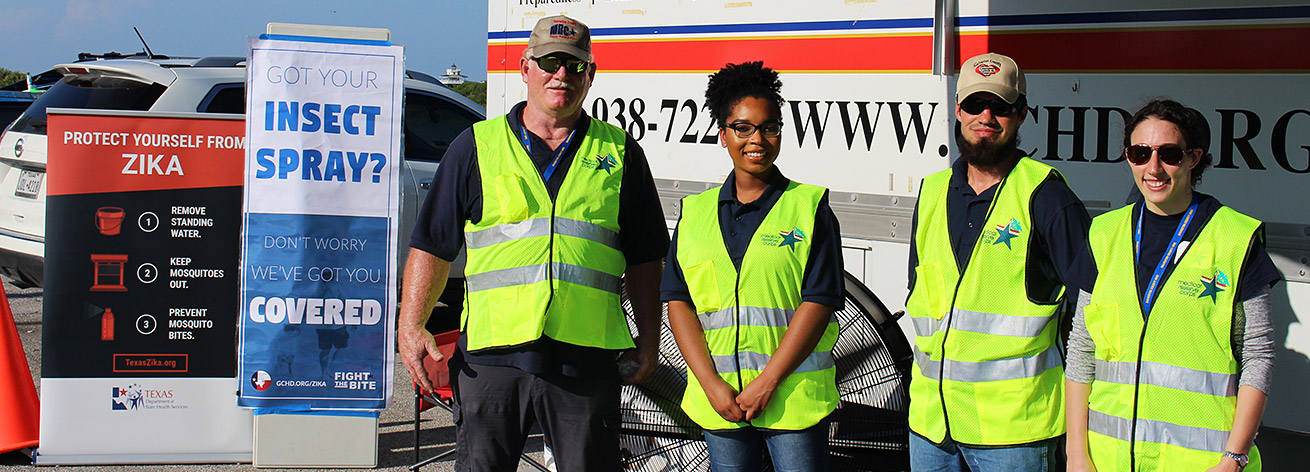
Galveston County MRC Volunteers

MRC Organization

Local

At the local level, each MRC unit is led by an MRC unit coordinator, who matches community needs—for emergency medical response and public health initiatives—with volunteer capabilities. Local coordinators are also responsible for building partnerships, ensuring the sustainability of the local unit, and managing volunteer resources. 
Looking to start an MRC Unit? Learn more here!

State Coordinators

State coordinators collaborate with the regional liaisons and unit leaders at the local level, as well as state-level partners. To find the contact information for the state coordinator in your area, select your state from the dropdown menu below.

Office of Medical Reserve Corps

The Office of Medical Reserve Corps (OMRC) is the national office of the MRC and is housed within the Center for Preparedness (CP), Administration for Strategic Preparedness and Response (ASPR), U.S. Department of Health and Human Services (HHS). The MRC Program supports the MRC network by providing technical assistance, coordination, communications, strategy and policy development, grants and contract oversight, training, and other associated services. It provides information and best practices to help communities establish, implement, and maintain MRC units in order to achieve their local visions for public health and emergency preparedness.

There are 10 MRC regions and 10 regional liaisons across the United States and its territories. Regional liaisons collaborate with local MRC unit coordinators, state coordinators, medical and healthcare personnel as well as personnel at national, state, and local public health and emergency preparedness agencies.

Looking for more information? To hear perspectives on serving with the MRC, check out the stories from our MRC network. Visit the Contact Us page for MRC program staff and regional liaison contact information.

Philadelphia MRC


Medical Reserve Corps Activities and Impact by State or Territory 2024

Medical Reserve Corps Activities and Impact by State or Territory 2024

Standing Strong, Serving Together

Across the country, Medical Reserve Corps (MRC) volunteers step forward every day with a single mission: to protect, support, and uplift their communities in times of need. This nationwide network of trained volunteers brings skill, heart, and resilience to public health and emergency response.

In 2024 alone, MRC volunteers dedicated over 300,000 hours of service, contributing an estimated $11.5 million in value. But the true impact of the MRC goes far beyond numbers. These are neighbors helping neighbors - providing vaccines, supporting emergency shelters, aiding during disasters, and filling critical gaps in local health systems. Their actions save lives, restore stability, and bring communities closer together.

The stories featured in these State Highlight Fact Sheets shine a light on the myriad and meaningful ways MRC units are making a difference in every corner of the country. From rural towns to urban centers, MRC volunteers show us what's possible when compassion meets commitment.

Find out what the Medical Reserve Corps has done for your state and in other communities across the country. As you explore each state's contributions, we invite you to see not only what the MRC has accomplished - but to imagine what we can achieve next, together.


Contact the Medical Reserve Corps

Contact the Medical Reserve Corps

MRC Program Email

MRCcontact@hhs.gov

MRC Program Mailing Address

ASPR / Office of Emergency Management & Medical Operations / Medical Reserve Corps 
C4H09 - O'Neill House Office Building 
Washington, DC 20515

The MRC network comprises more than 2680,000 volunteers in roughly 717 community-based units located throughout the United States and its territories. MRC units organize and utilize local volunteers who want to donate their time and expertise to prepare for and respond to emergencies and to support ongoing preparedness initiatives. MRC volunteers include medical and public health professionals as well as other community members without healthcare backgrounds who want to improve the health and safety of their communities.

Why the MRC is Needed

The need for the MRC became apparent after the September 11, 2001, terrorist attacks, when medical and public health professionals, eager to volunteer in support of emergency relief activities, found that there was no organized approach to channel their efforts. As a result, the MRC was established to provide a way to recruit, train, and activate medical and public health professionals and other volunteers to respond to community health needs during disasters and other public health emergencies.

MRC Office Staff

NameTitleContact Information
Dustun AshtonOMRC DirectorDustun.Ashton@hhs.gov 
(202) 692-4666
CDR Samantha SpindelOMRC Deputy DirectorSamantha.Spindel@hhs.gov 
(202) 961-0690
MRC Communications mrccontact@hhs.gov
Claudia Román-Stolte Internal EngagementClaudia.Roman-Stolte@hhs.gov 
(202) 389-2632

OMRC Regional Liaisons

NameTitleContact InformationSTATES/TERRITOR IES
Jennifer FrenetteRegion 1 MRC LiaisonJennifer.Frenette@hhs.gov 
(617) 947-6496
Connecticut, Maine, Massachusetts, New Hampshire, Rhode Island, Vermont
OMRCRegion 2 MRC LiaisonContact OMRCNew Jersey, New York, Puerto Rico, Virgin Islands
OMRCRegion 3 MRC LiaisonContact OMRCDistrict of Columbia, Delaware, Maryland, Pennsylvania, Virginia, West Virginia
OMRCRegion 4 MRC LiaisonContact OMRCAlabama, Florida, Georgia, Kentucky, Mississippi, North Carolina, South Carolina, Tennessee
Natay MinorRegion 5 MRC LiaisonNatay.Minor@hhs.gov 
202-550-0813
Illinois, Indiana, Michigan, Minnesota, Ohio, Wisconsin
OMRCRegion 6 MRC LiaisonContact OMRCArkansas, Louisiana, New Mexico, Oklahoma, Texas
OMRCRegion 7 MRC LiaisonContact OMRCIowa, Kansas, Missouri, Nebraska
Bryan LewisRegion 8 MRC LiaisonBryan.Lewis@hhs.gov 
(202) 731-3517
Colorado, Montana, North Dakota, South Dakota, Utah, Wyoming
OMRCRegion 9 MRC LiaisonContact OMRCArizona, California, Hawaii, Nevada, Guam, American Samoa, Northern Mariana Islands (CNMI), Federated States of Micronesia, Marshall Islands, Palau
Moji ObiakoRegion 10 MRC LiaisonMoji.Obiako@hhs.gov 
(202) 676-6879
Alaska, Idaho, Oregon, Washington

OMRC STTRONG Staff

NameTitleContact InformationSTATES/TERRITORIES
Claudia Román-StolteLead Project OfficerClaudia.Roman-Stolte@hhs.gov 
(202) 389-2632
  • Maryland Dept. of Health

  • Michigan Dept. of Health and Human Services

  • New Jersey Dept. of Health

  • New York State Dept. of Health/Health Research Inc. NY

  • Ohio Dept. of Health

  • Pennsylvania Dept. of Health

  • Puerto Rico Dept. of Health

Jennifer FrenetteProject OfficerJennifer.Frenette@hhs.gov 
(617) 565-1007
  • Arkansas Dept. of Health

  • Massachusetts Dept. of Public Health

  • Minnesota Dept. of Health

  • New Hampshire Dept. of Health and Human Services

  • New Mexico Dept. of Health

  • Oklahoma State Dept. of Health

  • Rhode Island Disaster Medical Assistance Team, Inc.

  • Wisconsin Dept. of Health Services

  • Vermont Agency of Human Services

Natay Minor Project OfficerNatay.Minor@hhs.gov 
202-550-0813
  • District of Columbia Department of Health

  • North Carolina Department of Health and Human Services

  • South Carolina Department of Health and Human and Services

  • Kentucky Cabinet for Health and Family Services

  • Georgia Department of Health

  • Virginia Department of Health

  • Texas Department of Health

  • MRC of Illinois (501c3)

Bryan LewisProject OfficerBryan.Lewis@hhs.gov 
(202) 731-3517
  • Arizona Dept. of Health Services

  • CNMI Commonwealth Healthcare Corporation

  • State of Colorado Dept. of Health and Environment

  • County of Ventura (CA)

  • Hawaii State Dept. of Health

  • Kansas Dept. of Health and Environment

  • Missouri State Emergency Management Agency

  • Oregon Health Authority

  • Utah Dept. of Health and Human Services

Subscribe to USWDS Height Card Large (240px)