Property CSS Value
height-card-lg

Chapter 4: Jurisdiction Incident Management (Tier 3)
Chapter 4: Jurisdiction Incident Management (Tier 3)

Medical Surge Capacity and Capabilities (MSCC) Handbook


Jurisdiction Incident Management (Tier 3) 

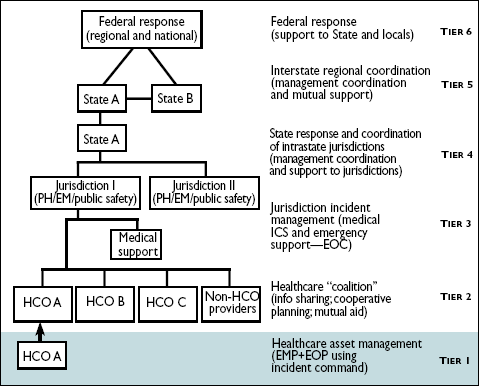
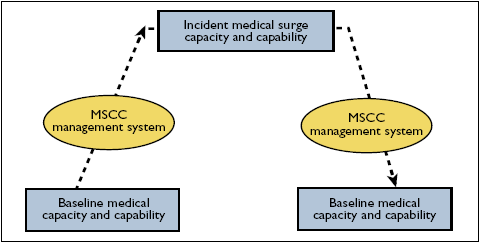
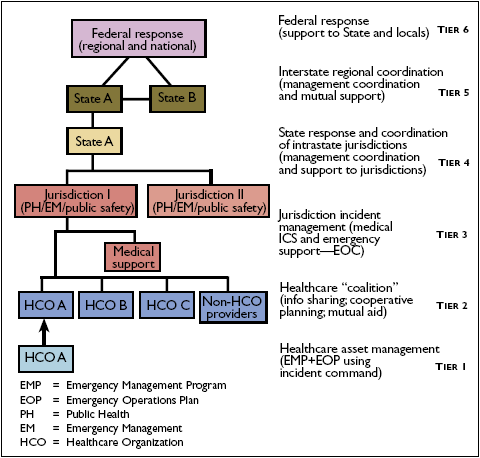
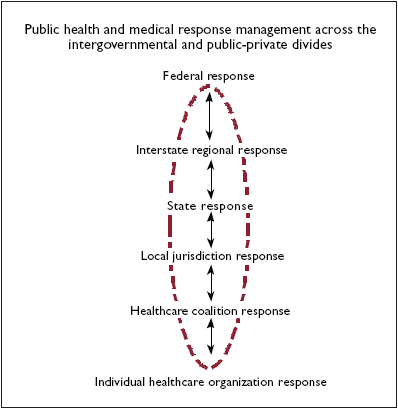
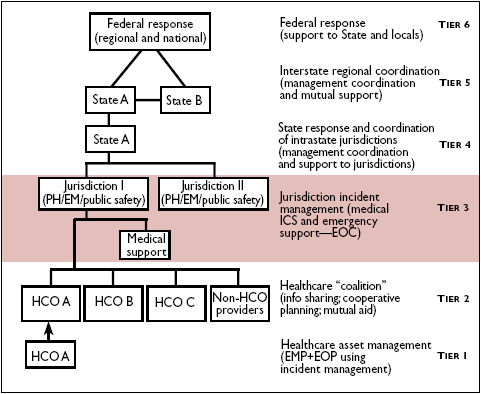
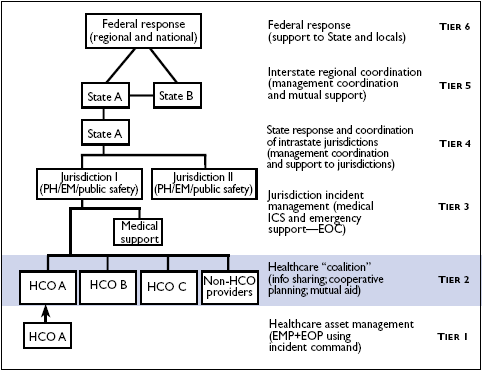
Image shows MSCC Management Organization Strategy with emphasis is put on the Tier 3: Jurisdiction incident management (medical ICS and emergency support - EOC).

Jurisdiction incident management (Tier 3) is the primary site of integration of healthcare organizations (HCOs) with fire/EMS, law enforcement, emergency management, public health, public works, and other traditional response agencies. It provides the structure and support necessary for medical assets to maximize MSCC, and it allows direct input by medical representatives into jurisdictional action planning and decision-making. In addition, it links local medical assets with State and Federal support.

Key Points of the Chapter

Jurisdiction incident management (Tier 3) addresses MSCC at the level of the responding community. Earlier chapters focused on the management of individual healthcare assets (Tier 1) and on promoting cooperation among point-of-service medical providers (Tier 2). Tier 3 builds on this by describing the integration of public health and medical assets into the functional organization of incident command within the traditional emergency response community.

When a mass casualty and/or mass effect event occurs, multiple disciplines may be called into action, including public safety, public health, human services, emergency management, and others. Many of these disciplines do not routinely work together in this capacity and so are often unfamiliar with each other's emergency preparedness and response procedures. It is crucial, therefore, to establish incident management processes for jurisdictional (Tier 3) response that integrate the many diverse disciplines and promote coordinated response actions. This is accomplished through a well-organized and tested jurisdiction Emergency Operations Plan (EOP).

The basis for effective jurisdictional incident management (Tier 3) is the jurisdiction's Emergency Management Program (EMP). Public health and acute-care medical assets should be viewed as key components of the jurisdiction's EMP and should have direct input into preparedness and response planning. In times of crisis, jurisdictional management (Tier 3) will benefit from receiving a health and medical perspective on issues that determine incident objectives and response strategies. Moreover, individual HCOs may maximize their ability to provide MSCC through enhanced coordination with EMS and other community resources.

The integration of diverse organizations during incident response is best accomplished through unified incident command, a concept that allows multiple agencies to maintain significant management responsibility and to work together to achieve optimal response. A unified command approach promotes consistency throughout the response system. The participation of public health and medical disciplines in unified command at Tier 3 is important since they bear a primary responsibility for the welfare of responders and the general public. 
 

4.1 The Role of the Jurisdiction in MSCC 
 

Jurisdiction incident management (Tier 3) and its emergency management operations support are critically important to maximizing MSCC. In a mass casualty and/or mass effect event, Tier 3 is the management level that effectively coordinates activities among the multiple and disparate entities involved in response for that jurisdiction. Because of its obligation to the community, Tier 3 is responsible for defining incident objectives and an overall response strategy for the community. Data from various response disciplines are aggregated and analyzed at Tier 3. Thus, the jurisdictional information processing function is critical in promoting timely application of community resources to support urgent medical care at individual HCOs (Tier 1).

4.2 Jurisdiction Emergency Management Program

The jurisdictional EMP brings together the many agencies that have defined roles in emergency or disaster response, including public health and acute-care medical organizations (see below). It involves their active participation as a group in activities to mitigate, prepare for, respond to, and recover from mass casualty and/or mass effect events. It does not (and should not) preclude agencies from conducting their own EMP; rather, it provides a platform for individual efforts to be coordinated.

Participant Agencies/Organizations in the Jurisdiction Response: 
 

  • Emergency management

  • Emergency Medical Services (EMS)

  • Fire service (often combined with EMS)

  • Local law enforcement (police, sheriff, and others)

  • Public health and human services (often combined)

  • Public works

  • Acute medical services (hospitals, community health centers, nursing homes, outpatient clinics, private medical physician offices and other acute-care providers)

  • Others, as determined by incident circumstances (e.g., school system, local Federal resources, such as Federal law enforcement, military assets, or Veterans Affairs facilities) 
     

The jurisdictional EMP is best developed (and refined) through regular meetings of the leadership of each participant agency. These meetings should be conducted using formats similar to those developed for incident planning (i.e., there should be a designated leader/moderator, an agenda specifying the meeting objectives, defined processes for decision-making, and documentation of pertinent information and action items). The meetings allow participants to interact with one another and work toward common goals, just as they would be called on to do in an actual incident response.

An effective Tier 3 preparedness planning process accomplishes the following:

  • Provides an opportunity for a jurisdiction's emergency response "players" to get to know one another and to understand each other's operations and perspectives

  • Enables response disciplines to better understand the emergency procedures and methods that characterize each other's response domain

  • Promotes a sense of trust between response disciplines

  • Provides a forum for discussing issues or concerns and implementing effective methods to resolve differences fairly.

Similar to Tiers 1 and 2, a valid hazard vulnerability analysis (HVA) forms the cornerstone of the jurisdictional EMP. Findings of each response agency's HVA may be summarized to develop the jurisdiction's HVA, or a separate joint analysis may be performed. An integrated HVA provides an opportunity for agencies to assist one another in addressing collective and individual risk. It also gives advance warning of areas where certain agencies are particularly vulnerable. The jurisdiction's emergency management authority usually develops the jurisdiction's HVA, which should be reviewed and updated annually to address new or emerging threats to a population (e.g., construction of a chemical manufacturing plant).

Important insight is gained by incorporating public health and acute-care medical disciplines in the jurisdiction's HVA. In many jurisdictions, public health authorities have already undertaken HVA activities in accordance with State and Federally funded mandates related to bioterrorism. These efforts may help with examinations of risks that may complicate jurisdictional (Tier 3) response to a bioterrorism event. There will be common hazards identified and, potentially, common vulnerabilities. Most significantly, the medical sector may have vulnerabilities not recognized and addressed in the jurisdiction's regular planning process. This is important since jurisdictional planning usually assumes that HCOs will survive the hazard impact and be available to care for incident victims.

4.3 Jurisdiction Emergency Operations Plan

The jurisdictional EOP provides action guidance for incident response at the level of the responding community. The sum of all activities related to developing and implementing the jurisdictional EOP represents preparedness. This includes establishing equipment and supply needs, educating and training personnel, and exercising the system to evaluate and improve procedures. Important considerations for the jurisdictional EOP include:

  • Developing all-hazards processes that can address potential incidents ranging from traditional weather events to large explosions, infectious disease outbreaks, or contamination scenarios

  • Identifying essential participants in the jurisdictional EOP when it is implemented for a response

  • Providing a systems description of how the various disciplines will be organized and integrated during response (may vary depending on the type of event), to include:

    • Management structure and procedures for a multi-agency response

    • Processes for information management and exchange among participants.

  • Describing key responsibilities for each stage of response.

By incorporating basic ICS and emergency management principles, and by integrating public health and acute-care medical disciplines, a functional Tier 3 management structure is proposed.

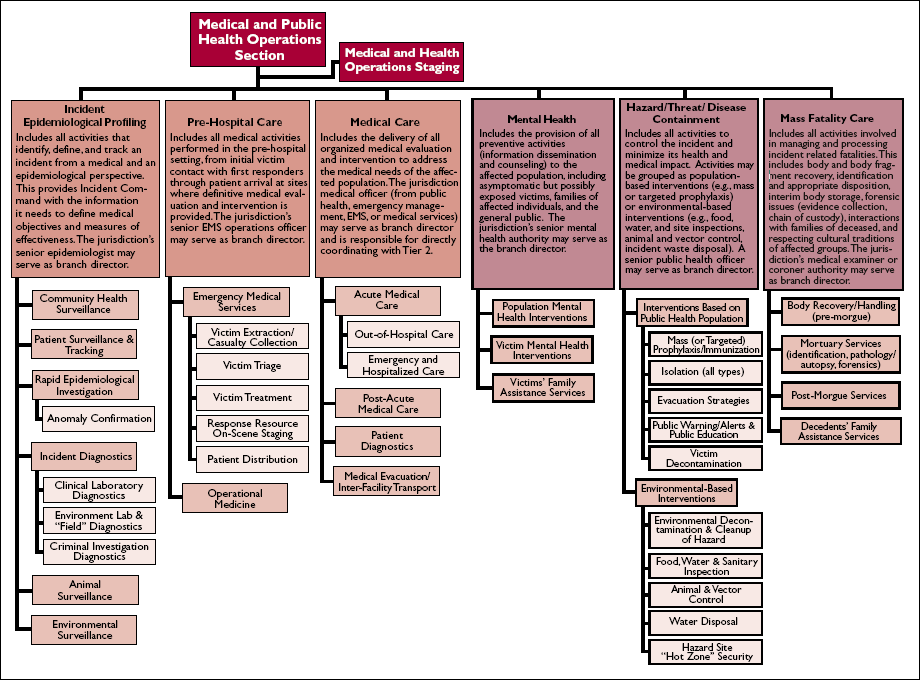
Figure 4-1. Generic Management Structure for Jurisdictional Response Figure 4-1 shows the generic management structure for Jurisdiction response to emergency event.
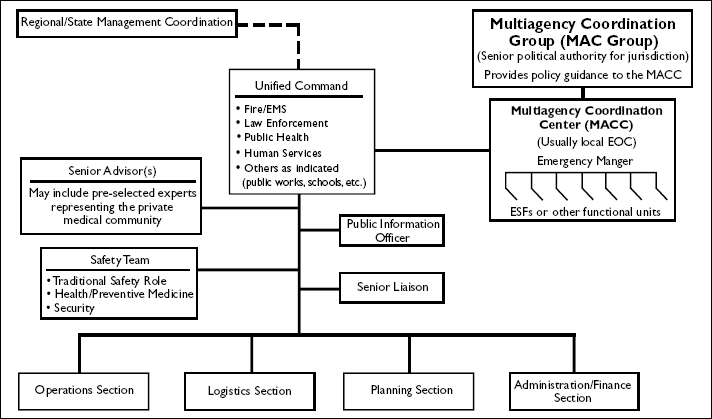
The site of integration for the Tier 2 liaison will vary based on the type of incident. In a mass casualty or complex medical event, the Tier 2 liaison will likely integrate at the Operations Section of the incident management team. In a primarily non-medical event, the Tier 2 liaison may integrate through the health and medical Emergency Support Function (ESF) or other functional group in the EOC (see IS-701, Lesson 2).

4.4 Organization of the Tier 3 Response

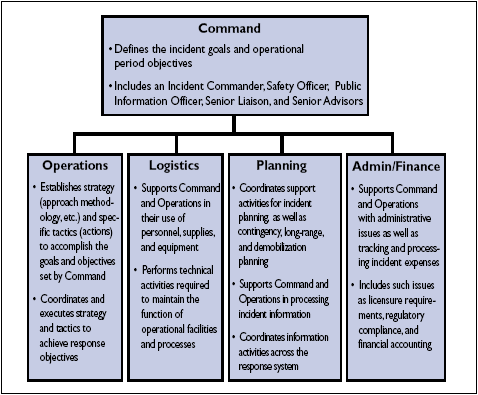
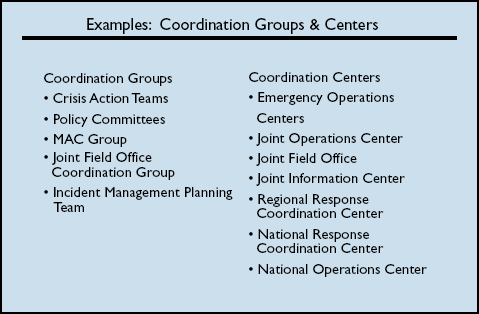
The jurisdictional (Tier 3) response to a major medical incident is guided by the same general ICS principles as the Tier 1 response (i.e., it is organized by functional areas—Command, Operations, Logistics, etc.). However, responsibility for the five primary functions may be distributed among multiple agencies at the Tier 3 level. In many cases, collaborative efforts between disciplines are necessary to ensure that these functions are adequately addressed (see example below). This is particularly true for the Command function. Distinguishing features of the jurisdictional (Tier 3) response, are unified command and Multiagency Coordination Systems (MACS). These form the basis for the remainder of the chapter.

Example of Multiagency Unified Command During Incident Operations:

After recognition that a biological agent has been intentionally released into the community, public health may be designated as the lead agency in incident management, with primary responsibility for protecting the health and safety of the community. Public safety agencies also play a critical role by providing assistance to public health through their familiarity and expertise in ICS. They also support public health and medical operations. For example, the Logistics Section may consist primarily of fire service and public works resources providing support to public health by assisting epidemiological investigations or delivering prophylaxis medications to distribution centers.

4.5 Integration of Incident Management and Emergency Management 
 

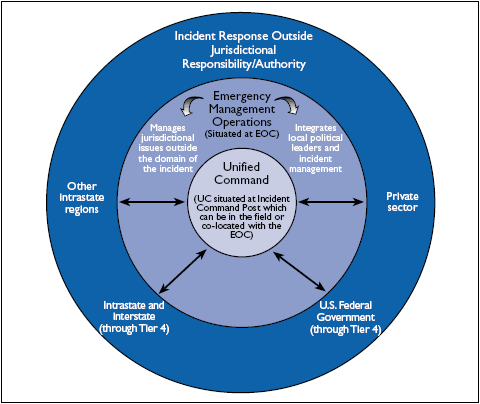
Emergency management operations support to the UC occurs through the jurisdiction's Multiagency Coordination Center or MACC, which is commonly based at an EOC. The EOC is the pre-designated facility in a jurisdiction from which emergency management personnel and government officials exercise direction and control in an emergency and provide high-level support to the UC. In the traditional disaster scenario, the UC operates from an ICP at the incident scene (e.g., site of a building collapse), and is geographically separated from the EOC.

Figure 4-3. EOC Incident Support in Traditional Emergency Response Figure 4-3 shows the Incident Support that the Emergency Operations Center provides during a traditional emergency response.
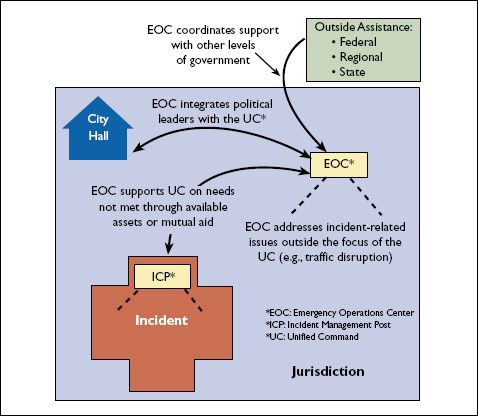
If the incident is diffuse, involves the entire jurisdiction, or in some other way prevents the UC from establishing its ICP elsewhere, the EOC may provide the structure and function for the ICP. When this occurs, the UC should occupy a space that is separate from emergency management operations support personnel so the focus of the UC remains distinct from that of the local emergency management and the MACS. However, the EOC leadership (in many cases, this is the local emergency manager) should attend and participate in the UC planning meetings and operations briefings, and related activities.[54] This integrates the UC with the local jurisdiction's MACS, but avoids risking crossover/conflict between their designated response roles. It also empowers the EOC to more actively support the UC by better anticipating possible incident response needs. 
 

4.6 Integration With Other Tiers

The jurisdictional (Tier 3) response system integrates with other tiers primarily through its information management function. The capability to collect, analyze, and disseminate aggregated data should always be operational, even if only at a baseline level during times of non-response. This enables healthcare coalition (Tier 2) leaders to be notified of upcoming meetings or changes to the jurisdictional response system. It also facilitates timely incident response by providing key medical personnel (e.g., Tier 2 coalition managers) with the earliest reports of hazards that may have significant medical implications.

During incident response, a robust jurisdictional (Tier 3) information management function within the Planning Section continually processes data received from the Tier 2 coalition to obtain real-time situation status on HCO operations. This situation status information is reported back to the data sources and is also used for Tier 3 incident action planning. Integration of this information into jurisdictional (Tier 3) action planning, and providing jurisdiction IAP action plan information to the HCOs promotes coordination of response actions between tiers. For example, plans to shut down roads or public transportation systems in an area may greatly affect the ability of healthcare personnel to reach local HCOs. Having this concern communicated via the Tier 2 liaison to the UC is beneficial in helping Operations Section personnel under UC (or in the EOC) develop tactics that will not interfere with HCO activities. In a similar way, an adequate information management function can provide much needed guidance to medical practitioners during an incident.

Example: In an unusual infectious disease outbreak, a jurisdiction's public health authority may issue health advisories that contain practitioner guidelines on patient evaluation, treatment modalities, and methods for reporting suspect cases. Medical practitioners benefit from the ability to access this information as incident circumstances evolve because it is both medically sound and it carries jurisdictional public health authority for implementation. The application of this guidance across a jurisdiction promotes hazard impact containment through evaluation and treatment efficiency and consistency, data reporting for incident profiling, and indications for altering or improving medical therapy or other recommendations. 
 

The New York City Department of Health and Mental Hygiene website is an excellent public health model for disseminating accurate, timely, and authoritative medical guidance.

The jurisdictional (Tier 3) ICS integrates with State authorities (Tier 4) primarily through its information management function. Timely processing and dissemination of incident and response parameters enable the Governor to determine the need for declaring a formal emergency or requesting Federal support. Such information also makes it possible to link affected intrastate jurisdictions so they can coordinate response efforts. Finally, it facilitates the coordination and distribution of State tactical mutual aid to areas with the greatest need.

The integration of jurisdictional and State entities with responsibility for emergency preparedness and response is a primary mission of several Federal initiatives. One example is the DHS-funded Metropolitan Medical Response System (MMRS) program. The MMRS provides funding and guidance to select highly populated jurisdictions (124 as of FY 2003) to develop plans, conduct training and exercises, and acquire pharmaceutical caches, PPE, and other capabilities necessary to respond to a mass casualty and/or mass effect event. It also requires planning integration with State (Tier 4), neighboring interstate jurisdictions (Tier 5), and Federal (Tier 6) entities. The MSCC Management System provides an effective platform for health and medical disciplines to coordinate/integrate capabilities acquired or developed through the MMRS.

4.7 Illustrative Example

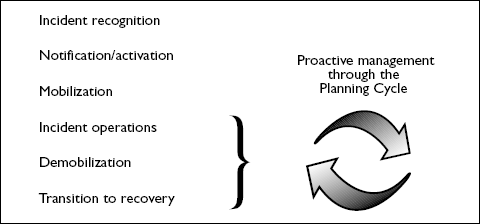
The following example demonstrates how the concepts presented in this chapter may be applied during an actual incident response. The various phases of response (as described in Chapter 1) highlight when critical actions should occur; however, the example extends only as far as incident response operations, as this is the focus of the MSCC Management System.

Background and Incident Description

  • Jurisdiction Alpha is a city of moderate size whose western border adjoins another State.

  • A very sick patient with severe respiratory distress and a fever is admitted to a hospital in Jurisdiction Alpha. His admission was preceded by nearly three days of progressive illness with cough. During this time, he continued to work as a butcher in a small but popular meat shop. Since the patient had recently returned from an overseas trip to areas where severe acute respiratory syndrome (SARS) had reappeared, SARS is suspected and the jurisdiction's Department of Health (DoH) is notified.

  • The patient dies a short time after his admission to the hospital.

Incident recognition begins when the clinical suspicion is first reported to DoH and public health experts recognize the implications. Although it has not been confirmed, the suspicion of SARS is enough to warrant immediate actions by DoH, and a rapid health investigation commences. Epidemiological questioning quickly indicates that the patient (index case) had exposure to many customers at the meat shop after becoming demonstrably ill.

Notification/activation occurs when the DoH public health officer requests a management meeting with representatives from emergency management, fire/EMS, law enforcement, and public works. After a brief discussion, they agree to partially activate Jurisdiction Alpha's EOP for public health response (formal declaration of emergency is not required to activate portions of the EOP). The following actions also occur:

  • Using the jurisdiction's public safety communications center (as specified in the EOP), a written communication is sent to all agencies that automatically participate in the EOP. The notification only activates jurisdictional resources that are needed for the initial response.

  • An alert is issued to all HCOs in the jurisdiction (through Tier 2) indicating what is known about the demographics and recent history of the index patient, and any reported outbreaks elsewhere in the United States. The alert notifies Tier 2 assets that the jurisdiction EOP is partially activated.

  • A similar notification is provided to the State DoH, which notifies neighboring regions and the CDC using mechanisms established in Tiers 4, 5, and 6.

  • The mayor and city council are notified and immediately express concern. They recognize the potential human impact, as well as the implications for business and tourism. The mayor's PIO works with the DoH PIO to draft and immediately release a statement to the public explaining the jurisdiction's response.

Mobilization of jurisdictional resources occurs as the designated agencies activate their individual EOPs, and ramp up their staffing accordingly. Similarly, Jurisdiction Alpha's EOC is activated and staffed.

Incident operations are led by a UC that was designated in the initial management meeting. The UC is composed of selected individuals from jurisdictional (Tier 3) public health, fire/EMS, and law enforcement. The jurisdiction's public health authority is recognized as the "lead" UC agency. The UC coordinates closely with the jurisdiction's emergency manager, who manages the EOC (a MACC for the UC).

Management representatives from each agency in the UC conduct a teleconference to discuss what is known about the incident and to determine a course of action. It is decided that an ICP will be established at the DoH Operations Center, but UC members agree to transfer the ICP to the jurisdiction's EOC if management needs exceed the resources available at the DoH Operations Center. This backup is planned because multiple reports are coming in about patients with febrile illnesses reporting to HCOs. Many of these patients have recently visited the butcher shop in question.

Members of the UC quickly establish themselves at the ICP and coordinate the integration of their respective disciplines. Each agency maintains authority over its own assets, yet all contribute to the composition of the ICS Sections (Operations, Logistics, Plannings, Admin/Finance). For example, a senior DoH staff member directs the Operations Section, while personnel from other agencies manage specific branches (see Figure 4-2) under Operations.

  • A jurisdictional epidemiologist manages the Incident Epidemiological Profiling and Hazard Containment branches, with additional resources supplied by other agencies.

  • EMS manages Pre-Hospital Care.

  • A trained, experienced medical administrator pre-selected by the Tier 2 coalition serves as a senior medical advisor to the UC for issues related to hospital care. This role is designed to provide the hospital and medical practitioners' "perspective" when the UC is considering jurisdictional decisions that will affect the provision of incident-related medical care.

  • A jurisdictional medical examiner manages Fatality Care.

Expedited SARS serology tests from the index patient strongly indicate the patient died from SARS. Confirmatory testing is being conducted at the CDC. The rapid epidemiological investigation, aided by public service announcements asking anyone in contact with the meat shop to report to a DoH clinic for evaluation, has identified an extensive list of potential contacts. The contacts are given written instructions on the disease, its signs and symptoms, and precautionary measures. They are provided digital thermometers and arrangements are made to contact them daily for a health check.

Based on available information, the UC develops the first formal jurisdictional IAP for the next operational period (designated as the upcoming 24-hour period starting at 7:00 a.m.). The jurisdictional IAP includes:

  • Control objectives for the overall response

  • Operational period objectives

  • Strategies for achieving the objectives, including:

    • Disease containment for healthcare workers, identified contacts of the index case, and the general public

    • Surveillance of the health of identified index case contacts

    • Surveillance of HCOs and medical providers to identify other cases of possible SARS in the jurisdiction

    • Contingency planning for medical surge needs (e.g., hospital isolation, critical care services, screening of concerned members of the public)

    • Concise public information bulletins that are consistent across all tiers.

  • Response tactics, including:

    • Twice daily telephonic screening of identified contacts, looking for early symptoms

    • Educational information for identified case contacts

    • Voluntary separation of contacts, with health personnel to assist and ensure that they maintain their separation from the public

    • Educational information and personal protection supplies for family members who remain at home during the contact's period of voluntary separation

    • Educational information for healthcare providers describing the early signs, symptoms, and physical findings of SARS. Contact information is also provided to report suspected cases, including how to obtain expedited serologic testing.

    • Educational information for the public.

  • Situation status and resource status updates for the jurisdiction

  • Chart illustrating the jurisdiction's incident command organization, with the primary role of each agency and other significant participants specified; contact information is provided; the chart also demonstrates the relationship of UC to the EOC and to department operations centers.

  • Communications and safety plans, including DoH recommended protection (e.g., PPE, isolation, other protective measures for persons caring for potential SARS victims).

The jurisdictional IAP is shared with Tier 2 coalition members and State emergency management officials (Tier 4). The State, in turn, provides pertinent information to adjoining jurisdictions, bordering States, and to Federal public health personnel assisting in the State response. The operational period established by the State is adjusted so that State meetings occur one hour after the jurisdiction's (Tier 3) meetings. This phase-shift of Tier 4's operational period allows for coordination of operational briefings.

With the UC having defined its incident objectives and strategies through the jurisdictional IAP, other activities are identified for emergency management operations support to address through the EOC. These EOC responsibilities include:

  • Interfacing with the private sector (excluding hospitals, which are considered part of incident operations)

  • Interfacing with the State and the Federal Government (except for Federal health and medical resources that consult to, or work under, the jurisdiction's management system)

  • Determining school closures, addressing transportation disruptions, and managing other SARS impacts on the jurisdiction

  • Providing interface of UC with MAC Group (mayor and her senior advisors).


51. Hospitals, integrated healthcare systems, clinics, alternative care facilities, nursing homes and other skilled nursing facilities, private practitioners' offices, and other assets constituting Tier 1 in the MSCC Management System represent the medical community. 52. This example is adapted from the Medical and Health incident Management (MaHIM) System. 53. Measures of effectiveness are observable criteria that management accepts as accurate and valid reflections that incident response is accomplishing its objectives. They should be defined in the planning process and used in the situation status reports. 54. When the UC is operating at a distant incident scene, EOC leadership could still participate in UC planning meetings via teleconference or some other defined mechanism. This is helpful in promoting full coordination between incident command and emergency management operations support. 


<< Back Next >> 


Chapter 3: Management of the Healthcare Coalition (Tier 2)

Chapter 3: Management of the Healthcare Coalition (Tier 2)

Medical Surge Capacity and Capabilities (MSCC) Handbook

Management of Individual Healthcare Assets (Tier 2)Image shows figure 1-2: MSCC Management Organization Strategy 's  six-tier construct with emphasis on Tier 2

The healthcare coalition (Tier 2) is composed of healthcare organizations (HCOs) and other assets described in Tier 1 that form a single functional entity to maximize MSCC in a defined geographic area. It coordinates the mitigation, preparedness, response, and recovery actions of medical and healthcare providers, facilitates mutual aid support, and serves as a unified platform for medical input to jurisdictional authorities (Tier 3).

Key Points of the Chapter

In a mass casualty and/or mass effect incident, HCOs[43] may lack the necessary resources and/or information to individually provide adequate MSCC. The healthcare coalition (Tier 2) attempts to maximize MSCC by coordinating mitigation, preparedness, response, and recovery activities among all HCOs in a jurisdiction. This allows existing medical and public health resources to be optimally leveraged, and it promotes interfacility cooperation and support. Tier 2 also promotes coordination with jurisdictional authorities (Tier 3) by providing a unified platform for medical and public health asset integration into the community response.

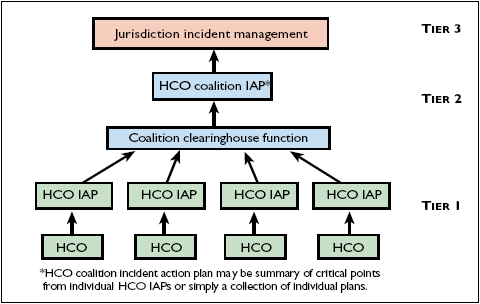
The healthcare coalition (Tier 2) emphasizes coordination and cooperative planning rather than a truly "unified command" of all public and private medical and health assets. This is because health and medical assets retain their individual management autonomy during incident response. However, they participate in information sharing and incident planning to promote consistent management strategies. The management organization and decision process of Tier 2, therefore, is less structured than in Tiers 1 and 3 since decision authority resides primarily at the level of each HCO. Rather than "commanding" HCOs, Tier 2 brings them together to collaborate on strategic issues and to coordinate incident planning, response, and recovery activities. Tier 2 is essentially a NIMS-consistent Multiagency Coordination System (MACS), with the coalition providing the Multiagency Coordination Center (MACC) functions, and intermittent conferencing of HCO decision-makers providing the Multiagency Coordination Group (MAC Group) component. Ideally, these efforts are closely integrated with the jurisdiction's (Tier 3) preparedness planning and response activities.

The function in Tier 2 that collects, processes, and disseminates data and information is referred to as a "clearinghouse function." It ensures that all HCOs have the information they need to adequately prepare for and respond to major events. This information exchange builds consistency in response activities and in the public message. It also allows the Tier 2 coalition to effectively integrate with non-medical responders at the jurisdiction level (Tier 3) by providing timely and accurate "snapshots," or composite situation updates of local HCO operations.

An integral component of the coalition response is medical mutual aid—the redistribution of personnel, facilities, equipment, or supplies to HCOs in need during times of crisis. Mutual aid provides surge capacity and capability that is immediately operational, reliable, and cost-effective. The Tier 2 coalition provides a mechanism to formally establish processes for requesting and receiving mutual aid during preparedness planning. It also allows such issues as staff credentialing, liability, reimbursement, and transfer of patient responsibility to be addressed in preparedness planning, thus ensuring a rapid distribution of aid when it is needed.

3.1 The Role of the Healthcare Coalition in MSCC

Research has shown that most individual HCOs possess limited surge supplies, personnel, and equipment, and that vendors or anticipated "backup systems" for these critical assets are often shared among local and regional HCOs.[44][45] This "double counting" of resources diminishes the ability to meet individually projected surge demands across multiple institutions during a medical emergency.[46] To address this, the healthcare coalition (Tier 2) integrates all medical and health assets in a jurisdiction to coordinate their mitigation, preparedness, response, and recovery activities. In this way, HCOs work together to maximize MSCC rather than compete against one another for limited resources.

Much of the benefit gained from the healthcare coalition is evident in participant HCOs' Emergency Management Programs (EMPs) well before a major event occurs. Joint planning and preparedness efforts with geographically related facilities are possible, even though the HCOs may normally be business competitors. Areas of mutual benefit include the following:

  • Distributing the mitigation and preparedness workload among facilities, since many of the solutions found during preparedness planning may be applicable to multiple HCOs in a jurisdiction

  • Establishing familiarity and trust among HCOs that promote cohesive response actions during an emergency

  • Fulfilling regulatory and accreditation requirements for community emergency planning and for establishing and maintaining management systems that integrate into the jurisdiction (Tier 3) response (as required by the Centers for Medicare and Medicaid Services, State survey agencies, the Joint Commission on Accreditation of Healthcare Organizations, and other accreditation organizations)

  • Promoting close integration with jurisdictional (Tier 3) authorities for mitigation and preparedness planning, and for pre-planning of scheduled unusual events, such as mass gatherings (e.g., fireworks display) or high-security events (e.g., political demonstrations).

During incident response, coalition participants benefit through cooperative planning, information sharing, and management coordination. As surge demands challenge individual HCOs, the coalition facilitates mutual aid assistance through arrangements with nearby HCOs. Mutual aid is a timely, cost-effective, and reliable method to obtain added surge capacity and capability (via equipment, facilities, supplies, and personnel) that is immediately operational. It distributes health and medical assets to areas of greatest need, thereby enhancing overall jurisdictional MSCC.

3.2 Coalition Emergency Management Program

The backbone of the healthcare coalition (Tier 2) is a comprehensive EMP that formally defines the mitigation, preparedness, response, and recovery efforts of participating HCOs. The preparedness and response architecture of the coalition EMP differs significantly from that found in individual HCOs (Tier 1) and at the jurisdiction level (Tier 3). For example, the Tier 2 leadership during an emergency or disaster response does not have an incident commander's decision authority for the coalition. Instead, the leadership acts to ensure optimal coordination and information sharing among participants. In this fashion, the coalition (Tier 2) functions like a MACS. If leadership decisions are necessary, the MAC Group component of Tier 2 should be activated.

Several important considerations for the coalition EMP include:

  • Establish an emergency management committee that includes representatives of each participating facility. These individuals should be knowledgeable in their respective organization's EMP and Emergency Operations Plan (EOP).

  • Address relevant issues related to mitigation, preparedness, response, and recovery. An example would be clearly defining the processes for how the Tier 2 leadership (the Tier 2 MAC Group) will be designated and activated during an incident response, or identifying how major decisions will be made on issues that affect all coalition participants. The MACC component must also be clearly delineated, for both the "clearinghouse" information function, as well as mutual aid and other important coordination tasks. This involves specifying during preparedness planning which personnel will perform these functions, the location where coordination will occur, the procedures for receiving, processing, and disseminating information, and the processes by which mutual aid will occur.

  • Develop formal processes to administer the coalition EMP and to conduct emergency management committee meetings:

    • The committee should meet regularly (at least once a month during startup and at times of high threat, or immediately after a response to receive input from all participants).

    • An agenda should be distributed to participants before all meetings, and minutes should be recorded for future reference.

    • An official vote should be taken to decide issues that affect all members.

    • Meeting locations may be rotated among participating HCOs to promote familiarity with each other's response plans and facilities, to encourage sharing of best practices, and to distribute costs.

  • Involve jurisdictional (Tier 3) authorities (e.g., EMS, public safety, emergency management, public health) in Tier 2 proceedings to ensure a close partnership between Tiers 2 and 3. Similarly, a Tier 2 liaison should participate in jurisdictional preparedness meetings and represent the Tier 2 coalition in the jurisdiction's EOC and (ideally) within the Tier 3 incident management team (if one exists separate from the EOC).

The coalition EMP should be sponsored by an established entity that can provide the administrative infrastructure (clerical support, meeting space, etc.) for the EMP. This "sponsor" must promote equal participation among member HCOs and should not convey a competitive business advantage to any coalition member. Potential sponsors may include local hospital associations, local or regional EMS councils, and Local Emergency Planning Committees (LEPCs).[47]

The Tier 2 coalition may include HCOs from beyond a single jurisdiction. This may be desirable especially in rural areas, where health and medical assets are scattered, or in complex metropolitan areas with overlapping hospital catchment areas. In such cases, the Tier 2 coalition should closely coordinate its preparedness planning with each Tier 3 jurisdiction covered by the coalition's resources. During response, the jurisdiction that is primarily responsible for the medical incident response (i.e., for the victims generated within its boundaries) would be the primary support to the Tier 2 coalition, ideally in close coordination with other involved jurisdictions.

It is important for the coalition to retain the responsibility and authority for the Tier 2 response infrastructure. This helps to maintain the private sector perspective and ensures that the coalition has priority access to resources (e.g., radio, telecommunications) during response.

Early in the development of the Washington, DC Hospital Association-based Hospital Mutual Aid System (HMAS), the District Government offered the use of its 800-megahertz radio system and the Mayor's conference-call resource to hospitals for use in times of crisis. HMAS participants declined, recognizing the need to establish communications to which HCOs always had primary access, regardless of the evolving circumstances. The HMAS low-tech radio system worked exceptionally well on 9/11, when other radios were committed or overwhelmed. The privately established conference-call service also worked well during subsequent weeks of the 9/11 recovery effort and the anthrax crisis.[48]

For reasons explained earlier(section 1.3.1), preparedness committees, processes, and procedures should be distinguished from those used during response. For example, the Tier 2 emergency management/preparedness committee would not be the appropriate structure for managing Tier 2 during an actual event.

3.3 Coalition Emergency Operations Plan

Similar to individual HCOs, the coalition (Tier 2) has an EOP that guides actions during response. However, the Tier 2 EOP emphasizes coordination among coalition members (via the MACC) rather than direct management of individual assets. This reflects the fact that HCOs retain their management autonomy during a response, while they collaborate with other medical assets to strengthen overall MSCC in the jurisdiction or region. In addition, the EOP should guide members on how to incorporate Tier 2 tenets into their respective HCO EOP. For example, the coalition EOP might provide instructions on such issues as how to request and integrate mutual aid assets into an HCO's incident operations, and what designated communication methods to use between HCOs during response.

3.4 Integration With Other Tiers

An important function of the Tier 2 coalition is to integrate community medical assets with non-medical response organizations in the jurisdiction. This is accomplished through a Tier 2 liaison function. Having one liaison to represent the collective interests of HCOs (Tier 2) at the jurisdiction (Tier 3) level enables non-medical response assets to more easily interface with and understand the concerns of the healthcare community. If the Tier 2 coalition covers multiple local jurisdictions, a Tier 2 liaison should be assigned to each Tier 3 incident command post or EOC (as indicated) to represent the coalition's interests.

Depending on specific incident circumstances, Tier 2 coordination with the following agencies might be considered:

  • EMS—tactical and strategic issues may be addressed through formal liaison with EMS. For example, Tier 2 may provide frequent status reports to EMS with each HCO's up-to-date receiving capacity. This promotes a more equitable distribution of patients by accounting for patient walk-ins, of which EMS transport officers might otherwise be unaware. At a strategic level, the Tier 2 liaison could have important input into action planning occurring within EMS.

  • Public Health—presenting HCO concerns in a single, organized format to public health promotes a more timely response. This association is mutually beneficial because patient numbers, symptoms, or other patient-related information that is collected and formatted in a standardized manner by Tier 2 can be invaluable to public health epidemiological investigations.

  • Law Enforcement—specific police support may be requested, or law enforcement may be alerted when their activities affect HCO operations (e.g., road closures that limit staff access to HCOs).

  • Public Works—this is important in the event that loss of a specific utility affects HCO operations.

  • Others—this may include the public school system, fire service/ HAZMAT, military, national guard, or others as indicated by incident circumstances.

To promote an organized response system, the Tier 2 liaison is best assigned to the local EOC (a MACC for Tier 3) or to the jurisdictional incident command post (Tier 3), depending on the incident. In a primarily non-medical event, the Tier 2 liaison will likely integrate at the EOC; in a major medical event, integration should occur within the jurisdiction's ICS (see Figure 4-1). If a jurisdiction operates using principles outlined in the next chapter, representatives from all of the just-listed agencies would be present and available to work with the Tier 2 liaison.

3.5 Illustrative Example

The following example demonstrates how the concepts presented in this chapter may be applied during an actual incident response. The various phases of response (as described in Chapter 1) highlight when critical actions should occur; however, the example extends only as far as incident operations, since this is the focus of the MSCC Management System.

While the following example demonstrates Tier 2 addressing specific activities, it should be noted that in some jurisdictions, many of these activities are addressed by Tier 3.

Background and Incident Description

  • During MSCC preparedness planning, HCOs in Jurisdiction Y developed a sophisticated healthcare coalition (Tier 2) that is sponsored by the largest hospital in the city with support from the jurisdiction's Department of Health (DoH).

  • The sponsoring hospital's primary contribution to the Tier 2 coalition is the commitment of its communications center, which during baseline operations coordinates helicopter and ground critical care transports for the hospital. During a major incident, the hospital assigns additional personnel to the communications center to ensure an operational capability for the Tier 2 coalition.

  • A large incendiary explosion occurs at a subway station during evening rush hour. Calls to 911 report many burned casualties emerging from the underground station, which is on fire. Many victims flee the area before first responders arrive and organize the scene. The number of victims that may be trapped underground is a major concern.

Incident recognition is provided across the Tier 2 coalition by EMS dispatch. Multiple 911 calls describing "a large explosion with casualties" trigger a pre-determined threshold, and the EMS dispatcher notifies coalition hospitals as EMS units are sent to the scene. Almost simultaneously, initial media reports describe an explosion with casualties. Subsequently, the hospital closest to the blast site notifies the Tier 2 coalition that they have already received several walk-in burn patients from the event.

Notification/activation of the Tier 2 coalition occurs immediately and is accomplished by the initial EMS dispatch communication. The initial notification is sketchy and states only that an explosion has occurred at or near Station X, many casualties are expected, and EMS scene officers will call back shortly for an HCO bed availability count. Because of preparedness planning and training, the Tier 2 coalition partners know to immediately survey their HCO's bed availability and categorize additional patient capacity according to a predetermined format.

Mobilization involves the initial staffing of the Tier 2 call center (MACC), as well as the gathering of initial information from the various Tier 1 assets. This includes determining which Tier 1 assets are activating their respective EOPs. In addition, the coalition begins to gather additional incident information from Tier 3 for dissemination to the Tier 1 assets. Participating Tier 1 HCOs appoint a liaison from their organization as their primary contact with the MACC component of the Tier 2, and appoint a senior executive to participate in any potential MAC Group activities in Tier 2.

Incident operations begin within minutes, as initial bed counts are reported by each HCO. The Tier 2 information clearinghouse function collects and aggregates the data, and provides a composite of the data to EMS for use by triage and transport officers, and to the DoH communications officer for jurisdictional (Tier 3) planning. Moreover, the composite is immediately distributed to all coalition HCOs and is used by hospital incident managers to anticipate surge needs for direct patient care or potential support needs for their partner HCOs.

  • Shortly thereafter, the hospital closest to the blast site reports to the Tier 2 coalition that they are inundated with self-referrals from the scene. The composite hospital-receiving capacity is revised and transmitted to EMS so that triage and transport officers can adjust patient distribution accordingly. The revised composite is also sent to DoH and to all coalition HCOs.

Through the Tier 2 communications mechanism, coalition HCOs (with DoH participating) receive an incident update from an assistant EMS Chief at the blast site. The total number of victims is unclear because underground areas have not been fully accessed by rescuers. The Tier 2 coalition decides to implement a formal reporting mechanism to facilitate distribution of incident information to the HCOs and to jurisdictional health authorities (Tier 3). The Tier 2 clearinghouse function provides an electronic reporting format for hospitals to use and initially requests submission on an hourly basis. Information from the reports is collated by the Tier 2 clearinghouse function and redistributed back to the HCOs to give them a more comprehensive perspective of the response. Essential elements of information in the reports include:

  • Situation reports at HCOs (counts of victims at each facility)

  • Resource status updates (e.g., available beds, staff, supplies, pharmaceuticals)

  • A composite communications plan that describes how jurisdictional authorities (Tier 3) can contact individual HCO's incident management teams (Tier 1).

The Tier 2 coalition coordinates various services among the HCOs. For example, staffing agencies that supply healthcare personnel to more than one HCO are coordinated through the Tier 2 coalition to prevent serious shortages at any one facility. In addition, the coalition sends a liaison to the jurisdiction's EOC to convey the collective issues and concerns of the HCOs to the EOC management team and appropriate Emergency Support Functions (ESFs). For example, the liaison to the EOC informs the jurisdiction that law enforcement activities (e.g., street closures) have hindered the ability of off-duty staff to return to the hospitals to assist with the surge in patient volume. This problem is rapidly addressed.

The blast caused a significant number of eye, burn, and respiratory injuries, which severely challenge the response capability of several HCOs. The Tier 2 coalition assists in coordinating medical mutual aid to these facilities:

  • Eye injuries: The Tier 2 coalition rapidly locates available ophthalmologic capacity at partner facilities and coordinates the transfer of some victims with eye injuries (who are otherwise stable) to those facilities.

  • Burn injuries: The one burn center in the area is overwhelmed with victims that have significant burns. The Tier 2 coalition writes guidelines for early inpatient hospital treatment of burn patients, and these are distributed electronically to area hospitals. Burn and trauma experts from an adjoining, unaffected jurisdiction are made available through the hospital radio/conference call system to provide clinical guidance as requested by the non-trauma and non- burn facilities that are receiving burn casualties. This information sharing increases the capability of hospitals to provide adequate initial burn care until out-of-region transfers can be arranged.

  • Respiratory injuries: One hospital has received a large number of victims that are progressing to respiratory failure due to smoke inhalation. The hospital reports an urgent need for additional critical-care airway management capacity (i.e., ventilators, respiratory therapists, and critical-care staff). Two HCOs farther away from the blast site volunteer their excess capacity, which was generated when the HCOs activated their respective EOPs. Credentialed staff, ventilators, and other supplies are dispatched to the requesting hospital. The jurisdiction's public health authority (Tier 3) is also notified that additional ventilators, supplies, and critical care staff are needed from outside the jurisdiction. Actions are initiated to obtain these resources.

As the blast scene is cleared of victims, the jurisdiction's defined "incident" transitions from focusing on fire/EMS rescue at the site to supporting HCOs as they surge to meet victims' medical needs. Medical representatives from the Tier 2 coalition are appointed as senior advisors to the Tier 3 incident management team. Input from these advisors to jurisdictional incident management will promote optimal support of the local HCOs in their efforts to address evolving surge demands.


43. In this document, an HCO is any hospital, integrated healthcare system, private physician office, clinic, community health center, nursing home or other skilled nursing facility, or other resource identified in Tier 1 that may provide point-of-service medical care. 44. Hospital Preparedness: Most Urban Hospitals Have Emergency Plans but Lack Certain Capacities for Bioterrorism Response. GAO-03-924, August 2003. 45. Barbera, JA, Macintyre, AG, and DeAtley CA. "Ambulances to Nowhere: America's Critical Shortfall in Medical Preparedness for Catastrophic Terrorism." Executive Session on Domestic Preparedness, John F. Kennedy School of Government, Harvard University ESDP-2001-07 (October 2001). Updated and reprinted in Countering Terrorism: Dimensions of Preparedness, MIT Press, September 2003. 46. The issue of "double counting" also highlights the importance of including members of the HCO supply chain (pharmaceutical companies, equipment vendors, etc.) in preparedness planning. 47. LEPCs are mandated by the Superfund Amendments and Reauthorization Act (SARA Title III) for communities with risk of hazardous material incidents from local industry. 48. Gursky, E, Inglesby, T V, and O'Toole, T. "Anthrax 2001: Observations on the Medical and Public Health Response." Biosecurity and Bioterrorism: Biodefense Strategy, Practice, and Science, Volume 1, Number 2, 2003; 97-110. 49. Additional information on the key components of an incident action plan is provided in Appendix C. 50. In most cases, HCOs will first go through their normal supply chain to address surge demands. If this is not sufficient, mutual aid is a timely and cost-effective way to provide MSCC.

<< Back Next >>

Chapter 2: Management of Individual Healthcare Assets (Tier 1)

Chapter 2: Management of Individual Healthcare Assets (Tier 1)

Medical Surge Capacity and Capabilities (MSCC) Handbook

Management of Individual Healthcare Assets (Tier 1) Image shows figure 1-2: MSCC Management Organization Strategy with emphasis on lowest level, Tier 1: Healthcare asset managemen

Tier 1 is the primary site for point-of-service (i.e., hands-on) medical evaluation and treatment. It includes hospitals, integrated healthcare systems, clinics, community health centers, alternative care facilities, private practitioner offices, nursing homes and other skilled nursing facilities, hospice, rehabilitation facilities, psychiatric and mental health facilities, and Emergency Medical Services (EMS).[33] The Medical Reserve Corps and State and Federal healthcare assets (e.g., Veterans Affairs Hospitals) that are co-located within a jurisdiction also fall into Tier 1 because they may become local assets for emergency response.

Key Points of the Chapter

In a mass casualty and/or mass effect incident, the vast majority of medical care is provided at the local level in hospitals, outpatient clinics, community health centers, and private physician offices. The success of an incident response, therefore, depends in part on how well these and other point-of-service healthcare organizations (HCOs)[34] are managed and their ability to coordinate with other response agencies.

The ability of an HCO to optimally manage its resources and to integrate with the larger response community is driven by its Emergency Management Program (EMP). The EMP includes all activities undertaken by the HCO to mitigate, prepare for, respond to, and recover from potential hazards. An integral component of the EMP is the Emergency Operations Plan (EOP), which defines the management structure and methodology to be used by an HCO during emergency response. The EOP is critically important because it also describes the management processes that enable the HCO to coordinate its actions with other responders.

The two Incident Command System (ICS) functions that facilitate cooperation among HCOs and integration with the larger response community are the Command element and the Planning Section:

  • HCO Incident Command: As an incident unfolds, the HCO incident management team must rapidly transition from reactive to proactive management by establishing HCO incident objectives and setting an overall HCO strategy for response. Information will have to be obtained from both inside and outside the HCO to conduct adequate response planning. A defined management structure that specifies roles for HCO personnel facilitates internal organization and external integration.

  • HCO Planning Section: The development of incident action plans (IAPs) and support plans allows the HCO incident management team to remain proactive, even as the incident parameters change. Likewise, a well-defined information function that is always operational (even at a minimal baseline during times of non-response) allows an HCO to rapidly process and disseminate vital incident- related data to divisions within the HCO and to outside responders. This promotes coordination with other entities and consistency across the response system.

2.1 The Role of the HCO in MSCC

Patient evaluation and care in emergencies or disasters is provided primarily at community-based hospitals, integrated healthcare systems, clinics, community health centers, private physician offices, and other point-of-service medical facilities. These assets, therefore, must be centrally involved in the development of MSCC strategies. To maximize overall MSCC, efforts must extend beyond optimizing internal HCO operations and focus on integrating individual HCOs with each other and with non-medical organizations. Such integration ensures that decisions affecting all aspects of the community response are made with direct input from medical practitioners, thus establishing medical care, along its continuum, as an essential component of incident management.[35] This chapter examines management processes that effectively integrate HCOs into the larger response community. It is not intended to describe a comprehensive internal management system for individual HCOs.[36]

2.2 HCO Emergency Management Program

To adequately provide MSCC, individual HCOs must have a comprehensive EMP that addresses mitigation, preparedness, response, and recovery activities for major public health and medical incidents. A valid hazard vulnerability analysis (HVA)[37] forms the cornerstone of the EMP. The HVA is conducted by HCOs to define and prioritize a strategy for mitigation preparedness, response, and recovery based on the perceived risk (i.e., likelihood of hazard occurrence and vulnerability to the hazard impact) posed by potential hazards to HCO.

The primary objective of an HVA is to identify hazards and the vulnerability (i.e., susceptibility) to hazard impacts, and to prioritize EMP initiatives. Many models and guides are available to develop an HVA, but the critical components may be accomplished through the following steps:

  • Hazard identification. Identify and list, by type, all hazards that could affect the location or asset of interest, and the relative likelihood of each hazard's occurrence ("threat").

  • Vulnerability determination. For each hazard, develop an assessment of both the community and the response system's susceptibility to the hazard impact. For MSCC, this includes:

    • The community vulnerability in terms of potential post-impact health and medical needs of the population

    • The medical response system's vulnerability to each hazard (both the vulnerability of the system's baseline operations and its ability to surge).

  • Analysis of the vulnerabilities. Use a systems-based approach to:

    • Break down each hazard vulnerability into its key components

    • Identify components that are common across multiple hazards

    • Identify issues that create extremely high-stakes weaknesses

    • Compare relative cost-benefit ratios between the many possible mitigation and preparedness interventions.

While no HVA instrument can provide precise stratification of hazard threat and vulnerability for an asset or community, the HVA exercise should provide a basis for developing priorities among the many options that can reduce risk and enhance preparedness. From the HVA findings, the HCO can prioritize initiatives for mitigation and preparedness, and develop plans to address the identified vulnerabilities during response and recovery. If approached in this fashion, the HVA has maximum applicability to an EMP. In addition to guiding internal HCO mitigation and preparedness, the HVA activities can foster relationships with other local HCOs (Tier 2), with jurisdictional authorities (Tier 3), and with non-health-related organizations by highlighting common threats facing them.

Universities and other educational facilities may find it beneficial to address some aspects of preparedness planning in partnership with a nearby HCO. Because the threats they face may be similar, each should understand the other's vulnerability in order to effectively plan. For example, the HCO should have a sense of the number of students and staff that might be affected by identified hazards, and the university should know the patient-receiving capacity of the HCO so that it can plan for additional resources if necessary. This relationship can extend to the preparedness phase, with each organization's strengths offered to help address the other's vulnerabilities. The university may provide housing and temporary staging facilities for HCO evacuation, whereas the HCO's patient tracking and family assistance mechanisms may be used to rapidly inform the university of the location and status of students transported there for care (which addresses a significant area of university vulnerability in meeting parental expectations).

Senior executives at HCOs have ultimate responsibility for the development, implementation, and maintenance of their institution's EMP, and often appoint an emergency management coordinator to perform EMP activities.[38] In addition, an EMP committee composed of senior-level representatives from major departments within an HCO is usually established to review all EMP-related work and to provide expert input into the development of the HCO's EOP. The following are brief descriptions of key activities in the four phases of the EMP that promote integration with the larger response community.

2.3 HCO Emergency Operations Plan

In the past, the HCO EOP was commonly (and inaccurately) referred to as the disaster plan. Fortunately, this has begun to change as the EOP evolves into a guide to address less overwhelming emergencies and hazard threats. For early response activities, the EOP uses operational checklists (or job action sheets) for designated functions. Later stages of response, and initial stages of recovery, should be addressed by a proactive management method that emphasizes documentation of response objectives, strategies, and specific tactics.

Key Components of the HCO EOP:

  • The management structure and methodology that will be used in an emergency, including the organization and operation of the internal HCO Incident Command Post (ICP). This should be easily identifiable to external coordinating agencies.

  • General organizational descriptions of Operations, Planning, Logistics, and Administration/Finance Sections, which personnel perform them, and the processes/procedures to be used.

  • Essential activities to be performed during each stage of emergency response. These activities should be coordinated with other HCOs (through Tier 2) and with jurisdictional incident management (Tier 3) to maximize MSCC across the system.

  • Methods for adequately processing and disseminating information during an emergency, including names and contact information for external liaisons and contacts at other HCOs and the jurisdictional level (Tier 3).

  • Processes to promote continuity of HCO operations, including patient care, business continuity, and pre-identified sources for external support (e.g., mutual aid partner facilities).

  • Guidance on how to develop and release public messages during emergencies, including coordination with the jurisdiction (Tier 3) public information function.

  • Guidance for very unusual hazards or for special circumstances, such as hospital evacuation or "shelter in place." Typically addressed in annexes to the EOP, this guidance should use the same processes established for other emergencies.

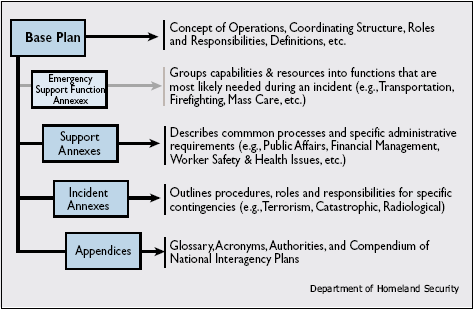
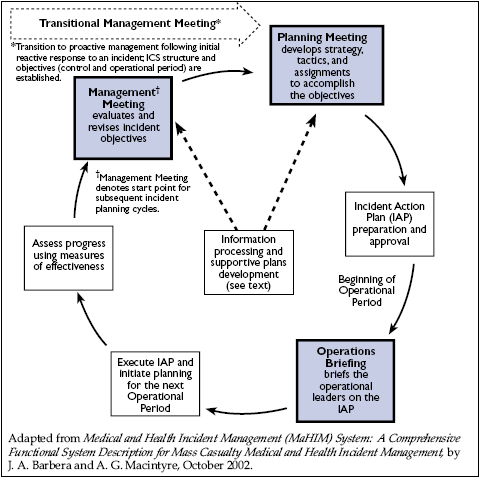
The structure of the EOP in emergency management is becoming more standardized, and HCOs should consider conforming to this structured approach. Figure 2-1 provides a synopsis of the EOP structure demonstrated in the National Response Plan (NRP)[40] and the example below provides an EOP structure and format specifically for HCOs.

Figure 2-1. Organization of the National Response Plan Figure 2-1 shows the organization of the Emergency Operations Plan from Healthcare Organizations as depicted in the national response plan from the Department of Homeland Security.

The material developed for the EOP should be formatted for ease of use during response and recovery yet must remain comprehensive. This EOP format is consistent with the common format of other disciplines and is consistent with the NRP format[41]:

It is important to recognize that many private physician offices, neighborhood clinics, and other "smaller" Tier 1 assets do not have the management infrastructure or personnel necessary to establish complex processes for incident preparedness and response. However, these entities may find themselves, during a major incident, compelled to participate in the community response beyond simply referring patients to a hospital or closing down their clinical operations. This is because:

  • Victims often seek medical care in settings they are familiar with, such as a personal physician's office

  • When medical surge demands severely challenge hospitals, patients may seek care at alternative facilities

  • Some victims' treatment requirements, or persons with medical special needs, may be adequately managed in these smaller settings

  • Certain events, such as a biological agent release, may be prolonged in duration and generate patients that can be safely evaluated in these settings, thus relieving some of the burden on larger HCOs.

The approach to emergency preparedness and response for these Tier 1 assets can be relatively simple. They may elect to integrate with each other and with the community response in one of two ways:

  • Associate with a larger Tier 1 organization (e.g., hospital, integrated healthcare system, large outpatient facility) where they have privileges, or with a local professional medical society. The organizing body must have the ability to manage ongoing EMP activities and, during response, to perform incident management processes, such as incident action planning and disseminating information to its participants.

  • Participate in at least the information processing function of the ICS. For this to occur, the smaller Tier 1 asset must know where to obtain authoritative information and where to report information. The exchange of incident-related information should include the following:

    • Where to obtain information on personal protection and other incident-specific safety measures for practitioners, their staff, and patients.

    • Where to obtain reliable incident information that allows anticipation of medical needs, such as unusual patient treatment requirements.

    • Where to obtain guidance on the specific medical evaluation of incident cases, such as the availability of confirmatory lab tests and the test limitations.

    • Where to obtain pertinent information on populations at risk (e.g., for a biological event, understanding the community- wide approach to risk stratification for potentially exposed patients).

    • Where to obtain information on whether public health emergency powers have been invoked, allowing release of private patient information, and other deviations from standard medical practice.

    • Where to send reports and what information to transmit on patients who have been evaluated and/or treated at the practitioner's location. This helps jurisdictional authorities (Tier 3) determine the size and scope of the event and monitor incident parameters.

2.4 Integration With Other Tiers

The comprehensive EMP should establish processes that enable the HCO to coordinate and integrate with other response entities. This helps the HCO adequately provide MSCC and becomes critically important when an asset is severely challenged and must seek external assistance.

Why is it important for individual health and medical assets to have an effective interface with other tiers?

Consider the scenario of a bombing incident with large numbers of casualties. Patients may self-refer or be transported by official jurisdictional assets to multiple treatment locations. This occurred after the Pentagon attack on 9/11, as patients were transported to hospitals around the region and others self-referred to hospitals and at least two clinics (one of which was in the Pentagon). Having individual HCOs effectively integrated with other tiers will facilitate:

  • Patient tracking: location of individual patients within a community's medical system.

  • Tracking the status of healthcare assets to determine:

    • HCOs that received large numbers of casualties that require outside support and diversion of additional patients

    • Individual assets that may be available to assist other HCOs

    • HCOs that can accept additional patients.

  • Notification of response actions that could affect an individual asset's operations, such as street closures that limit a facility's ability to get personnel to work.

The two major functional areas that facilitate cooperation among HCOs and integration of individual HCOs with non-medical responders at the jurisdiction (Tier 3) level are the Command element and Planning Section.


33. EMS is not usually included in this category and is not a facility per se. In a major emergency or disaster, however, EMS may provide definitive medical care in the field and should be integrated into Tier 1. 34. In contrast, the traditional Incident Command System (ICS) model assumes that incident management is no longer responsible for patients once EMS transports patients to HCOs. 35. In this document, an HCO is any hospital, integrated healthcare system, private physician office, clinic, nursing home or other skilled nursing facility, or other resource that may provide point-of-service medical care. 36. Many other descriptions exist for individual HCO management, including the Hospital Incident Command System (HICS), State of California, Emergency Medical Services Authority, and Emergency Management Principles and Practices for Healthcare Systems, The Institute for Crisis, Disaster, and Risk Management (ICDRM) at the George Washington University; for the Veterans Health Administration (VHA)/U.S. Department of Veterans Affairs (VA), Washington, D.C., June 2006. 37. For a detailed discussion of the HVA for healthcare systems, see Emergency Management Principles and Practices for Healthcare Systems: Unit 1, Lessons 1.3.3 and 1.3.2. 38. J. A. Barbera and A. G. Macintyre. Jane's Mass Casualty Handbook: Hospital. Surrey, UK: Jane's Information Group, Ltd., 2003. 39. "Control objectives" is the NIMS term for overall incident response goals and are not limited to any single operational period (thus distinguishing them from operational period objectives). 40. U.S. Department of Homeland Security, National Response Plan, August 2004 41. Emergency Management Principles and Practices for Healthcare Systems: Unit 1. 42. A more detailed description of incident action plans, including an example of a hospital IAP, is provided in Appendix C.

<< Back Next >>

Chapter 1: Overview of MSCC, Emergency Management and the Incident Command System

Chapter 1: Overview of MSCC, Emergency Management and the Incident Command System

Medical Surge Capacity and Capabilities (MSCC) Handbook


Key Points of the Chapter 

Mass casualty and/or mass effect[12] incidents create demands that often challenge or exceed the medical infrastructure of an affected community. A mass effect incident may be defined as a hazard impact that primarily affects the ability of the organization to continue its usual operations (in contrast to a mass casualty incident). For healthcare systems, the usual medical care capability and capacity can be compromised and the ability to surge prevented. The ability to provide adequate medical care under such circumstances is known as medical surge. There are two components of medical surge: (1) surge capacity is the ability to respond to a markedly increased number of patients; (2) surge capability is the ability to address unusual or very specialized medical needs. Strategies to enhance medical surge capacity and capability (MSCC) require a systems-based approach that is rooted in interdisciplinary coordination and based at the local level.

The MSCC Management System describes a framework of coordination across six tiers of response, building from the individual healthcare organization (HCO) and its integration into a local healthcare coalition, to the integration of Federal public health and medical support. The most critical tier is jurisdiction incident management (Tier 3) since it is the primary site of integration for public health and medical assets with other response disciplines. Each tier must be effectively managed internally in order to integrate externally with other tiers.

Emergency management and Incident Command System (ICS) concepts form the basis of the MSCC Management System. Within ICS, response assets are organized into five functional areas: Command establishes the incident goals and objectives (and in so doing defines the incident); Operations Section develops the specific tactics and executes activities to accomplish the goals and objectives; and the Planning, Logistics, and Administration/Finance Sections support Command and Operations. The Planning Section is particularly critical because it manages complex information across tiers and facilitates information exchange among responders to promote consistency within the overall system.

Because multiple agencies may have leadership responsibilities in a mass casualty and/or mass effect incident, a unified command approach is essential. Unified command enables disparate entities (both public and private) to collaborate and actively participate in the development of incident goals, objectives, and an overarching response strategy. Participation by public health and medical disciplines in unified command is important since these disciplines have a primary responsibility for ensuring the welfare of responders and the general public. Where unified command is not implemented due to sovereignty issues (e.g., across State borders or between private facilities), effective mechanisms for management coordination should be established. 
 

 1.1 What is Medical Surge 
 

The concept of medical surge forms the cornerstone of preparedness planning efforts for major medical incidents. It is important, therefore, to define this term before analyzing solutions for the overall needs of mass casualty or mass effect incidents.

Medical surge describes the ability to provide adequate[13] medical evaluation and care during events that exceed the limits of the normal medical infrastructure of an affected community. It encompasses the ability of HCOs to survive a hazard impact and maintain or rapidly recover operations that were compromised (a concept known as medical system resiliency).

Beyond this rather simple explanation, medical surge is an extraordinarily complex topic that is difficult to comprehensively describe. The first step in doing so, however, is to distinguish surge capacity from surge capability. 
 

Medical surge capacity refers to the ability to evaluate and care for a markedly increased volume of patients–one that challenges or exceeds normal operating capacity. The surge requirements may extend beyond direct patient care to include such tasks as extensive laboratory studies or epidemiological investigations.

Because of its relation to patient volume, most current initiatives to address surge capacity focus on identifying adequate numbers of hospital beds, personnel, pharmaceuticals, supplies, and equipment. The problem with this approach is that the necessary standby quantity of each critical asset depends on the systems and processes that:

  • Identify the medical need

  • Identify the resources to address the need in a timely manner

  • Move the resources expeditiously to locations of patient need (as applicable)

  • Manage and support the resources to their absolute maximum capacity.

In other words, fewer standby resources are necessary if systems are in place to maximize the abilities of existing operational resources. Moreover, the integration of additional resources (whether standby, mutual aid, State or Federal aid) is difficult without adequate management systems. Thus, medical surge capacity is primarily about the systems and processes that influence specific asset quantity.

Basic example: If a hospital wishes to have the capacity to medically manage 10 additional patients on respirators, it could buy, store, and maintain 10 respirators. This would provide an important component of that capacity (other critical care equipment and staff would also be needed), but it would also be very expensive for the facility. If the hospital establishes a mutual aid and/or cooperative agreement with regional hospitals, it might be able to rely on neighboring hospitals to loan respirators and credentialed staff and, therefore, might need to invest in only a few standby items (e.g., extra critical care beds), minimizing purchase and maintenance of expensive equipment that generate no income except during rare emergency situations.

When addressing an overall medical surge strategy, it is recommended that guidance be delineated prospectively for maximizing the use of existing resources before resorting to the use of alternate care facilities and standards of care appropriate to the austere conditions of a disaster.[14]


Medical surge capability refers to the ability to manage patients requiring unusual or very specialized medical evaluation and care. Surge requirements span the range of specialized medical services (expertise, information, procedures, equipment, or personnel) that are not normally available at the location where they are needed (e.g., pediatric care provided at non-pediatric facilities). Surge capability also includes patient problems that require special intervention to protect medical providers, other patients, and the integrity of the HCO.

Basic example: Many hospitals encountered difficulties with the arrival of patients with symptoms of severe acute respiratory syndrome (SARS). The challenge was not presented by a high volume of patients, but rather by the specialty requirements of caring for a few patients with a highly contagious illness that demonstrated particular transmissibility in the healthcare setting. Protection of staff and other patients was a high priority, as was screening incoming patients and staff for illness, preventing undue concerns among staff, and avoiding publicity that could adversely affect the hospital's business. Coordination with public health, emergency management, and other response assets was critical.

Effective strategies for MSCC require a systematic approach to meet patient needs that challenge or exceed normal operational abilities, while preserving quality of care and the integrity of the healthcare system. The MSCC Management System demonstrates management processes that allow HCOs to coordinate existing resources and then obtain "outside" assistance in a timely and efficient manner. In this way, HCOs can transition from baseline operations to incident surge capacity and capability–to meet the response needs of catastrophic events–and then back to baseline.

Figure 1-1. Management System for Reaching MSCC ObjectivesFigure 1-1 shows the management system for reaching MSCC objectives.

Any strategy to enhance MSCC must recognize that the required emergency interventions are time sensitive and must be based primarily at the local level. This urgency limits the ability of the Federal Government to independently establish, stockpile, or own/control resources necessary for immediate MSCC. In addition, because most medical assets in the United States are privately owned, MSCC strategies must bridge the public-private divide, as well as integrate multiple disciplines and levels of government.

A comprehensive effort to address response requirements must include a system description (i.e., how the different response components are organized and managed) and a concept of operations (i.e., how the system components function and interact through successive stages of an event). It must include "all-hazard" processes and procedures, mutual aid, and other validated emergency management concepts. The remainder of this chapter presents key considerations for the system design and the concept of operations to maximize integration between response components and, thus, enhance MSCC. 
 

1.2 The MSCC Management System 
 

The MSCC Management System describes a system of interdisciplinary coordination that emphasizes responsibility rather than authority. In other words, each public health and medical asset is responsible for managing its own operations, as well as integrating with other response entities in a tiered framework. This allows response assets to coordinate in a defined manner that is more effective than the individual, ad hoc relationships that otherwise occur during a major emergency or disaster.

The six-tier construct (Figure 1-2) depicts the various levels of public health and medical asset management during response to mass casualty and/or mass effect incidents. The tiers range from the individual HCO or other healthcare assets and their integration into a local healthcare coalition, to the coordination of Federal assistance. Each tier must be effectively managed internally in order to coordinate and integrate externally with other tiers.

Figure 1-2. MSCC Management Organization Strategy

Diagram showing a six-tier emergency response structure from local healthcare assets to federal support. At the bottom (Tier 1) is

Tier 1 includes hospitals, integrated healthcare systems, private physician offices, outpatient clinics, nursing homes and other skilled nursing facilities, and other resources where "point of service" medical care is provided. Emergency Medical Services (EMS) may be included in Tier 1 if called on to provide field-based medical care in an emergency. The goal of Tier 1 is to maximize MSCC within each healthcare asset while ensuring the safety of personnel and other patients, and the integrity of the asset's usual operations. This is best accomplished by optimizing an entity's Emergency Operations Plan (EOP) to effectively manage internal resources and to integrate with external response assets. The MSCC Management System describes key considerations for internal preparedness planning, while focusing primarily on the processes within the EOP that facilitate external integration with the larger response community.


The healthcare coalition organizes individual healthcare assets into a single functional unit. Its goal is to maximize MSCC across the coalition through cooperative planning, information sharing, and management coordination. The coalition ensures that public health and medical assets have the information and data they need at a level of detail that will enable them to optimally provide MSCC. In addition to hospitals, the coalition may include long-term care or alternative treatment facilities, dialysis and other outpatient treatment centers, nursing homes and other skilled nursing facilities, private physician offices, clinics, community health centers and any other healthcare asset that may be brought to bear during major medical response. Its reach may extend beyond the geographic area of the primary responding jurisdiction (Tier 3), especially in rural settings where healthcare assets may be scattered. 
 

Tier 2 strengthens MSCC by creating the ability to move medical resources (e.g., personnel, facilities, equipment, supplies) to sites of greatest need.[15] This is accomplished through mutual aid and cooperative agreements[16] between HCOs. It also provides a platform for unified interface with the jurisdiction's incident management (Tier 3). To be effective, the coalition must establish a planning process that is equal and fair to all participants, giving each the opportunity for input during preparedness planning, response, and recovery. 
 

Tier 3 directly integrates HCOs with other response disciplines (e.g., public safety, emergency management) to maximize jurisdictional MSCC. It is the most critical tier for integrating the full range of disciplines that may be needed in a mass casualty and/or mass effect incident. The focus of Tier 3 is to describe how to effectively coordinate and manage diverse disciplines in support of medical system resiliency and medical surge demands. This requires healthcare assets to be recognized as integral members of the responder community and to participate in management, operations, and support activities. In other words, public health and medical disciplines must move from a traditional support role based on an Emergency Support Function (ESF) to part of a unified incident command system. This is especially important during events that are primarily public health and medical in nature, such as infectious disease outbreaks. 
 

To address MSCC, Tier 4 describes how State-level actions can support jurisdiction incident management (Tier 3), promote coordination among multiple affected jurisdictions, or assume a primary incident command role. The State management function also serves as the primary interface for requesting Federal assistance. During preparedness planning, State agencies may facilitate arrangements between jurisdictions to coordinate response assets. The use of strategic mutual aid and/or cooperative agreements may standardize the implementation of tactical mutual aid between jurisdictions and promote a cohesive response strategy during a widespread incident. 
 

Tier 5 describes how to maximize interstate coordination to support MSCC. In the past, interstate coordination generally depended on ad hoc arrangements, goodwill at the time of an incident, and other less-than-predictable mechanisms. However, this changed when Congress enacted the Emergency Management Assistance Compact in 1996 (Public Law 104-321). EMAC, as it is commonly known, has now been accepted by all States and U.S. territories, and provides legal authority, financial mechanisms, and operational guidance to establish the ability to request and receive emergency assistance from other States or territories. This tier focuses on how to manage interstate medical and public health assistance and examines how mutual aid, incident management coordination, and information sharing can enhance MSCC. 
 

The Federal Government maintains public health and medical resources to support State, Tribal, and jurisdictional authorities during a mass casualty and/or mass effect incident. The goal of Tier 6 is to maximize MSCC through the optimal integration and management of Federal public health and medical assets. Activation of Federal public health and medical assistance may occur through implementation of the Robert T. Stafford Disaster Relief and Emergency Assistance Act (424 USC 5121, et seq.) or through independent authority of the Department of Health and Human Services (HHS) to declare a Federal public health emergency or disaster.[17] The National Response Plan (NRP) and National Incident Management System (NIMS) provide operational guidance for Federal action. Tier 6 focuses on key functional concepts that promote integration of the Federal response. 
 

1.3 Emergency Management and the Incident Command System

Emergency management and Incident Command System (ICS) concepts serve as the basis for the MSCC Management System.[18] However, unlike traditional descriptions of emergency management and ICS, which organize assets around a defined scene, the MSCC Management System has adapted the concepts to be more applicable to large-scale medical and public health response where there is no defined scene, or where multiple incident scenes may exist (e.g., infectious disease outbreak). Public health and medical professionals must understand the utility of emergency management and ICS concepts as they relate to public health and medical disciplines.[19]

The following pages examine key distinctions between emergency management and ICS and the roles that each is designed to fulfill during a major medical incident. 
 

Emergency management describes the science of managing complex systems and multidisciplinary personnel to address extreme events, across all hazards, and through the phases of mitigation, preparedness, response, and recovery. Hospital staff and other healthcare personnel might equate emergency management activities to a hospital's Disaster Committee (hence the recommended name change to Emergency Management Committee). The sum of all emergency management activities conducted by a response organization may be collectively referred to as an Emergency Management Program (EMP) for that entity. The term program is used because it denotes activity that is continuously ongoing, whereas a plan is often considered a series of actions that occur only in response to defined circumstances.

The activities of the EMP address the phases of mitigation, preparedness, response, and recovery. They are based on a hazard vulnerability analysis (HVA), which if properly accomplished, will identify potential hazards, assess their likelihood of occurrence, their potential impact and the organization's vulnerabilities to the impact, and provide a basis for understanding how the hazard likelihood and organizational vulnerabilities can be addressed. Each EMP phase is briefly described below. 
 

  • Mitigation encompasses all activities that reduce or eliminate the probability of a hazard occurrence, or eliminate or reduce the impact from the hazard if it should occur. In Comprehensive Emergency Management, mitigation activities are undertaken during the time period prior to an imminent or actual hazard impact. Once an imminent or actual hazard impact is recognized, subsequent actions are considered response actions and are not called "mitigation." This avoids the confusion that occurs with the HAZMAT discipline's use of mitigation, which applies to response actions that reduce the impact of a hazardous materials spill. Mitigation is the cornerstone of emergency management because any response strategy relies on medical assets surviving a hazard and maintaining operations in the post-impact environment (i.e., medical system resiliency). An effective mitigation effort should begin with, and be based on, a valid HVA as this will help an organization prioritize issues during follow-on mitigation and preparedness planning.

  • Preparedness encompasses actions designed to build organizational resiliency and/or organizational capacity and capabilities for response to and recovery from hazard impacts. It includes activities that establish, exercise, refine, and maintain systems used for emergency response and recovery. The critical task in preparedness planning is to define the system (how assets are organized) and processes (actions and interactions that must occur) that will guide emergency response and recovery. This is accomplished through the development of an effective EOP (see below for suggested EOP formats). Staff should be educated and trained on the system so they gain the knowledge and skills necessary to adequately perform their assigned roles. 

    • It is important to note that the procedures and systems used to conduct preparedness activities (committee structure and meetings, memo writing, regular email notification of meetings, etc.) are typically not adequate for use during emergency response. This point is often missed by organizations as they attempt to utilize emergency preparedness committees and their associated structures and processes to manage response to an event. The EOP defines effective process and procedures for the context of emergency response (emergency notification procedures, establishing an incident management team, processing of incident information, etc.). It is recommended that, to the extent possible, emergency response process and procedures be used to conduct preparedness activities.[20]

  • Response activities directly address the hazard impact, including actions taken in anticipation of an impending event (e.g., hurricane, tornado) and actions during and after an impact has occurred. Specific guidance for incident response, including processes for asset deployment, is addressed in an EOP. An effective EOP not only guides the initial (reactive) response actions but also promotes transition to subsequent (proactive) incident management.

  • Recovery activities restore the community to "normal" after a major incident. The initial recovery stage (which actually begins in the late stages of response) is integrated with response mechanisms, and the EOP incident management process should be extended into recovery. The management transition from response to recovery (both timing and methods) must be carefully planned and implemented to avoid problems. As recovery progresses, recovery management transitions to regular agency management processes or some intermediate method defined by the responsible organizations. 


The ICS provides guidance for how to organize assets to respond to an incident (system description) and processes to manage the response through its successive stages (concept of operations). All response assets are organized into five functional[21] areas: Command, Operations, Planning, Logistics, and Administration/Finance. Figure 1-3 highlights the five functional areas of ICS and their primary responsibilities. 
 

Figure 1-3. Incident Command System

Organizational chart of the Incident Command System (ICS) structure. At the top is a

The ICS, as described in NIMS, refers to the combination of facilities, equipment, personnel, procedures, and communications operating within a common organizational structure and designed to aid in the management of resources during incident response. The ICS is based on eight concepts that contribute to the successful application of this system.

Exhibit 1-3. Incident Command System Core Concepts

  • Common terminology - use of similar terms and definitions for resource descriptions, organizational functions, and incident facilities across disciplines.

  • Integrated communications - ability to send and receive information within an organization, as well as externally to other disciplines.

  • Modular organization - response resources are organized according to their responsibilities. Assets within each functional unit may be expanded or contracted based on the requirements of the event.

  • Unified command structure - multiple disciplines work through their designated managers to establish common objectives and strategies to prevent conflict or duplication of effort.

  • Manageable span of control - response organization is structured so that each supervisory level oversees an appropriate number of assets (varies based on size and complexity of the event) so it can maintain effective supervision.

  • Consolidated action plans - a single, formal documentation of incident goals, objectives, and strategies defined by unified incident command.

  • Comprehensive resource management - systems in place to describe, maintain, identify, request, and track resources.

  • Pre-designated incident facilities - assignment of locations where expected critical incident-related functions will occur. 

For ICS to be effective, the incident must be formally defined so that there is clarity and consistency as to what is being managed. This may be best accomplished by defining the incident response through delineation of response goals and objectives, and by explaining response parameters through an Incident Action Plan (IAP)–the primary documentation that is produced by the incident action planning process.[22]

Early in the response to the Pentagon on 9/11, incident command (headed by the Arlington County, VA, Fire Department) defined the incident as managing the fire suppression, building collapse, and the search and rescue activities at the Pentagon. It did not include objectives for managing the disruption of traffic or other countywide ramifications of the plane crash. Arlington County emergency management officials, therefore, quickly knew they had to manage these other problems through their Emergency Operations Center (EOC), which was geographically separate from, but closely coordinated with, incident command at the Pentagon.

The utility of ICS becomes evident when analyzing the demands encountered during an incident response. 
 

Figure 1-4. Types of Demands Encountered in Incident Response

Figure 1-4 shows the two sets of simultaneous demands that are encountered during an incident response:

When an incident generates demands on the response system, the issues addressed first are usually demands created by the hazard itself–hazard-generated demands. For example, in a highly contagious disease outbreak, hazard-generated demands include the need to evaluate and treat victims, while controlling the spread of the disease. Simultaneously, the response system itself creates response-generated demands. In the same example, these demands include the need to coordinate disparate resources, to process widely dispersed data into accurate epidemiological information, to coordinate the public message, and to protect healthcare workers. Too often, the response community focuses on the hazard demands and neglects response demands until the latter create a significant impediment to overall response effectiveness. With well-developed ICS and emergency management support, the incident response proactively addresses both types of demands and, in fact, reduces many response-generated demands to routine status. 
 

 1.4 The Incident Command Process

The incident command process describes an ordered sequence of actions that accomplishes the following: 

  • Activates the system and defines the incident response structure

  • Establishes incident goals (where the system wants to be at the end of response; these are referred to as "control objectives"[23] in NIMS) to any single operational period (thus distinguishing them from operational period objectives). 

  • Defines incident operational period objectives (measurable steps that contribute to reaching the goal) and strategies to meet the defined objectives 

  • Adequately disseminates information, including the following, to achieve coordination throughout ICS: 

    • Response goals, objectives, and strategies 

    • Situation status reports 

    • Resource status updates 

    • Safety issues for responders

    • Communication methods for responders

    • Assignments with individual assignment objectives and operating parameters

  • Evaluates strategies and tactics for effectiveness in achieving objectives and monitors ongoing circumstances 

  • Revises the objectives, strategies, and tactics as dictated by incident circumstances. 

Actions during the initial phases of incident response should be guided by checklist procedures established in the EOP. For any response of more than a few hours, management should transition to a method of proactive response by establishing incident-wide objectives. These overarching "control objectives" are further qualified by establishing measurable and attainable objectives for each operational period, and by defined strategies and tactics. All are documented in an IAP. Because event parameters and the status of the components of an asset will change, incident objectives will have to change as the response evolves.

This flux in incident and response conditions is best managed using a deliberate planning process that is based on regular, cyclical reevaluation of the incident objectives. Commonly known in ICS as the planning cycle (see Figure 1-5), this iterative process enhances the integration of public health and medical assets with other response agencies that operate planning cycles.

Figure 1-5. Basic Presentation of a Planning Cycle.[24]

Figure 1-5 shows the basic presentation of a planning cycle.

The timing of the development of incident action plans should be coordinated among disciplines so that updated information may be shared before strategies and objectives are established. As shown in Figure 1-5, the key steps in the planning cycle are: 

  • Transitional management meeting: This marks the transition from reactive to proactive incident management. The transitional meeting brings together the leadership of key response disciplines, defines the primary incident management team, and allows managers to be briefed on the known incident parameters. If the lead incident commander determines that formal incident planning is warranted, the command staff set initial incident goals (i.e., control objectives) and operational period objectives and the planning cycle process moves forward. 

  • Planning meeting: Using the objectives set during the transitional (or a subsequent) management meeting, the incident management team, with leaders of key functional areas, sets strategies, general tactics, and major assignments. These are documented by the Planning Section and become a central component of the IAP. For public health and medical disciplines, documentation of an IAP has rarely been undertaken as an essential action during response, and yet it is one of the most effective means for coordinating between multiple locations, resources, and levels of government (see appendix C for an example of an IAP). The addition of supportive plans[25] completes the IAP for the upcoming operational period. 

  • Operational briefing: All components of the response system are briefed on the operational period objectives, strategies, tactics, and assignments. The purpose of the operational briefing is to impart information and to raise emergent issues, not to discuss alternative plans, debate choices made in the planning process, or undertake extensive problem solving. In traditional descriptions of ICS, the operational briefing occurs in person, but it may also occur telephonically or through electronic communications. A defined briefing process imposes discipline for the operational briefings so that time constraints are met, distractions are limited, and questions are kept to a minimum.

  • Management meeting: This marks the onset of the next planning cycle. The incident command staff reevaluates the control objectives and progress made in meeting the operational period objectives, based on information collected throughout the operational period. Objectives are revised and new ones are established as appropriate. 

The following critical points should be made about the planning cycle: 

  • Tiers, and assets within tiers, should attempt to coordinate their planning cycles with that of the primary incident command. This allows information exchange between assets and tiers to promote consistency in the development of incident objectives and strategies.

  • A planning cycle is timed so the operational briefing occurs just before the beginning of work that is guided by the recently completed IAP. This work interval is usually referred to as an operational period. It is beneficial, therefore, for assets directly managed by the IAP to establish common operational periods. 

  • Throughout the action planning process, the Planning Section plays a critical role by stewarding the planning activities and processing data into information that is relevant to incident decision-making. 
     

During an emergency, the normal administrative structure for an organization must continue to operate while actions are carried out under the EOP to address the incident. Issues not related to the incident are best managed, to the extent possible, by the usual, day-to-day administrative system. In a sense, the ICS structure works within and for the organization's usual administrative system. This concept may be obvious to some disciplines such as Fire Fighting (the entire Fire Department is not replaced by the ICS structure during response) but may not be as intuitive in the example of smaller organizations such as some healthcare facilities.

For this reason, it is generally NOT advisable for the Chief Executive Officer (CEO) or other senior executive to automatically assume the position of the Incident Commander (IC) for an organization. Instead, this individual may be better situated to serve in the role ICS denotes as "Agency Executive."[26]. This individual maintains overall authority and responsibility for the organization, including the activated incident management team. The executive is involved in the incident by providing policy and strategic direction to the IC, as well as allocating the authority to the IC to manage the incident. The Agency Executive must have access to the IC and may be included in the incident planning meetings.

This concept of an Agency Executive is important for organizations to understand as they seek to develop an effective EOP and interface with other organizations. Even though the ICS for the organization may be clearly delineated, the role of the Agency Executive is not always well addressed. 
 

Multiple organizations may have leadership responsibilities during a mass casualty and/or mass effect event. ICS has a designated model, Unified Command (UC), which allows multiple stakeholders to actively participate in incident management. When this occurs, the resulting UC team promotes cohesive action within the response system, and provides a uniform interface for integration with other tiers. This concept is critically relevant for participation by public health and medical disciplines since they bear a primary responsibility for the well-being of responders and the general population during emergencies or disasters. The UC model provides a mechanism for direct input from public health and medical practitioners at the decision-making level. 

UC brings together incident managers of all major organizations involved in the incident to coordinate an effective response, while allowing each manager to carry out his/her own jurisdictional or discipline responsibilities. UC links response organizations at the leadership level, thus providing a forum for these entities to make joint decisions. Under UC, various jurisdictions and/or agencies and non-government responders may work together throughout the incident to create and maintain an integrated response system. UC may be established to overcome divisions from: 

  • Geographic boundaries

  • Government levels 

  • Functional and/or statutory responsibilities 

  • Some combination of the above. 

(Adapted from: U.S. Coast Guard Incident Management Handbook, U.S. Coast Guard COMDTPUB P3120.17, April 2001) 

Unified, proactive incident command is accomplished through joint decision-making that establishes common incident objectives (i.e., management by objectives). During an incident, clearly delineated goals and objectives are agreed on and formally documented to form the basis of the IAP. To accomplish this strategic guidance throughout an incident, UC must entail:

  • A single integrated management structure for the emergency response

  • Shared or co-located management facilities 

  • A single planning process and IAP (single set of goals and objectives) 

  • A coordinated process for requesting and managing resources. 


As previously described, Command and Operations are primarily supported by three internal (within ICS) Sections: Logistics, Planning, and Administration/Finance. However, in large-scale or complex events, incident command may require additional support from entities outside the responsibility/authority of ICS. This commonly occurs through an emergency management operations function–known in NIMS as a Multiagency Coordination System (MACS)–that is usually based in an Emergency Operations Center (EOC).[27]. For Tier 3, it is usually supervised by the jurisdiction's emergency manager. 
 

Figure 1-6. Relationship of UC and the MACS that provide emergency management operations support to the UC.

Figure 1-6 shows the basic presentation of a planning cycle.

Multiagency Coordination Systems provide the architecture to support coordination for incident prioritization, critical resource allocation, communications systems integration, and information coordination.[28] The coordination center (EOC and others, see figure 1-7) is referred to in NIMS as the Multiagency Coordination Center (MACC) component of the MACS. It provides support and coordination to the Incident Command, facilitates logistical support, and develops and provides information. The component of the MACS that provides strategic decision-making and policy direction (senior policy groups and others) is referred to as the Multiagency Coordination Group (MAC Group).[29] The MACC implements the MAC Group decisions.[30]

Figure 1-7. Common types of Multiagency Coordination Groups and Centers[31]

Figure 1-7 shows the common types of multiagency coordination groups and centers.

During response, the MACS: 

  • Directly supports the UC by providing resources that are not available through incident-specific ICS capabilities. This includes coordinating assistance from outside resources (Federal, State, and other jurisdictions) that cannot be obtained through tactical mutual aid. 

  • Directly manages emergency issues related to the incident, but that are outside the scope of the incident as defined by the UC. This may be determined geographically (outside a scene perimeter) or functionally (beyond the scope of the UC control objectives when no single scene exists or when the impact is diffuse). An example is provided below. 

  • Provides integration between community political leaders and the incident managers. 

Example: In the event of a widespread outbreak of SARS in a jurisdiction, the UC (with lead participation by public health and the acute-care medical community) would establish protocols to guide the medical evaluation and treatment of confirmed and suspected cases, and to address surge capacity needs. In addition, the UC would be responsible for limiting the spread of the disease (as defined by their IAP). 

Addressing the needs of travelers stranded when mass transit is disrupted, addressing requests to minimize the effect of school or business closures, and other significant issues may be considered to be functionally outside the scope of the incident response system. The jurisdiction's EOC would manage these issues using its emergency management team and Emergency Support Functions (ESFs), or other task groups. 

Because of its complex role, the EOC's organization and management processes must be well defined. The MACS functions should be physically separate from incident management activities, even if they are co-located in the same facility. This critical concept, which is not widely addressed by many medical and public health managers, ensures that the roles and responsibilities of each remain distinct. 
 

1.5 Concept of Operations

The management process delineated in the MSCC Management System is best presented in relation to the various stages of incident response.

Figure 1-8. Stages of Incident Response

Figure 1-8 shows the different stages of incident response: incident recognition, notification/activation, mobilization, incident operations, demobilization, and transition to recovery.

These stages provide the context in which to describe the critical actions that must occur at different times during incident response.

Incident recognition is the point in time when a response agency becomes aware that a significant event (i.e., one requiring emergency response beyond baseline operational capability) is imminent or occurring. This is not always obvious, particularly with the onset of an infectious agent or chemical toxin. For example, one or two patients presenting to scattered HCOs with progressive paralysis indicating botulism may not be immediately recognized as a major public health problem until they are linked to a single toxin source. Because of this potential ambiguity, the process used to move from an early suspicion to recognizing that incident response is indicated should be carefully considered. Early convening of the jurisdiction's (Tier 3) UC, for example, may provide the necessary understanding of any public health impact associated with an event, and it may clarify whether an event needs to be formally declared an emergency. 
 

Notification/activation refers to the activities required to inform appropriate assets within the response system about an incident onset or an important change in incident parameters. "Notification" conveys critical details (if available) and an indication as to whether the notified asset should undertake response actions. Full activation of every response component under UC is often not necessary and, therefore, the activation request in each asset's notification message may vary depending on the type of event. 

Many notification/activation categories and schemes have been promulgated. Those selected for use should be consistent within tiers and easily understood across other tiers. To further prevent confusion, the categories should be clearly defined on each communication. The Federal Urban Search and Rescue System (and other Federal agencies) have used one notification/activation categorization for over a decade because of its clarity and simplicity.

Federal Urban Search and Rescue Notification/Activation Categories:

  • Advisory: Provides urgent information about an unusual occurrence or threat of occurrence, but no significant action is recommended, requested, or required.

  • Alert: Provides notification of an unusual occurrence where a response is anticipated or indicated. It provides guidance on the degree of action to take at the time of the alert. In some systems, an alert from a designated agency also authorizes the expenditure of a specific funding amount to address the costs of the requested pre-mobilization actions.

  • Activation: May be either partial or full:

    • Partial: Specific components or assets within a unit are activated (all other components should receive notification regardless of their activation status).

    • Full: All resources commence response according to procedures described in the asset's EOP.

Other information is conveyed through "updates" during the course of the incident response.

Sources: Adapted from FEMA Urban Search and Rescue System; J. A. Barbera and A. G. Macintyre. Jane's Mass Casualty Handbook: Hospital; Jane's Information Group, Ltd., Surrey, UK, 2003.

The notification process should include a "confirmation of receipt" reply from the intended recipient. This reply should also contain a brief status report from the notified asset (using a standard format developed during preparedness planning) to allow immediate assessment of the response asset's capabilities.

Mobilization marks the transition from baseline operations to the response level designated in the notification. It may be triggered by a hazard that has already occurred, or it may result from a credible threat or an impending hazard (such as an approaching hurricane). Designating the response level enables an organization to execute specific actions delineated in its EOP for that level, such as providing contact information to ensure that the asset can integrate with other mobilizing response entities. For the mobilization process to function efficiently, each step must be clearly defined during preparedness planning and staff must learn the steps through training.

Incident operations encompasses efforts that directly address the hazard impact. Two critical actions that should occur early during operations are:

  • Establishment of incident management authority: For certain types of incidents, the lead management authority and how incident management will be conducted are relatively straightforward (e.g., local fire service usually manages an explosion at a shopping mall). Management authority is more ambiguous in events that extend across jurisdictional boundaries or authorities (e.g., bombing at a Federal facility) or when the impact is diffuse (e.g., disease outbreak in multiple State jurisdictions). For most major incidents, tradition (and successful previous experience) dictates that jurisdictional authorities are responsible for incident management. For a diffuse impact scenario, State public health authorities (in a UC model similar to "area command" described in NIMS) might assume the lead role in UC and coordinate the incident response across the affected jurisdictions. 

  • Establishment of Incident Command Post: The site where the primary incident management team will function must be rapidly established and publicized across the response system. During any sudden onset or large-scale incident, several initial management sites are often established and operated by multiple disciplines from a range of MSCC tiers. The terminology used to designate them may not reflect their actual roles. Thus, identifying and publicizing the primary management site and how it integrates the other sites is a critical task in organizing incident-wide, proactive management. 

When incident response involves multiple disciplines and levels of government, it becomes operationally important to synchronize, as much as possible, the planning activities of participants so that response actions can be coordinated (Figure 1-9). This promotes consistency across tiers in defining the incident objectives and follow-on tactics. It also ensures consistency in the development of public messages. 

As Figure 1-9 shows, the planning cycles and operational periods for the jurisdiction (Tier 3) and State (Tier 4) are concurrent; those for the Federal response (Tier 6) are slightly staggered. This allows for information exchange during planning activities. The agency representative meeting enables the evolving IAP to be reviewed in time to identify conflicts before briefing the operational units. This meeting can be conducted face-to-face or via teleconference. A formal media briefing to release incident details could occur after the agency representative meeting to ensure that responders are informed first and to promote a consistent message. 
 

Figure 1-9. Coordination of Planning Activities

Figure 1-9 shows the coordination of planning activities between the state and jurisdiction and that of the federal government.

Demobilization refers to activities that focus on disengaging response resources as the incident objectives are met, transitioning remaining incident responsibilities to ongoing assets, and promoting rapid return of demobilized response resources to their normal function. There are several important considerations:

  • Demobilization across assets: The timing of resource demobilization is a complex and difficult decision, with potentially competing priorities between incident managers and managers of individual assets. The managers of individual assets and agencies should always coordinate any decision with the overall incident command. Demobilization of individual assets may occur at widely varying times, with some taking place early in a response if objectives have been met. 

  • Representing demobilization to the media and public: Management of the public's perception of asset demobilization may be very important, depending on the incident and the asset (e.g., the public believing the event is not over, thus being dismayed that an asset is disengaging). This should be considered carefully and addressed through incident management processes, including public information action that demonstrates that the asset's objectives have been accomplished and it is no longer needed.

  • Continued use of ICS during demobilization: For medical resources, demobilization (and initial recovery) must occur efficiently because medical backlogs created during response can present a significant risk to the asset's regular patient population (e.g., delays in performing cardiac catheterizations), as well as a financial risk (e.g., loss of revenue from elective surgery). The continued use of ICS processes may be beneficial in addressing backlogs and should be considered during planning for both individual asset and overall incident demobilization. 


Recovery refers to longer-term activities that extend beyond demobilization and other response activities. It includes the rehabilitation of personnel and equipment, resupply, and actions related to physical and financial restoration. Returning the overall system to its pre-incident state–the goal of the recovery stage–is addressed by developing and implementing strategic plans for full restoration and system improvement.

Post-incident "organizational learning" is achieved through a timely and objective after-action report process that is designed to capture the positive aspects and the shortcomings of the response system. Findings should be documented in an outline format that can be organized on a spreadsheet and tracked. One basic format that has been widely successful is designed to capture, for each issue, a brief description of the issue, background information, recommendations, and follow-up actions. Improvements should focus on the EOP organization, processes, and training or equipment/supply issues, rather than on individual personnel actions. The review should also examine how effectively each asset integrated into the overall system, as well as how the response tiers coordinated with each other. Indicated changes should be accomplished based on priority and incorporated into the appropriate documentation.

1.6 The Public-Private Divide

This chapter has presented several key concepts of ICS on which the MSCC Management System is based. A difficulty with applying traditional ICS in major medical and public health incidents is that it is designed primarily for management participation by public safety personnel. It is difficult within ICS to identify defined mechanisms for incorporating private sector assets into incident management, even if they are essential in providing leadership-level expertise for the incident. This problem was apparent in New York City after 9/11, where it was challenging to efficiently incorporate engineering deconstruction expertise (largely a private sector asset) into incident management.[32] This issue is particularly problematic for medical input into incident management because specialty medical expertise in the United States resides primarily in the private sector.

The World Trade Center experience in the aftermath of 9/11 and the response to Hurricane Katrina demonstrated many factors that can exacerbate the public-private divide: 

  • Private assets may have conflict-of-interest issues when participating in public management. 

  • Public agency officials may be reluctant to accept high-level management advice because they may not be comfortable with the source's objectivity or expertise. This is more likely if in-depth familiarity was not established during preparedness planning.

  • Private-sector assets do not have the liability immunity for public management that is enjoyed by public officials when acting within their established capacity. This may create a reluctance to engage in public decision-making without reliable assurance that they will not incur unacceptable legal risk.

Response systems for public health and medical incidents must identify and implement methods to bridge the public-private divide. Depending on the type of incident, qualified medical experts may provide strategic advice through a formal position in UC or as senior advisors to the UC. Alternatively, they may serve as technical specialists when their input is provided at a tactical level. Regardless of the approach, qualified medical experts must know when and how to interface with incident management (as they are rarely in charge of major response), and understand other implications of mass casualty and/or mass effect events. These experts should be selected from the medical community for their ability to accurately and fairly represent the collective interests of the private sector by providing the following:

  • Advice as it relates to medical operations

  • Evaluation of management options for addressing medical issues

  • Peer review of public messages for medical accuracy and clarity

  • Peer review of messages to the professional medical community to promote accuracy of the message and acceptance by participating medical responders

  • Other assistance or expertise, as indicated.


12. A mass effect incident may be defined as a hazard impact that primarily affects the ability of the organization to continue its usual operations (in contrast to a mass casualty incident). For healthcare systems, the usual medical care capability and capacity can be compromised and the ability to surge prevented. 13. Throughout this document, the term adequate implies a system, process, procedure, or quantity that will achieve a defined response objective. 14. Readers are encouraged to visit the Agency for Health Research and Quality Web site (http://www.ahrq.gov/) for information on alternate care facilities and allocation of scarce resources. 15. Traditionally, patient needs are matched with available resources by evenly distributing large numbers, or very ill/injured patients, to available facilities. This is logistically difficult because, in a mass casualty and/or mass effect incident, many victims self-refer for medical care (i.e., arrive outside the formal EMS system). 16. Cooperative agreements provide the same services as mutual aid, but they establish a mechanism for payment for the responding services by the affected jurisdiction. This may also be referred to as "reimbursed" or "compensated" mutual aid (the term "mutual aid" otherwise implies assistance without remuneration). 17. The authority for the Secretary of HHS to declare a Federal public health emergency or disaster is granted under Section 319 of the U.S. Public Health Service Act. 18.Appendix A highlights several critical assumptions that were made in developing the MSCC Management System. 19.Appendix B describes the basic ICS for public health and medical personnel. 20. Many of these procedures increase the efficiency of preparedness activities, while essentially training participants on the procedures to be used during response and recovery. Examples include the use of emergency notification procedures for disseminating preparedness information, the use of a management- by- objective approach when planning preparedness tasks, and using tightly managed meetings with detailed agendas. 21. A function is a key set of tasks that must be performed during incident response. They are grouped according to similarity of purpose but are not positions, per se, because each could entail multiple persons working to fulfill that function. 22. Key components of an incident action plan are presented in Appendix C. 23. "Control objectives" is the NIMS term for overall incident response goals and are not limited 24. While ICS descriptions of the meetings in the planning process vary across versions, this diagram encompasses the principle actions in all versions of the ICS planning cycle. 25. Supportive plans include the Safety Plan, the Medical Plan (for responders), communications plan, contingency plans, and others. 26. Agency Executive is defined as the Chief Executive Officer (or designee) of the agency or jurisdiction that has responsibility for the incident (FEMA ICS definition). 27. Additional information on MACS can be found in Chapter 2 of the NIMS 28. The components of MACS (per NIMS) include facilities, equipment, emergency operation centers (EOCs), specific multiagency coordination entities, personnel, procedures, and communications. These systems assist agencies and organizations to fully integrate the subsystems of the NIMS (NIMS glossary). 29. Multiagency Coordination Group: A Multiagency Coordination Group functions within a broader multiagency coordination system. It may establish the priorities among incidents. 30. ICS 300 Unit 5: Multiagency Coordination; available through FEMA Emergency Management Institute, Emmitsburg, MD. 31. ICS 300 Unit 5: Multiagency Coordination; available through FEMA Emergency Management Institute, Emmitsburg, MD. 32.This observation was made by Dr. Joseph Barbera, who was present at the World Trade Center site in the days and weeks following the attacks. 
 

<< Back Next >> 


Introduction

Introduction

Medical Surge Capacity and Capabilities (MSCC) Handbook

Why the MSCC Project?

In the aftermath of the 9/11 terrorist attacks and the dissemination of anthrax in 2001, the ability of the U.S. healthcare system to provide an effective and coordinated response to mass casualty or complex[5] incidents came under intense scrutiny. More recently, the devastation caused by Hurricane Katrina and the mass disruption of public health and medical services along the Gulf Coast spotlighted the need for cohesive strategies that focus on management systems for major public health and medical response. The critical question becomes:

What management structure will allow us to discuss, analyze, and describe complex medical and public health response under exceptional[6] circumstances as a single system? 

Examinations of major public health and medical emergencies reveal exceptionally complex management scenarios. This is true for all hazard types (natural disasters, infectious diseases, terrorism, large-scale explosives, and etc.) and is apparent even in events without large numbers of physically injured or ill patients. Medical evaluation and treatment of incident victims require many complicated tasks that extend beyond hands-on medical care and are dispersed across a wide range of resources. Surprisingly, however, the management of such complex scenarios has received very little attention.

In addition to ensuring adequate patient care, critical management responsibilities in major medical and public health incidents include:

  • Medical system resiliency: The ability of healthcare organizations (HCOs) to survive a hazard and rapidly recover any compromised medical services is critical. This ensures that a reliable platform is available to address medical surge needs. It also provides the public with access to regular medical services, thus minimizing the risk of a "secondary surge" that can result when people with chronic health conditions decompensate because they lack access to their normal care.

  • Responder safety: The protection of healthcare personnel and other responders as they perform activities to minimize the hazard impact on an affected population is paramount. Personal protective equipment (PPE), vaccination, prophylactic medication, and other interventions may be necessary in the midst of a rapidly evolving emergency.

  • Information management: A large amount of complex information must be collected, analyzed, and managed to determine incident parameters and response needs. Information is needed to rapidly and accurately determine patient distribution and numbers, the range of injury and illness caused by the hazard, recommendations for evaluation and treatment, the post-impact condition of public health and medical assets, and other response considerations.

  • Coordinating diverse operating systems: The multiple disciplines involved in response to a major public health or medical event do not routinely work together. This complicates interaction when they engage under the stress of incident response.

  • Resolving intergovernmental issues: Major public health or medical incidents often involve initiatives across multiple levels of government. Usually, Federal and State Governments operate in support of the local response, though the reverse may occur. Management activities at each level will vary from incident to incident and must be well coordinated.

  • Medical asset support: For public health and medical response agencies to perform optimally, extensive logistical, financial, and administrative support is necessary. This may include ensuring prompt and reasonable financial compensation for extraordinary medical efforts, and temporarily waiving certain regulatory and compensatory requirements so medical assets may care for increase patient volume.

  • Addressing time constraints: Medical emergencies are time-sensitive and require rapid intervention by clinicians to address the urgent medical and surgical needs of victims. In addition, rapid public health and public safety interventions are necessary to limit the number and/or severity of casualties.

  • Incorporating public health and medical assets into public safety response: In many locales, public health and medicine are not recognized as traditional first responders. As a result, they may not receive equal treatment and prioritization for training and funding compared to public safety and other response assets.

Given the complexity of response to major public health and medical events described here and elsewhere, sustainable solutions to these multifaceted challenges have been elusive. The MSCC Management System proposed in this document outlines and recommends a systems-based approach[7] that focuses on the management solution for these complex tasks. It describes how to manage, within a single system, the diverse public health and medical entities involved in incident response, and it identifies mechanisms to integrate medical and public health assets with traditional response disciplines (e.g., public safety, emergency management).

The basis of the MSCC handbook is the Medical and Health Incident Management (MaHIM) System, the first published U.S. effort to conceptually address the complex health and medical issues that arise during major medical incidents.[8] The MaHIM model provides a comprehensive system description of the functional components critical to effective response for any mass casualty event. It further describes the processes that coordinate these functions to limit morbidity and mortality after exposure to a hazard. The MSCC Management System extracts key concepts from MaHIM to develop practical, operational guidance for medical and health emergency planners.

MSCC Project Goal

The goal of this project is to develop a management system (framework) that promotes public health and medical system resiliency and maximizes the ability to provide adequate public health and medical services during events that exceed the normal medical capacity and capability of an affected community.

MSCC Project Objectives

The primary objectives of this project are to:

  • Assist healthcare organizations, other acute-care medical assets, and local/regional emergency response entities in establishing and integrating effective management systems during emergencies and disasters.

  • Provide concrete operational direction without supplanting State and local authorities' responsibilities and initiatives. This guidance must be flexible and allow the integration of ongoing initiatives and programs, while maintaining consistent management architecture.

  • Integrate the use of established incident command principles.

  • Promote coordination between medical response management and the larger emergency response community.

  • Delineate information management and coordination processes that can be established at the local and regional levels to rapidly enhance surge capacity and capability.

  • Define a management system that is directly applicable to mitigation, preparedness, response, and recovery activities, and on which current and future training efforts may be based.

  • Promote adoption of systems that are consistent with NIMS.

  • Use a working group process to obtain a wide range of expert input through an open, valid peer review of concepts and products. 
     

MSCC Project Scope

As shown below, the MSCC handbook presents a system for management integration that ranges from the individual healthcare organization (HCO) through jurisdictional, State, and Federal Government levels.[9] Because of the local jurisdiction's central role in providing MSCC, the handbook's primary emphasis is on jurisdictional incident management and the coordination and support of HCOs. The handbook also highlights the functions and processes that promote integration of assets into an overall response system and coordination between assets.

Graphic shows the Public health and medical response management across the intergovernmental and public-private divides.

What the MSCC Management System Is

The MSCC Management System is designed to promote the integration of existing programs for incident management used by hospitals, public health, and traditional response entities into an overarching management system for major public health and medical response. It defines the basic requirements for medical and public health asset participation in the overall response system. Rather than focus on narrow topics (e.g., communications or training), the MSCC Management System examines functional relationships across the range of response needs. In so doing, it provides a systematic approach to organize and coordinate available public health and medical resources so they perform optimally under the stress of an emergency or disaster.

The MSCC Management System seeks to enhance management integration and coordination by:

  • Defining a system that integrates the management of local, State, Tribal, and Federal medical response to provide optimal surge capacity and capability, while protecting healthcare staff, current patients, and healthcare system integrity.

  • Defining the management relationship between HCOs and providers, and the multiple levels of government response.

  • Establishing incident planning processes and information management to promote an integrated medical response that is timely and accurate.

  • Incorporating incident command system principles to facilitate medical system integration with non-medical incident management during response, and to establish acute care medicine as "first responders" in the emergency response community.

  • Providing a platform for effective training of medical incident management and response, from the local to the Federal response levels.

What the MSCC Management System Is Not

This handbook does not focus extensively on the internal management of individual public health and medical assets, nor is it specifically for hospital emergency preparedness. It does not attempt to redefine the operational methods of other entities (e.g., law enforcement, fire service, emergency management) that also have as primary missions the preservation of life and/or critical infrastructure. Though the handbook describes overall management processes and systems, it is not a comprehensive, standalone description of MSCC. For example, it does not address the specific amounts of materials, personnel, and other resources required for specific numbers of patients. Moreover, it provides only a general description of Federal programs that currently exist, or those in development, to address quantitative adequacy in surge capacity.[10]

The National Response Plan and individual Federal health and medical programs should be accessed for specifics on these Federal capabilities.

How To Use This Document

The MSCC Management System is intended for all professionals in the U.S. who are involved in planning for, responding to, and recovering from domestic public health and medical emergencies or disasters. They include, but are not limited to, public health (State and local) and emergency management personnel, emergency planners, planners at hospitals or other community health and medical organizations, public safety personnel, healthcare executives, public health and medical providers, and political officials responsible for emergency preparedness and response. The handbook is meant to promote collaborative planning and discussion among these professionals.

Readers may apply the management processes detailed in the MSCC handbook to ongoing preparedness planning activities. Whether undergoing initial development or revision of existing plans, readers are encouraged to examine portions of the MSCC applicable to their specific situation. Incorporating the MSCC guidance may enhance their ability to interface with other response entities. Most importantly, the material presented is intended to promote cooperative planning and community integration of public health and medical assets into the overall response. The material is also relevant as an evaluative measure during after-action analyses, and in developing and implementing education, training, drills, and exercises.

The concepts are applicable to response across all hazards, from small incidents to the largest and most intense events. They are presented in a manner that demonstrates their consistency with NIMS, a requirement for Federal funding. In fact, the MSCC Management System was incorporated into the 2006 guidance for the Hospital Preparedness Program (HPP). This represented a major shift in the program's focus towards the development of management systems for emergency public health and medical response. HPP awardees should use the MSCC to promote more consistent terminology, processes, and interfaces between HCOs and the various disciplines and levels of government involved in emergency preparedness and response.

The management processes described in the MSCC may also be leveraged to integrate local capabilities developed through other Federal programs, such as the Metropolitan Medical Response System (MMRS). MMRS program guidance embodies the concepts of the MSCC Tier 3, requiring jurisdictions to develop linkages among first responders, medical treatment resources, public health, emergency management, volunteer organizations, the private sector, and other jurisdictional elements.[11] Finally, readers may apply MSCC management processes during exercises and small or low-intensity events (e.g., managing community healthcare issues in a snow emergency) to prepare for response under more severe incident stress. 


5. In complex incidents, the victims have unusual medical needs or require medical care that is not readily available. These medical needs may be difficult to define or address without specialized expertise, even with only a few casualties. 

6. Throughout this document, exceptional refers to unusual numbers or types of victims, affected medical care systems, or other adverse conditions. 

7. The term system in this project means a clearly described functional structure, including defined processes, that coordinates otherwise diverse parts to achieve a common goal. 

8. J. A. Barbera and A. G. Macintyre. Medical and Health Incident Management (MaHIM) System: A Comprehensive Functional System Description for Mass Casualty Medical and Health Incident Management. Institute for Crisis, Disaster, and Risk Management, The George Washington University. Washington, DC, October 2002. 

9. The MSCC handbook acknowledges the sovereignty of Tribal Nations and the responsibility of Tribes for preparedness and response planning in areas governed by Tribal authority. When incident circumstances warrant, management integration may include Tribal authority. In States where Tribal Nations are located, State and local emergency planning should consider Tribal health and medical resources that may be called on to augment State or local response efforts. 

10. The National Response Plan and individual Federal health and medical programs should be accessed for specifics on these Federal capabilities. 

11. Additional information on the MMRS program is available. 

<< Back Next >> 


Executive Summary

Executive Summary

Medical Surge Capacity and Capabilities (MSCC) Handbook
 

Medical and public health systems in the United States must prepare for major emergencies or disasters involving human casualties. Such events will severely challenge the ability of healthcare systems to adequately care for large numbers of patients (surge capacity) and/or victims with unusual or highly specialized medical needs (surge capability). In addition, medical and public health systems can expect incidents that significantly impact their usual operations, as occurred with Hurricane Katrina. These so-called "mass effect" events can have devastating consequences for medically fragile segments of society and those living with chronic health conditions. Limited or no access to routine healthcare services can cause these populations to rapidly decompensate, producing a downstream surge of demand for acute care that can overwhelm local capabilities. The first step in addressing medical surge and medical system resiliency is to implement systems that can effectively manage medical and health response, as well as the development and maintenance of preparedness programs.

The Medical Surge Capacity and Capability (MSCC) Management System describes a management methodology based on valid principles of emergency management and the Incident Command System (ICS). Medical and public health disciplines may apply these principles to coordinate effectively with one another, and to integrate with other response organizations that have established ICS and emergency management systems (fire service, law enforcement, etc.). This promotes a common management system for all response entities–public and private–that may be brought to bear in an emergency. In addition, the MSCC Management System guides the development of public health and medical response that is consistent with the National Incident Management System (NIMS).

The MSCC Management System emphasizes responsibility rather than authority alone for assigning key response functions and advocates a management-by-objectives approach. In this way, the MSCC Management System describes a framework of coordination and integration across six tiers of response:

  • Management of Individual Healthcare Assets (Tier 1): A well-defined ICS to collect and process information, to develop incident plans, and to manage decisions is essential to maximize MSCC. Robust processes 
    must be applicable both to traditional hospital participants and to other healthcare organizations (HCOs) that may provide "hands on" patient care in an emergency (e.g., outpatient clinics, community health centers, private physician offices, and others). Thus, each healthcare asset must have information management processes to enable integration among HCOs (at Tier 2) and with higher management tiers.

  • Management of a Healthcare Coalition (Tier 2): Coordination among local healthcare assets is critical to provide adequate and consistent care across an affected jurisdiction.[4] The healthcare coalition provides a central integration mechanism for information sharing and management coordination among healthcare assets, and also establishes an effective and balanced approach to integrating medical assets into the jurisdiction's ICS.

  • Jurisdiction Incident Management (Tier 3): A jurisdiction's ICS integrates healthcare assets with other response disciplines to provide the structure and support needed to maximize MSCC. In certain events, the jurisdictional ICS promotes a unified incident command approach that allows multiple response entities, including public health and medicine, to assume significant management responsibility.

  • Management of State Response (Tier 4): State Government participates in medical incident response across a range of capacities, depending on the specific event. The State may be the lead incident command authority, it may provide support to incidents managed at the jurisdictional (Tier 3) level, or it may coordinate multijurisdictional incident response. Important concepts are delineated to accomplish all of these missions, ensuring that the full range of State public health and medical resources is brought to bear to maximize MSCC.

  • Interstate Regional Management Coordination (Tier 5): Effective mechanisms must be implemented to promote incident management coordination between affected States. This ensures consistency in regional response through coordinated incident planning, enhances information exchange between interstate jurisdictions, and maximizes MSCC through interstate mutual aid and other support. Tier 5 incorporates existing instruments, such as the Emergency Management Assistance Compact (EMAC), and describes established incident command and mutual aid concepts to address these critical needs.

  • Federal Support to State, Tribal, and Jurisdiction Management (Tier 6): Effective management processes at the State (Tier 4) and jurisdiction (Tier 3) levels facilitate the request, receipt, and integration of Federal public health and medical resources to maximize MSCC. The Federal public health and medical response is described, emphasizing the management aspects that are important for State and local managers to understand.

The tiers of the MSCC Management System do not operate in a vacuum. They must be fully coordinated with each other, and with the non-medical incident response, for medical and public health resources to provide maximum MSCC. The processes that promote this coordination and integration enable medicine and public health to move beyond their traditional support roles (for example, as an Emergency Support Function) and become competent participants in large-scale medical incident management.

Response systems, by necessity, are adapted to address historically effective capabilities, available resources, specific laws and regulations, and the medical and public health infrastructure in a given area. The MSCC Management System is not intended as an "all or nothing" requirement that ignores this reality, and the specific tiers and management processes will not apply equally in all States, Tribal Nations, and jurisdictions. Regardless of how a response system is configured, however, planners must ensure that all key management functions are addressed. The MSCC Management System provides a model to conduct this assessment, and provides formative guidance when developing or revising response management capabilities.

Many of the tenets of the MSCC Management System are not easily achieved. For example, garnering support and participation from medical clinics and private physician offices, while laudable, is by no means a simple task to accomplish. Because the private medical community is so diverse and disconnected, there is wide variation in motivation and constraints to implementing these processes. This may cause incomplete realization of some of the tier goals and objectives. Nevertheless, the MSCC Management System provides an overarching model that can help to organize seemingly disparate preparedness efforts. It may also assist in illustrating, for any reluctant medical administrators, the critical role played by private medical assets.

The NIMS makes it increasingly important for medicine and public health to adopt response systems based on ICS principles. NIMS establishes core concepts and organizational processes based on ICS to allow diverse disciplines from all levels of government and the private sector to work together in response to domestic hazards. NIMS compliance is required of all Federal departments and agencies, as well as State, Tribal, and jurisdictional organizations that seek Federal preparedness assistance (grants, contracts, etc.). With its basis in ICS, the MSCC Management System helps to ensure that medical and public health organizations develop NIMS-consistent relationships, strategies, processes, and procedures, and become equal partners that are fully integrated into the emergency response community.


4. The term jurisdiction in this context refers to a geographic area's local government, which commonly has the primary role in emergency or disaster response. 
 

<< Back Next >> 


Forward

Forward

Medical Surge Capacity and Capabilities (MSCC) Handbook

The Medical Surge Capacity and Capability (MSCC) handbook was published in August 2004 to describe a systematic approach for managing the medical and public health response to an emergency or disaster. Shortly after its publication, the Department of Homeland Security released the National Response Plan (NRP). In accordance with Homeland Security Presidential Directive (HSPD)-5, the NRP established the structure and process for a coordinated multidisciplinary and all-hazards approach to domestic incident management based on a National Incident Management System (NIMS).

The NRP was put to its first real-world test during Hurricane Katrina. Although incident response is a State and local responsibility, after action reviews from Katrina indicate the need to strengthen Federal support of State and local efforts and improve preparedness for the Federal response to a catastrophic event. Katrina was a stark reminder of the devastating consequences, especially among the medically fragile segments of society, when the local healthcare infrastructure fails. It also revealed that collaborative planning, information sharing, and incident management coordination—hallmarks of the MSCC handbook—apply not only to surge events, but also to maintaining normal healthcare operations and services, a concept known as medical system resiliency. The lessons learned from Katrina spurred changes to the NRP.[1]

The impetus for updating the MSCC handbook was to describe recent changes to the Federal emergency response structure, particularly the Federal public health and medical response. The revision also expands on several concepts described in the first edition of the MSCC handbook to facilitate their implementation. While the tiered approach described in this handbook is consistent with NIMS and the NRP, this revision addresses terminology and concept descriptions to assure consistency with Federal guidance.

A subject matter expert panel was convened in August 2006 to identify areas of the MSCC handbook that should be expanded or updated. The panel was drawn primarily from the pool of experts that participated in the development of the original MSCC. Based on the panel's insights, HHS worked with the CNA Corporation and Drs. Joseph Barbera and Anthony Macintyre to prioritize areas for revision and complete the necessary changes.

In addition to promoting consistent terminology with the NRP and NIMS, the following is a list of key updates or revisions contained in this second edition of the MSCC handbook:

  • Tier 6 – Federal Support to State, Tribal, and Jurisdiction Management – has been rewritten to highlight changes to the Federal emergency response structure. The chapter focuses on the information that medical and public health planners need to know regarding the request, receipt, and integration of Federal public health and medical support under Emergency Support Function #8 of the NRP. At the time of this writing, the NRP is undergoing revision and may soon be known as the National Response Framework. However, the Emergency Support Function (ESF) structure as described in this handbook is not expected to change.[2]

  • The handbook now emphasizes how MSCC concepts can be applied not only to medical surge, but also to maintain normal healthcare services and operations during a crisis (i.e., medical system resiliency).

  • Newly added Section 1.4.1 clarifies the role of Incident Command versus the regular administration of an organization during response and recovery operations. Included in this section is a description of the "Agency Executive" role in ICS.

  • In accordance with NIMS, the handbook describes the role of a Multiagency Coordination System (MACS), Multiagency Coordination Center (MACC), and Multiagency Coordination Group (MAC Group) in providing emergency operations support to incident command. The application of these concepts at Tiers 2 and 3 is particularly important.[3]

  • Section 1.3.1 draws distinctions between the processes and structures that are used in preparedness planning and those used during incident response and recovery.

  • An important lesson learned from Hurricane Katrina and included in this update is the need at all levels of government to plan for the health services support needs of medically fragile populations.

  • The structure of the Emergency Operations Plan (EOP) has become increasingly standardized. Section 2.3 of the handbook provides a more detailed description of the requirements of an effective EOP for healthcare organizations.

  • The term "healthcare organization" has been substituted for "healthcare facility" to reflect the fact that many medical assets that may be brought to bear in an emergency or disaster are not facility-based.


1. U.S. Department of Homeland Security, Notice of Change to the National Response Plan, May 25, 2006. 

2. At the time of this writing, the NRP is undergoing revision and may soon be known as the National Response Framework. However, the Emergency Support Function (ESF) structure as described in this handbook is not expected to change. Additional information on the National Response Framework

3. As NIMS is updated, the terminology used to describe components of multiagency coordination systems may change, however, the general concepts remain the same. 
 

<< Back Next >> 


Acknowledgment

Acknowledgment

Medical Surge Capacity and Capabilities (MSCC)
In preparing this handbook, a panel of nationally recognized subject matter experts was convened representing the Federal, State, local, and private sectors. HHS gratefully acknowledges and thanks the panel for lending their expertise and experience to the development and review of this handbook.

Prepared for: 

U.S. Department of Health and Human Services

200 Independence Avenue, S.W. 

Washington, D.C. 20201

Contract No. 233-03-0028

Prepared by: The CNA CorporationInstitute for Public Research

Editors: 

Ann Knebel, R.N., D.N.Sc., FAAN 

Office of Preparedness and Emergency Operations 

Office of the Assistant Secretary for Preparedness and Response


Eric Trabert, M.P.H. 
The CNA Corporation 
Institute for Public Research

Authors: 

Joseph A. Barbera, M.D.

Co-Director of the Institute for Crisis, Disaster, and Risk Management 

The George Washington University

Anthony G. Macintyre, M.D. 
Associate Professor of Emergency Medicine 
The George Washington University 

<< Home Next >>

Subscribe to USWDS Height Card Large (240px)