Property CSS Value
height-card-lg

Appendix F: Additional Readings

Appendix F: Additional Readings

Medical Surge Capacity and Capabilities (MSCC) Handbook

(Project coordinators receive no financial benefit from the purchase or use of these materials.)

American Hospital Association. Emergency Readiness

Barbera, J. A., and Macintyre, A. G. Jane's Mass Casualty Handbook: Hospital. Surrey, UK: Jane's Information Group, Ltd. 2003. Available for purchase.

Barbera, J. A., and Macintyre, A. G. Medical and Health Incident Management (MaHIM) System: A Comprehensive Functional System Description for Mass Casualty Medical and Health Incident Management. Institute for Crisis, Disaster, and Risk Management, The George Washington University. Washington, DC, October 2002

California Emergency Medical Services Authority. Hospital Incident Command System (HICS)

California Governor's Office of Emergency Services. Standardized Emergency Management System (SEMS)

Department of Homeland Security. National Incident Management System (NIMS)

Emergency Management Principles and Practices for Healthcare Systems. The Institute for Crisis, Disaster, and Risk Management (ICDRM) at the George Washington University (GWU); for the Veterans Health Administration (VHA), U.S. Department of Veterans Affairs (VA). Washington DC, June 2006.

Federal Emergency Management Agency (FEMA). Federal Emergency Management Agency (FEMA). Basic Incident Command System IS 200..

Federal Emergency Management Agency (FEMA). Guide for All-Hazard Emergency Operations Planning: State and Local Guide (101); April 2001.

Harrald, J. R., and Stoddard, L. Scenario Based Identification and Structuring of Information Needs for the Response to Complex International Crises. Proceedings of the 5th Annual Conference of the Emergency Management Society; 1998; Washington, DC, 295-306.

Joint Commission on the Accreditation of Healthcare Organizations (JCAHO). Emergency Management in the New Millennium. Perspectives. December 21, 2001; (12).

Joint Commission on the Accreditation of Healthcare Organizations (JCAHO). Proposed Revisions to the Emergency Management Standards.

United States Coast Guard (USCG). U.S. Coast Guard Incident Management Handbook. COMDTPUB P3120.17. Coast Guard Headquarters, Washington, DC, April 2001.

Veterans Health Administration (VHA). Emergency Management Program Guidebook.

<< Back Home >>

Appendix E: List of Acronyms

Appendix E: List of Acronyms

Medical Surge Capacity and Capabilities (MSCC) Handbook

ACF: Administration for Children and Families

AHRQ: Agency for Health Research and Quality

AoA: Administration on Aging

APHT: Applied Public Health Team

ARF: Action Request Form

ASPR: Assistant Secretary for Preparedness and Response

ATSDR: Agency for Toxic Substances and Disease Registry

CDC: Centers for Disease Control and Prevention

CMS: Centers for Medicare and Medicaid Services

CONOPS: Concept of Operations

DEOC: Director's Emergency Operations Center

DHS: Department of Homeland Security

DMAT: Disaster Medical Assistance Team

DMORT: Disaster Mortuary Operational Response Team

DoD: Department of Defense

DoH: Department of Health

DOL: Department of Labor

DPMU: Disaster Portable Morgue Unit

DRG: Domestic Readiness Group

ECC: Emergency Communications Center

EMA: Emergency Management Agency

EMAC: Emergency Management Assistance Compact

EMG: Emergency Management Group

EMMA: Emergency Managers Mutual Aid

EMP: Emergency Management Program

EMS: Emergency Medical Services

EMTALA: Emergency Medical Treatment and Labor Act

EOC: Emergency Operations Center

EOP: Emergency Operations Plan

EPA: Environmental Protection Agency

ERT-A: Emergency Response Team - Advance

ERT-N: Emergency Response Team - National

ESF: Emergency Support Function

FDA: Food and Drug Administration

FEMA: Federal Emergency Management Agency

FMS: Federal Medical Station

HAZMAT: Hazardous Materials

HCO: Healthcare Organization

HHS: Department of Health and Human Services

HICS: Hospital Incident Command System

HIPAA: Health Insurance Portability and Accountability Act

HRSA: Health Resources and Services Administration

HSEEP: Homeland Security Exercise and Evaluation Program

HSPD: Homeland Security Presidential Directive

HVA: Hazard Vulnerability Analysis

IAP: Incident Action Plan

ICP: Incident Command Post

ICS: Incident Command System

IHS: Indian Health Service

IMPT: Incident Management Planning Team

IRCT: Incident Response Coordination Team

JCAHO: Joint Commission on Accreditation of Healthcare Organizations

JFO: Joint Field Office

JIC: Joint Information Center

LEPC: Local Emergency Planning Committees

LRN: Laboratory Response Network

MA: Mission Assignment

MACC: Multiagency Coordination Center

MAC: Group Multiagency Coordination Group

MACS: Multiagency Coordination System

MHT: Mental Health Team

MOU: Memorandum of Understanding

MSCC: Medical Surge Capacity and Capability

MSEHPA: Model State Emergency Health Powers Act

NDMS: National Disaster Medical System

NIH: National Institutes of Health

NIMS: National Incident Management System

NJTTF: National Joint Terrorism Task Force

NOC: National Operations Center

NRCC: National Response Coordination Center

NRP: National Response Plan

OPDIV: Operating Division

PFO: Principal Federal Official

PIO: Public Information Officer

PPE: Personal Protective Equipment

RD: Regional Director

RDF: Rapid Deployment Force

REC: Regional Emergency Coordinator

RHA: Regional Health Administrator

RRCC: Regional Response Coordination Center

SAMHSA: Substance Abuse and Mental Health Services Administration

SARS: Severe Acute Respiratory Syndrome

SCHIP: State Children's Health Insurance Program

SEMS: Standardized Emergency Management System

SHO: Senior Health Official

SNS: Strategic National Stockpile

SOC: Secretary's Operations Center

TOPOFF: Top Officials

UC: Unified Command

USPHS: U.S. Public Health Service

VA: Department of Veterans Affairs

VMAT: Veterinary Medical Assistance Team

<< Back Next >>

Appendix D: Glossary

Appendix D: Glossary

Medical Surge Capacity and Capabilities (MSCC) Handbook

Adequate: Denotes the quality or quantity of a system, process, procedure, or resource that will achieve the relevant incident response objective.

Area Command (Unified Area Command): An organization established (1) to oversee the management of multiple incidents that are each being handled by an ICS organization, or (2) to oversee the management of large or multiple incidents to which several Incident Management Teams have been assigned. Area Command has the responsibility to set overall strategy and priorities, allocate critical resources according to priorities, ensure that incidents are properly managed, and ensure that objectives are met and strategies followed. Area Command becomes Unified Area Command when incidents are multijurisdictional. (adapted from NIMS)

Assignments: Tasks given to resources to perform within a given operational period that are based on operational objectives defined in the IAP. (adapted from NIMS)

Chief: The Incident Command System (ICS) title for individuals responsible for command of the functional ICS Sections: Operations, Planning, Logistics, and Finance/Administration. This group is collectively referred to as the General Staff.

Command Staff: In an incident management organization, the Command Staff consists of the Incident Command and the special staff positions of Public Information Officer, Safety Officer, Liaison Officer, and other positions as required (such as Senior Advisors). Special staff positions report directly to the Incident Commander and may have an assistant or assistants. (adapted from NIMS)

Complex Medical Incidents: Events where the victims have unusual medical needs or require medical care that is not readily available. These medical needs may be very difficult to adequately define or address without specialized expertise, even with only a few casualties.

Contingency Plan: Proposed strategy and tactics (often documented) to be used when a specific issue arises or event occurs during the course of emergency or disaster operations.

Disaster ("Major"): As defined in the Robert T. Stafford Act, a "major disaster" is any natural catastrophe (including any hurricane, tornado, storm, high water, wind-driven water, tidal wave, tsunami, earthquake, volcanic eruption, landslide, mudslide, snowstorm, or drought), or, regardless of cause, any fire, flood, or explosion, in any part of the United States, which in the determination of the President causes damage of sufficient severity and magnitude to warrant major disaster assistance under this Act to supplement the efforts and available resources of States, local governments, and disaster relief organizations in alleviating the damage, loss, hardship, or suffering caused thereby.

Emergency (Federal): As defined in the Robert T. Stafford Act, any occasion or instance for which, in the determination of the President, Federal assistance is needed to supplement State and local efforts and capabilities to save lives and to protect property and public health and safety, or to lessen or avert the threat of a catastrophe in any part of the United States.

Emergency Management: Describes the science of managing complex systems and multidisciplinary personnel to address emergencies or disasters, across all hazards, and through the phases of mitigation, preparedness, response, and recovery.

Emergency Management Program (EMP): A program that implements the organization's mission, vision, management framework, and strategic goals and objectives related to emergencies and disasters. It uses a comprehensive approach to emergency management as a conceptual framework, combining mitigation, preparedness, response, and recovery into a fully integrated set of activities. The "program" applies to all departments and organizational units within the organization that have roles in responding to a potential emergency. (adapted from NFPA 1600 and the VHA Guidebook, 2004)

Emergency Operations Center (EOC): The physical location from which the coordination of information and resources to support domestic incident management activities normally takes place. The use of EOCs is a standard practice in emergency management and is one type of Multiagency Coordination Center (MACC). The EOC is used in varying ways at all levels of government and within private industry to provide coordination, direction, control or support during emergencies.

Emergency Operations Plan (EOP): The "response" plan that an entity (organization, jurisdiction, State, etc.) maintains for responding to any hazard event. It provides action guidance for management and emergency response personnel, during the response phase of Comprehensive Emergency Management.

Emergency Support Function (ESF): As defined in the National Response Plan, an ESF refers to a group of capabilities of Federal departments and agencies to provide the support, resources, program implementation, and services that are most likely to be needed to save lives, protect property, restore essential services and critical infrastructure, and help victims return to normal following a national incident. An ESF represents the primary operational level mechanism to orchestrate activities to provide assistance to State, Tribal, or local governments, or to Federal departments or agencies conducting missions of primary Federal responsibility.

Exceptional: Refers to unusual numbers or types of victims, impacted medical care systems, or other very adverse conditions.

Federal: Of or pertaining to the Federal Government of the United States of America.

Finance/Administration: The ICS functional area that addresses the financial, administrative, and legal/regulatory issues for the incident management system. It monitors costs related to the incident, and provides accounting, procurement, time recording, cost analyses, and overall fiscal guidance.

First Responder: Refers to individuals who in the early stages of an incident are responsible for the protection and preservation of life, property, evidence, and the environment, including emergency response providers as defined in Section 2 of the Homeland Security Act of 2002 (6 U.S.C. 101). It includes emergency management, public health, clinical care, public works, and other skilled support personnel (e.g., equipment operators) that provide immediate support services during prevention, response, and recovery operations.

Functional Area: A major grouping of the similar tasks that agencies perform in carrying out incident management activities. These are usually all or part of one of the five ICS sections (Command, Operations, Logistics, Planning, Administrative/Finance).

Function: In the Incident Command System, refers to the five major activities (i.e., Command, Operations, Planning, Logistics, and Finance/Administration). Intelligence is not considered a separate function under traditional ICS but has been added for consideration as a possible separate function under NIMS. The term function is also used when describing the activity involved (e.g., the Planning function).

Hazard: A potential or actual force, physical condition, or agent with the ability to cause human injury, illness, and/or death, and significant damage to property, the environment, critical infrastructure, agriculture and business operations, and other types of harm or loss.

Hazard Vulnerability Analysis (HVA): A systematic approach to identifying all hazards that may affect an organization, assessing the risk (probability of hazard occurrence and the consequence for the organization) associated with each hazard and analyzing findings to create a prioritized comparison of hazard vulnerabilities. The consequence, or vulnerability, is related to both the impact on organizational function and the likely service demands created by hazard impact.

Homeland Security Presidential Directive-5 (HSPD-5): A Presidential directive issued on February 28, 2003, and intended to enhance the ability of the United States to manage domestic incidents by establishing a single, comprehensive National Incident Management System.

Incident: An actual or impending hazard impact, either human caused or by natural phenomena, that requires action by emergency personnel to prevent or minimize loss of life or damage to property and/or natural resources.

Incident Action Plan (IAP): The document in ICS that guides the response for that operational period. It contains the overall incident objectives and strategy, general tactical actions and supporting information to enable successful completion of objectives. The IAP may be oral or written. When written, the IAP may have a number of supportive plans and information as attachments (e.g., traffic plan, safety plan, communications plan, and maps). There is only one IAP at an incident. All other "action plans" are subsets of the IAP and their titles should be qualified accordingly. For example, the jurisdiction primarily impacted usually develops the IAP. Action plans developed below the level of the jurisdiction could be referred to as "Operations Plans" (e.g., Summary Hospital Operations Plans or Individual Hospital Operations Plans).

Incident Commander (IC): The individual responsible for all incident activities, including the development of strategies and tactics and the ordering and the release of resources. The IC has overall authority and responsibility for conducting incident operations and is responsible for the management of all incident operations at the incident site. (adapted from NIMS)

Incident Command System (ICS): The combination of facilities, equipment, personnel, procedures, and communications operating within a common organizational structure, designed to aid in the management of resources for emergency incidents. It may be used for all emergencies, and has been successfully employed by multiple response disciplines. ICS is used at all levels of government (local, State, Tribal, and Federal) to organize field level operations. (adapted from NIMS)

Incident Command Post (ICP): The physical location close to the incident site (or elsewhere for a diffuse incident or one with multiple sites), which serves as a base location for managing tactical or "field operations." Located within the ICP are designated representatives of the major response agencies for the incident, who fill positions in the incident command team. The ICP location is designated by the Incident Commander.

Incident Management Team (IMT): The Incident Commander, and appropriate Command and General Staff personnel assigned to an incident.

Incident Objectives: Statements of guidance and direction necessary for selecting appropriate strategy(s) and the tactical direction of resources. Incident objectives are based on realistic expectations of what can be accomplished when allocated resources have been effectively deployed. Incident objectives must be achievable and measurable, yet flexible to allow for strategic and tactical alternatives. (adapted from NIMS)

Joint Information Center (JIC): A center established to coordinate the public information activities for a large incident. It is the central point of contact for all news media at the scene of the incident. Public information officials from all participating Federal agencies collaborate at the JIC, as well as public information officials from participating State and local agencies. (adapted from NIMS)

Jurisdiction: A political subdivision (Federal, State, county, parish, and/or municipality) with the responsibility for ensuring public safety, health, and welfare within its legal authorities and geographic boundaries. In the context of this handbook, it refers to a geographic area's local government, which commonly has the primary role in emergency response.

Liaison: In ICS, it is a position(s) assigned to establish and maintain direct coordination and information exchange with agencies and organizations outside of the specific incident's ICS structure. (adapted from NIMS)

Liaison Officer: A member of the Command Staff responsible for filling the senior liaison function with representatives from cooperating and assisting agencies.

Local Government: (HSPD-5 definition) A county, municipality, city, town, township, local public authority, school district, special district, intrastate district, council of governments (regardless of whether the council of governments is incorporated as a nonprofit corporation under State law), regional or interstate government entity, or agency or instrumentality of a local government; an Indian Tribe or authorized tribal organization, or in Alaska a Native Village or Alaska Regional Native Corporation; a rural community, unincorporated town or village, or other public entity. (As defined in Section 2 (10) of the Homeland Security Act of 2002, Pub. L. 107-296, 116 Stat. 2135, et seq. (2002).)

Logistics: The ICS functional section that provides resources and other support services to incident management, operations, and the other ICS sections. (adapted from NIMS)

Management by Objectives: In the ICS, this is a proactive management activity that involves a four-step process to achieve the incident goal. The steps are: establishing the overarching incident objectives; developing and issuing assignments, plans, procedures, and protocols; establishing specific, measurable objectives for various incident command functional activities and directing efforts to fulfill them, in support of defined strategic objectives; and documenting results to measure performance and facilitate corrective action. (adapted from NIMS)

Management Meeting: In the incident management process, the meeting that establishes (or revises) the incident goals and objectives and the makeup of the ICS structure. NIMS does not separate this meeting from the Planning meeting, although they are commonly separated in wildland fire and Urban Search and Rescue incident management.

Measures of Effectiveness: Defined criteria for determining whether satisfactory progress is being accomplished toward achieving the incident objectives. Similarly, defined criteria can also be utilized to establish the effectiveness of the overall Emergency Management Program in meeting its defined goals across the four phases.

Medical Surge: Describes the ability to provide adequate medical evaluation and care in events that severely challenge or exceed the normal medical infrastructure of an affected community (through numbers or types of patients).

Mission Assignment: The vehicle used by DHS/FEMA to support Federal operations in a Robert T. Stafford Act major disaster or emergency declaration. It orders immediate, short-term emergency response assistance when an applicable State or local government is overwhelmed by the event and lacks the capability to perform, or contract for, the necessary work. (NRP definition)

Mitigation: Activities designed to reduce or eliminate risks to persons or property or to lessen the actual or potential effects or consequences of a hazard. Mitigation involves ongoing actions to reduce exposure to, probability of, or potential loss from hazards. Examples include zoning and building codes, floodplain buyouts, and analysis of hazard-related data to determine where it is safe to build or locate temporary facilities. Mitigation can include efforts to educate governments, businesses and the public on measures they can take to reduce loss and injury. (adapted from NIMS)

Mobilization: Activities and procedures carried out that ready an asset to perform incident operations according to the Emergency Operations Plan. During the response phase of Comprehensive Emergency Management, it is the stage that transitions functional elements from a state of inactivity or normal operations to their designated response state. This activity may occur well into the response phase, as additional assets are brought on line or as surge processes are instituted to meet demands.

Multijurisdiction Incident: An incident that extends across political boundaries and/or response disciplines, requiring action from multiple governments and agencies to manage certain aspects of an incident. These incidents may best be managed under Unified Command. (adapted from NIMS)

Mutual Aid Agreement: Written instrument between agencies and/or jurisdictions in which they agree to assist one another upon request, by furnishing personnel, equipment, supplies, and/or expertise in a specified manner. An "agreement" is generally more legally binding than an "understanding."

National Incident Management System (NIMS): A system mandated by HSPD-5 that provides a consistent nationwide approach for Federal, State, Tribal, and local governments, the private sector, and nongovernmental organizations to work effectively and efficiently together to prepare for, respond to, and recover from domestic incidents, regardless of cause, size, or complexity. To provide for interoperability and compatibility among Federal, State, and local capabilities, NIMS includes a core set of concepts, principles, and terminology. HSPD-5 identifies these as the Incident Command System; multiagency coordination systems; unified command; training; identification and management of resources (including systems for classifying types of resources); qualifications and certifications; and the collection, tracking, and reporting of incident information and incident resources. (adapted from NIMS)

National Response Plan (NRP): The NRP establishes a comprehensive all-hazards approach to enhance the ability of the United States to manage domestic incidents. The plan incorporates best practices and procedures from incident management disciplines – homeland security, emergency management, law enforcement, firefighting, public works, public health, responder and recovery worker health and safety, emergency medical services, and the private sector – and integrates them into a unified structure. It forms the basis of how the Federal government coordinates with State, local, and Tribal governments and the private sector during incidents.

Operations Section: The ICS functional area responsible for all resources and activities that directly address the incident objectives. It develops all tactical operations at the incident, and in ICS, includes branches, divisions and/or groups, Task Forces, Strike Teams, Single Resources, and Staging Areas.

Planning (incident response): Activities that support the incident management process, including completing the incident action plan and support plans and accomplishing incident information processing. This is in contrast to preparedness planning, which is designed to ready a system for response.

Planning Meeting: A meeting held as needed throughout the duration of an incident to select specific strategies and general tactics for incident operations, and for service and support planning. In the incident management process, the planning meeting establishes strategy and priorities based upon the goals and objectives developed in the management meeting. Remaining decisions for the action plan are achieved during this meeting. (adapted from NIMS)

Planning Section: In ICS, this functional area is responsible for the collection, evaluation, and dissemination of operational information related to the incident, and for the preparation and documentation of the incident action plan and its support plans. The Planning Chief is responsible for running the management and planning meetings and the operations briefing, and the Planning Section supports these activities. The Planning Section also maintains information on the current and forecasted situation, the status of resources assigned to the incident, and other incident information. (adapted from NIMS)

Preparedness: The range of deliberate, critical tasks and activities necessary to build, sustain, and improve the capability to protect against, respond to, and recover from hazard impacts. Preparedness is a continuous process. Within NIMS, preparedness involves efforts at all levels of government and the private sector to identify threats, to determine vulnerabilities, and to identify required response plans and resources. NIMS preparedness focuses on establishing guidelines, protocols, and standards for planning, training and exercise, personnel qualifications and certification, equipment certification, and publication management. (adapted from NIMS)

Prevention: Actions to avoid a hazard occurrence, or to avoid or minimize the hazard impact (consequences) if it does occur. Prevention involves actions to protect lives and property. Under HSPD-5, it involves applying intelligence and other information to a range of activities that may include such countermeasures as deterrence operations; heightened inspections; improved surveillance and security operations; investigations to determine the full nature and source of the threat; public health and agricultural surveillance and testing processes; immunizations, isolation, or quarantine; and as appropriate specific law enforcement operations aimed at deterring, preempting, interdicting, or disrupting illegal activity, and apprehending potential perpetrators and bringing them to justice. (adapted from NIMS)

Private Sector: Organizations and entities that are not part of any governmental structure. It includes for-profit and not-for-profit, and formal and informal structures, including commerce and industry, non-governmental organizations (NGO), and private voluntary organizations (PVO). (adapted from NIMS)

Processes: Systems of operations that incorporate standardized procedures, methodologies, and functions necessary to effectively and efficiently accomplish objectives. (adapted from NIMS)

Public Health Emergency: Defined by the Model State Emergency Health Powers Act (MSEHPA): An occurrence or imminent threat of an illness or health condition that is believed to be caused by: (1) bioterrorism; (2) the appearance of a novel or previously controlled or eradicated infectious agent or biological toxin; (3) a natural disaster; (4) a chemical attack or accidental release; or (5) a nuclear attack or accident. It must pose a high probability of a large number of deaths in the affected population, or a large number of serious or long-term disabilities in the affected population, or widespread exposure to an infectious or toxic agent that poses a significant risk of substantial future harm to a large number of people in the affected population. (the Center for Law and the Public's Health at Georgetown and Johns Hopkins Universities)

Public Information Officer: Official at headquarters or in the field responsible for preparing and coordinating the dissemination of public information in cooperation with other responding Federal, State, Tribal, and local agencies. In ICS, the term refers to a member of the Command Staff responsible for interfacing with the public and media and the Joint Information Center.

Recovery: The phase of Comprehensive Emergency Management that encompasses activities and programs implemented during and after response that are designed to return the entity to its usual state or to a "new normal." For response organizations, this includes return-to-readiness activities.

Resiliency: The ability of an individual or organization to quickly recover from change or misfortune.

Resources: All personnel and major items of equipment, supplies, and facilities available, or potentially available, for assignment to incident or event tasks on which status is maintained.

Response: Activities that address the direct effects of an incident. Response includes immediate actions to save lives, protect property, and meet basic human needs. Response also includes the execution of emergency operations plans as well as activities designed to limit the loss of life, personal injury, property damage, and other unfavorable outcomes. As indicated by the situation, response activities may include applying intelligence and other information to lessen the effects or consequences of an incident; increased security operations; continuing investigations into nature and source of the threat; ongoing public health and agricultural surveillance and testing processes; immunizations, isolation, or quarantine; and specific law enforcement operations aimed at preempting, interdicting, or disrupting illegal activity, and apprehending actual perpetrators and bringing them to justice. (adapted from NIMS)

Safety Officer: A member of the Command Staff responsible for monitoring and assessing safety hazards or unsafe situations, and for developing measures for ensuring personnel safety. The Safety Officer may have assistants.

Span of Control: The number of individuals a supervisor is responsible for, usually expressed as the ratio of supervisors to individuals (under NIMS, an appropriate span of control is between 1:3 and 1:7). (adapted from NIMS)

State: When capitalized, refers to any State of the United States, the District of Columbia, the Commonwealth of Puerto Rico, the Virgin Islands, Guam, American Samoa, the Commonwealth of the Northern Mariana Islands, and any possession of the United States. (As defined in section 2 (14) of them Homeland Security Act of 2002, Pub. L. 107-296, 116 Stat. 2135, et seq.(2002).)

Strategic: Strategic elements of incident management are characterized by continuous long-term, high-level planning by senior level organizations. They involve the adoption of long-range goals and objectives; the setting of priorities; the establishment of budgets and other fiscal decisions; policy development; and the application of measures of performance or effectiveness. (adapted from NIMS)

Surge Capability: The ability to manage patients requiring unusual or very specialized medical evaluation and care. Requirements span the range of specialized medical and public health services (expertise, information, procedures, equipment, or personnel) that are not normally available at the location where they are needed. It also includes patient problems that require special intervention to protect medical providers, other patients, and the integrity of the healthcare organization.

Surge Capacity: The ability to evaluate and care for a markedly increased volume of patients—one that challenges or exceeds normal operating capacity. Requirements may extend beyond direct patient care to include other medical tasks, such as extensive laboratory studies or epidemiologic investigations.

System: A clearly described functional structure, including defined processes, that coordinates otherwise diverse parts to achieve a common goal.

Tactical: Tactical elements of ICS are characterized by the execution of specific actions or plans in response to an actual incident or, prior to an incident, the implementation of individual or small unit activities, such as training or exercises.

Terrorism: Any premeditated, unlawful act dangerous to human life or public welfare that is intended to intimidate or coerce civilian populations or governments (National Strategy for Homeland Security, July 2002). It includes activity potentially destructive of critical infrastructure or key resources. It is a violation of the criminal laws of the United States or of any State or other subdivision of the United States in which it occurs. It can include activities to affect the conduct of a government by mass destruction, assassination, or kidnapping (Section 2 (15), Homeland Security Act of 2002, Pub. L. 107-296, 116 Stat. 2135, (2002)).

Threat: An indication of possible violence, harm, or danger. (adapted from NIMS)

Unified Command: An application of ICS used when there is more than one agency with incident jurisdiction. Agencies work together through their designated Incident Commanders or Managers at a single location to establish a common set of objectives and strategies, and a single incident action plan. (adapted from NIMS)

<< Back Next >>

Appendix C: What Is An Incident Action Plan?

Appendix C: What Is An Incident Action Plan?

Medical Surge Capacity and Capabilities (MSCC) Handbook

An incident action plan (IAP) formally documents incident goals (known as control objectives in NIMS), operational period objectives, and the response strategy defined by incident command during response planning. It contains general tactics to achieve goals and objectives within the overall strategy, while providing important information on event and response parameters. Equally important, the IAP facilitates dissemination of critical information about the status of response assets themselves. Because incident parameters evolve, action plans must be revised on a regular basis (at least once per operational period) to maintain consistent, up-to-date guidance across the system.

The following should be considered for inclusion in an IAP:

  • Incident goals (where the response system wants to be at the end of response)

  • Operational period objectives (major areas that must be addressed in the specified operational period to achieve the goals or control objectives)

  • Response strategies (priorities and the general approach to accomplish the objectives)

  • Response tactics (methods developed by Operations to achieve the objectives)

  • Organization list with ICS chart showing primary roles and relationships

  • Assignment list with specific tasks

  • Critical situation updates and assessments

  • Composite resource status updates

  • Health and safety plan (to prevent responder injury or illness)

  • Communications plan (how functional areas can exchange information)

  • Logistics plan (e.g., procedures to support Operations with equipment, supplies, etc.)

  • Responder medical plan (providing direction for care to responders)

  • Incident map (i.e., map of incident scene)

  • Additional component plans, as indicated by the incident.

What follows is an example of an individual healthcare organization (HCO) action plan, as it might appear following response planning by the HCO incident management team. This is meant only to give the reader a general idea of how the components in the foregoing list might be described in an HCO action plan during emergency response. In reality, the information included in an action plan will vary depending on the incident circumstances and the type of response asset.

Sample Considerations for an HCO Incident Action Plan

Scenario: contagious disease outbreak with limited numbers of patients.

  • HCO goal: to protect the facility, personnel, and non-incident patients from the effects of the hazard (i.e., infectious disease) while providing optimal care to incident victims and maintaining normal medical operations.

  • HCO objectives:

    • Maintain safety of HCO personnel

    • Maintain safety of non-incident patients

    • Provide care to infected, exposed, or concerned patients.

  • HCO strategies and tactics:

    • Activate appropriate assets in the hospital to address general need for increased patient volume (incident management team, emergency department (ED), laboratory personnel, etc.)

    • Establish the operational period for HCO response planning

    • Secure portals of entry into the HCO to monitor for entry of infected/contagious patients

      • Post signs that contain easy-to-understand instructions for potential incident victims to decrease the likelihood of disease transmission.

      • Post security at each entrance (with personal protective equipment (PPE)) to monitor purpose of visit.[92]

      • Brief ED triage personnel and provide them with PPE.

    • Monitor staff for signs/symptoms of illness (services provided by the HCO occupational health staff)

      • Unit leader to perform check at shift change.

    • Provide for infection control

      • Distribute PPE to HCO staff

      • Provide instruction to HCO staff on the use of PPE

      • Provide instruction to staff on procedures that are high risk for transmission of agent.

  • HCO resources assigned:

    • Security personnel (numbers assigned)

    • ED (including staff to augment response in ED)

    • Occupational health personnel (to monitor employee health)

    • Infection control personnel (assisting with instructions and delivery of PPE)

    • Personnel pool staff available to supplement above assignments.

  • HCO event updates:

    • Information relevant to internal facility operations:

      • Number of patients screened and released in ED over the past 24 hours

      • Number of patients admitted with diagnosis of suspected disease

      • Number of patients admitted with confirmed disease (placed in cohort isolation)

      • Information on known patient-to-staff transmission of disease (or lack thereof)

      • Updates on case definition, risk factors for contracting the disease, and other new information.

    • Information relevant to external operations:

      • Number of patients screened in all jurisdictional and regional EDs over the past 24 hours;

      • Number of patients admitted with suspected disease in all jurisdictional and regional EDs

      • Number of patients admitted with confirmed disease in all jurisdictional and regional EDs

      • Number of cases of nosocomial and hospital staff cases of disease in jurisdictional and regional HCOs

      • Description of the Tier 3 response to date (including higher tiers as relevant).

  • Section updates:

    • Incident Command

    • Operations: particular emphasis on staffing

    • Logistics: including emphasis on where and how to obtain PPE and prophylaxis

    • Planning: emphasis on turning in functional area reports by pre-designated times

    • Administration/Finance

  • Safety message:

    • Coordinated with the healthcare coalition (Tier 2) and jurisdictional authorities (Tier 3) to promote a uniform message to HCO personnel in the jurisdiction

    • Covers infection control, PPE, prophylaxis, extended incident stress and other topics.

  • Communications message:

    • Internal: contact method for emergent messages and routine functional area updates.

    • External: provides explanation for the differences in communication channels for strategic issues (contact external agencies through HCO management function) and for tactical issues (direct contact with external responders).

  • Event projections: as available.


92. This demonstrates the importance of sharing incident action plans that contain general strategies and specific tactics. If one HCO has personnel wearing PPE while other HCOs do not, the staff and the general public will be confused and will potentially lose trust in the incident management at the HCO.

<< Back Next >>

Appendix B: Incident Command System Primer for Public Health and Medical Professionals

Appendix B: Incident Command System Primer for Public Health and Medical Professionals

Medical Surge Capacity and Capabilities (MSCC) Handbook

Traditionally, preparedness actions for public health and medical emergency or disaster response have focused on the operational (tactical) knowledge and skills required by individuals to respond. This has resulted in training programs developed primarily for such topics as victim triage or the characteristics of specific hazards (e.g., chemical or biological agents). Though this knowledge is important and has relevance, much of it is easily accessed during incident response and does little to maximize the capacities and capabilities of existing structures. In other words, teaching and training on these topics provides little in the way of strategic knowledge that improves the ability of individuals to respond as part of a cohesive system.

Management systems exist in most professional disciplines, but they have a wide range of primary objectives. Many businesses, for example, have developed systems with the primary objective of maximizing profits. The use of a well-described management system helps to optimally leverage available resources. It allows disparate personnel and resources to organize in a manner that allows them to achieve a desired outcome. Equally important is the ability of management systems to prevent discord and confusion among personnel, particularly when engaged in activities under stressful conditions. In emergency or disaster response, the primary objective of a management system should be to organize and coordinate disparate response assets to effectively address the incident issues, while minimizing risks (physical, financial, etc.) to responders. This was a primary motivation for the development of the Incident Command System (ICS).

The ICS was originally developed to help coordinate the multiple agencies and types of response personnel acting to control wild-land fires. The physical and financial risk in wild-land firefighting can be extreme when multiple agencies come together. Disparate organizations are able to work together effectively using ICS because, among other reasons, it establishes a common terminology and advocates a management-by-objectives philosophy.

The decision to participate in ICS is based on an understanding that, by doing so, an agency or individual can expect the following:

  • Enhanced collective security

  • Increased information sharing

  • Decreased confusion among responders due to coordination of response actions.

One of the main tenets of ICS is that a wide range of tasks is necessary in any incident response. These tasks can be grouped into categories that reflect similarities. For instance, all tasks that represent support of response personnel through the provision of accurate information can be grouped into the Planning Section. This approach has led to the description of five main functional areas that are necessary for response (Figure B-1):

  • Command: Provides overall direction of the response through the establishment of control and operational period objectives for the system. This functional area usually includes other activities that are critical to providing adequate management:

    • Public Information Officer manages information released to media and public

    • Safety Officer assesses hazardous and unsafe conditions and develops measures to ensure responder safety

    • Liaison Officer provides coordination with agencies outside the response system.

  • Operations Section: Achieves Command's objectives through directed strategies and execution of tactics.

  • Logistics Section: Supports Command and Operations with personnel, supplies, communications equipment, and facilities.

  • Planning Section: Supports Command and Operations with information management and the documentation of prospective plans of actions (also known as incident action plans, or IAPs). Critical components include the following:

    • Tracking of the status of resources and continual updates of the situation (event)

    • Development of contingency plans and long-range plans for Command staff

    • Early development of demobilization plans.

  • Administration/Finance Section: Supports Command and Operations through tracking of such issues as reimbursement and regulatory compliance.

Figure B-1. Incident Command System

Public health and medical disciplines have focused historically on the Operations functions necessary for response. Experience demonstrates that problems will arise if inadequate attention is paid to the other functional areas:

• Protection of responders: Inadequate initial consideration for personal protective equipment (PPE) could cause responders to be exposed to an infectious disease (a Safety function).

• Management of strategies: Inadequate coordination of strategies and tactics for screening for a disease might promote confusion in the patient population if people receive different evaluation or treatment at various healthcare facilities (a Command function).

• Management of information: Inadequate information management might result in the transportation of patients to a hospital that is already overwhelmed with walk-in patients (a Planning function).

Many of the most severe challenges during an incident response arise within the response system itself. Therefore, ICS devotes a large portion of its activities to supporting the response system, whether through Logistics, Planning, or Administration/Finance Sections.

The advantages of using ICS are not limited to organizing assets into similar tasks (functions and task groups).[90] This merely represents a "systems description." Another critical advantage provided by ICS is a "concept of operations," or a description of how the pieces function in a well coordinated manner through the successive stages of a response.

These are the critical processes that make ICS work. For example, a well-described goal of ICS is to transition from "reacting" to an incident to "proactively managing" an incident. Though many systems provide checklist procedures to be followed during the initial stages of a response, it is desirable to have commanders proactively establish overall objectives and strategies for response based on evolving incident and response parameters. Other, more finite, processes that allow ICS functions to interact are described as well. For instance, the simple act of holding an operations briefing can seem complex under the stress of response. In professionally conducted ICS, established "rules" are used for meetings to prevent confusion, limit disruptions, promote the capture of information, and adhere to time limitations. This contrasts with the less efficient tele-conference methods commonly used by the public health and medical disciplines during response to major events.[91]

With so many inherent advantages to the use of ICS, why has it not been readily adopted by many in the public health and medical disciplines? Part of the answer is that incident command systems can be complex to describe. When explained in an oversimplified manner, confusion results and there is a lack of understanding of the applicability of ICS. In addition, ICS principles are typically described in the terms used where it was originally developed—wild-land fire services. Many differences exist between this discipline and public health and medicine, most notably the existence of line authority. With inadequate explanations of ICS, personnel in public health and medical disciplines may be tempted to focus on the simple answers when preparing for an event. This leads them to concentrate on specific technologies that can be purchased as opposed to how to structure an incident response.

Increasingly, public health and medical entities are realizing the importance of organizing response according to ICS principles. Many hospitals have established response structures based on the Hospital Incident Command System (HICS), formerly known as the Hospital Emergency Incident Command System (HEICS). Others have implemented their own versions of hospital incident command. Some public health departments have begun to adopt systems approaches, using ICS principles, to manage complex health events. The adoption of these ICS principles is necessary to ensure consistency with the National Incident Management System (NIMS), which includes ICS. For public health and medicine to be considered equal partners and fully integrated into the response community, the concepts put forth in ICS should form the basis of their response systems. Without this foundation, it will become increasingly difficult for public health and medicine to maximize their roles in incident response.


90. A critical shortcoming of many ICS training programs is that they provide only a description of functions without also providing a description of how the functions interact. 91. Personal observations of the MSCC project coordinators during the anthrax response in the National Capital Region in 2001, as well as during the TOPOFF I and II exercises and other incidents.

<< Back Next >>

Appendix A: MSCC Management System Assumptions

Appendix A: MSCC Management System Assumptions

Medical Surge Capacity and Capabilities (MSCC) Handbook

Several assumptions were made in developing the MSCC Management System. These assumptions are delineated below to help the reader understand the basis and rationale for the development of this document.

Management Guidance Sought for Incident Response

Across the United States, acute-care medical providers and public health officials are recognizing the need for effective management of mass casualties and unusual types of injury and illness that exceed prior preparedness levels. Multiple interviews and discussions reflect the following prevalent views:

  • Hospital-based and other acute-care medical providers are challenged by the sizable and increasing volume of literature, courses, Internet sites, and other materials being produced on medical surge capacity.

  • Hospital-based and other acute medical providers seek guidance that explicitly outlines important management, operations, and support components necessary for response to complex medical incidents. Many past efforts fall short because either they focus entirely on operations (e.g., teaching triage systems) or they present only specific, isolated event parameters (e.g., characteristics of specific biological agents).

  • Guidance, while specific, must also provide flexibility and allow for change that addresses the identified needs. In addition, it must "fit" within individual systems and traditions so that it is consistent with established approaches.

A Management System Must Have Practical Applications

The MSCC Management System must provide a practical organizational framework for current public health, acute-care medical, and emergency management systems. It must consider the diversity in management and practice that resides among stakeholders, especially in the private medical sector. Securing buy-in from private medical entities presents a formidable challenge, with success contingent on demonstrating the importance of an emergency response organizational structure that varies from day-to-day operations and provides such benefits as effective incident planning for emergency response.

Planning Must Consider the Interface Between State and Local Agencies

Traditionally, emergency management in the United States has been primarily a local responsibility. This is an effective approach because of the immediate needs of victims. A major area that varies from this authority construct is public health, which has evolved more as a State power. The interface between State public health and local emergency management and medical response requires careful planning because time and resource imperatives must be met primarily through local response.

Input From Public Health and Medical Providers Enhances Incident Management

The majority of emergency and disaster events are managed by non-health/medical agencies. The integration of public health and medical disciplines into this management framework presents several advantages:

  • Timely input by public health and medical managers at decision- making levels regarding life and safety issues for non-health responders.

  • Ability to define medical response priorities across all aspects of an incident and incorporate them into a single cohesive strategy.

  • Promotion of a proactive rather than a reactive response by HCOs helps to ensure the continuity of medical operations during an incident.

  • Hands-on instruction for public health and medical managers by jurisdictional managers who have extensive incident management experience.

Public Health and Medicine May Have Leadership Roles in Incident Management

Public health and medical disciplines must assume the leadership role in the management of certain events, such as bioterrorism, or other incidents involving unusual or large numbers of casualties. In these scenarios, public safety agencies, which traditionally are the lead agencies in community response, would then provide support. This represents a significant adaptation for medical and public safety groups from their traditional roles in large-scale incident management. An effective "unified command" team, with a medical/health incident commander as the lead, may be the most effective way to accomplish this important task.

Healthcare Organizations Require Broad Support To Provide MSCC

To maximize MSCC, hospitals and other healthcare organizations (HCOs) require a broad range of support (e.g., logistical, information, financial, regulatory) to address their role in a potentially overwhelming event. These support needs are not well understood outside the hospital community.

Training Efforts Must Be Based on Established, Defined Response Systems

Many previous training efforts in incident management for healthcare personnel have not been well coordinated or based on defined hospital response systems. Effective, operational-level training must be structured on existing and available systems. It must be adaptable to the healthcare circumstances so that, if participants don't have the necessary systems, the training will demonstrate how to develop and implement operational systems.

The U.S. Healthcare System Maintains Excellent Baseline Capabilities

Under normal conditions, excellent baseline capabilities exist to address everyday health and medical issues in most communities in the United States. The most cost-effective, reliable strategy in MSCC is to first provide system support to these existing resources to enhance their volume and range for medical evaluation and treatment.

There Are Finite Limits to MSCC

Any attempt to develop and implement MSCC strategies must acknowledge that definite limits exist because no system can have limitless capacity. Expectations for the end product must be established in accordance with these limitations (for example, mass casualty care cannot be provided all at once, not all victims can be saved, and triage may be used to provide "the greatest good to the greatest number"). These realities should be carefully but clearly communicated to the public. Managing public expectations may be one of the most critical strategies in a challenging or overwhelming event.

Funding Is Available To Implement Management Systems

Significant Federal grants are being given to State and local public health agencies for emergency planning and training. Thus, money is available to implement management systems in the public health and private medical communities. The most efficient use of these funds is to define and implement management systems before the purchase of specific technologies.

<< Back Next >>

Chapter 8: Implementation, Training, and System Evaluation

Chapter 8: Implementation, Training, and System Evaluation

Medical Surge Capacity and Capabilities (MSCC) Handbook

Key Points of the Chapter

The concepts presented in the MSCC Management System are designed to complement ongoing initiatives to establish individual components of medical surge, such as identifying pools of qualified healthcare personnel. This handbook provides the management processes necessary to enhance coordination and integration of these components. Implementation of these concepts should take full advantage of the assets and processes already in place to address medical surge. Important areas of focus for implementation strategies include:

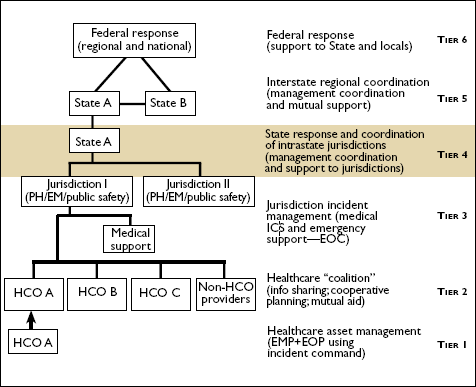
  • Management of Individual Healthcare Assets (Tier 1): Develop processes in the healthcare organization (HCO) Emergency Operations Plan (EOP) that promote effective internal management of the HCO response and information management. This will significantly enhance the ability of HCOs to coordinate with one another and to integrate into the larger community response.

  • Management of the Healthcare Coalition (Tier 2): Establish processes for cooperative planning and information sharing among HCOs that can be used in times of crisis, as well as during day-to-day operations. To the extent possible, standardize requirements so that HCOs know what to report, when to report, in what format, and to whom. Establish or revise mutual aid agreements that formally describe processes for requesting, receiving, and managing mutual aid support.

  • Jurisdiction Incident Management (Tier 3): Bring together representatives of the various emergency response entities, including acute-care medicine and public health, to participate in joint planning. Determine how event notification, unified incident command, and information management will occur across the response system. Ensure that processes are in place so public health and medical input can be provided into unified incident command. The Hospital Preparedness Program and MMRS Program guidance may be of assistance.

  • Management of the State Response (Tier 4): Determine critical information requirements for coordinating intrastate jurisdictions and specify how State primary incident command will occur when necessary. Conduct an inventory and assessment of existing mutual aid agreements and determine how they can be enhanced to specifically address public health and medical issues.

  • Interstate Regional Management Coordination (Tier 5): Establish interstate mutual aid arrangements that address medical and public health needs. Determine critical information requirements and how information will be shared across State borders. Identify points of contact in neighboring States and formally establish processes for requesting, receiving, and managing support. Where possible, integrate these arrangements into the regulations and processes that maintain the State's Emergency Management Assistance Compact. The MMRS Program guidance may be of assistance in coordinating interstate regional preparedness response in a major metropolitan area.

  • Federal Support to State, Tribal, and Jurisdiction Management (Tier 6): Establish processes to gather Statewide information, evaluate response capabilities, and to determine the need for Federal public health and medical assistance. Understand how Federal public health and medical resources are organized, how they are activated and where they come from, and establish processes to facilitate integration of Federal assets at the State and local levels.

Once the concepts of the MSCC Management System are implemented, responder training should examine how they are applied within tiers and across tiers to shape the overall response system. Training sessions should include representatives from each of the major organizations involved in mass casualty or mass effect incident response. The training may be structured in stages of varying complexity and difficulty so that participants of similar knowledge level and experience can learn together. Both didactic instruction and drills might be used to maximize comprehension and retention of key concepts. Trainers should have significant experience and demonstrated expertise in large-scale incident response, and they should be able to motivate people from diverse professions to work together.

The lack of system change after thorough incident review has been a major challenge for all response entities from the local to the Federal levels. To achieve and maintain effectiveness, the response system must continually evolve to incorporate best-demonstrated practices identified through exercises or after-action report processes. A mechanism should be built into the system to provide feedback on ways to address deficiencies. In all after-action analyses, input from medical and public health disciplines should be sought and incorporated with the recommendations of other disciplines. Findings must then be translated into organizational learning, where improvement in processes, procedures, training, equipment and supplies, EOP guidance, or other areas will create lasting organizational learning rather than the less permanent "lessons learned." 
 

8.1 Implementation Strategies 
 

The concepts described in the MSCC Management System present an overall strategy for defining cohesive management and operational relationships for the diverse and often disparate entities that collaborate to provide MSCC. The MSCC Management System does not require an all-or-nothing approach; it may be partially implemented or fully implemented, but in a stepwise fashion over time. It is meant to complement ongoing initiatives that establish individual components of MSCC, such as identifying pools of qualified personnel, pharmaceutical and equipment caches, plans for medication-dispensing stations, plans for alternative care sites, and enhancements to laboratory capabilities. In addition, the MSCC Management System can serve as a comparison tool when assessing and revising current programs and plans, as a tool for planning and evaluating exercises, or even as a metric for conducting incident after-action review and analysis.

The concepts described in this handbook should be incorporated with existing assets and processes to limit the amount of new infrastructure that must be developed. Therefore, implementation efforts should focus first on evaluating established Emergency Management Programs (EMPs) and Emergency Operations Plans (EOPs) within individual tiers. If systems already in place meet the objectives of the MSCC Management System but operate differently than presented here, they most likely do not require change. If deficits are detected, this document could suggest where revisions to the system (rather than replacement) might enable the system to integrate more effectively into the overall response. 
 

The Centers for Medicare and Medicaid Services (CMS), State survey agencies, the Joint Commission on Accreditation of Healthcare Organizations (JCAHO) and other accrediting agencies require all HCOs (hospitals, integrated healthcare systems, nursing homes or other skilled nursing facilities, hospices, etc.) to have individual EOPs.[86] As stated in Chapter 2, excellent models already exist that describe how HCOs can organize internally to respond to extreme events. Tier 1 focuses on the internal HCO processes that enhance external integration with other HCOs (Tier 2) and with jurisdictional assets (Tier 3). Persons reviewing existing HCO EOPs or developing new ones should consider the following major issues in applying MSCC concepts to their facility:

  • Management of the HCO response: Review the qualifications and training of personnel expected to lead HCO efforts during a major response. These personnel must understand the full range of internal resources available during response and how to organize and manage the HCO effort to maximize integration with external assets. In addition, the HCO EOP should outline the steps necessary to institute a proactive management model, driven by action planning, during the early stages of response. This promotes internal HCO organization and information exchange with other entities.

  • Information management: Establish quick, reliable, and redundant methods for sharing incident information. This will help link HCOs with other acute-care medical assets (Tier 2) and with the larger jurisdiction response (Tier 3). It is important not only to establish the modes of communication that will be used, but also to identify the type of information required for a coordinated response. Examinations of HCO procedures for obtaining and conveying incident information should be reviewed to determine:

    • What internal linkages are necessary to ensure that initial survey data and ongoing incident information can be rapidly provided to internal HCO operations? Establishing a method for frequent situation assessments and, resource status reports across the range of assets within the HCO is invaluable for incident management.

    • What mechanisms can be instituted to track patients internally during incidents of sudden surge, so that it can be quickly determined which patients are, or definitely are not, receiving care at the facility?

    • What external linkages need to be made to facilitate information exchange with other medical assets, both in terms of providing data and soliciting information during a crisis?

    • What types of information are appropriate to share externally during response and, therefore, can be formatted into an HCO incident action plan?

To the maximum extent possible, these efforts should be standardized across jurisdictional HCOs through Tier 2 mechanisms. Smaller entities that provide hands-on care in the community (community health centers, neighborhood outpatient clinics, nursing homes or other skilled nursing facilities, private physician offices, etc.) should not be neglected in preparedness efforts. Presenting methods for participation (as described in Chapter 2) to individual practitioners and smaller HCOs may greatly enhance their participation in major response efforts.

HCOs are increasingly engaged in joint-planning efforts, particularly as they participate in Federally-funded bioterrorism preparedness initiatives.[87] Moreover, many localities already have established operational interaction between HCOs to monitor emergency department and critical care capacity, ambulance diversion, and other everyday situations. These activities provide an ideal opportunity for HCOs to come together to discuss and plan for coordinating major medical response.

Key issues to consider when implementing Tier 2 concepts include:

  • Is there an organizational structure in place that allows HCOs to collaborate in a non-competitive environment? This organizational structure may be a local hospital association, local medical society, or local/regional EMS council.

  • Are mechanisms available that allow HCO managers to interact with one another in time of need, as well as during day-to-day operations? Current processes and systems should be reviewed for their ability to support this interaction. Hospital communication centers established for private patient transport, or as EMS command centers for a jurisdiction, may be expanded or adapted to fulfill this requirement.

  • Have communication and information management processes been standardized among Tier 2 coalition members, including formats for recording data? Consideration should be given not only to technology needs, but also to the methods that will be used to facilitate consensus decision-making.

  • Do existing tactical mutual aid arrangements among HCOs clearly establish the processes for requesting, receiving, and managing mutual aid support? An initial assessment may be needed to inventory and evaluate support mechanisms that already exist, and to determine how to prioritize new efforts to maximize MSCC. Consideration of such issues as staff credentialing, liability coverage, worker compensation, and reimbursement mechanisms is critical.


Implementation of MSCC concepts at the jurisdictional level should follow a process in which representatives of various response disciplines (including public health and acute-care medicine) assemble to examine how to improve the delivery of public health and medical care during extreme events. The process should examine specific questions, such as:

  • How will the various response entities notify one another of an impending or occurring event?

  • What critical information should be included in the initial notification messages?

  • How will response entities establish jurisdictional incident management for the wide range of events that may potentially result in human casualties?

  • How will response entities organize and interact with one another during a response, and how will the input of individual agencies be given to the lead management agency?

  • How will representatives of the medical community (traditionally private sector) provide input into the unified command or UC (e.g., through a designated position in a unified command team, a senior advisory role, or some other mechanism)?

  • What critical information should be shared among response entities? How will needs be addressed, while including such private-sector entities as hospitals and clinician offices?

  • What type of support from the jurisdiction's non-medical entities may be needed to enhance the ability of public health and medical assets to provide MSCC?

  • What critical demobilization issues are there for HCOs?

  • How can representatives of the healthcare community be included in after-action analyses?

Initiatives undertaken to address these questions should use currently available assets and processes to enhance operational relationships. For example, most jurisdictions have 911 emergency communication centers (ECCs) for everyday emergency services. The ECC may be adapted to perform the notification and early planning function for the jurisdiction's (Tier 3) EOP until this can be established at the Incident Command Post (ICP). In addition, the ECC and its paging/messaging services can provide initial notification to on-call representatives of the UC and be used for the early teleconference that initiates unified incident planning.

Examinations of the jurisdictional (Tier 3) response system should focus on identifying processes that promote unified incident command. Below is a series of basic steps that can be followed to incorporate UC processes into the jurisdictional EOP. In addition, each response entity should be assessed for its ability to integrate into the system. Assets that do not reach a threshold of desired management capability (e.g., effective incident information processing, incident planning, and informed decision-making) should be prioritized for improvement through jurisdiction EMP actions.

The following is a general guide for establishing unified incident command techniques in the jurisdiction's EOP.

  1. Review the jurisdiction's hazard vulnerability analysis (HVA) to identify key management needs for all identified hazards.

  2. Identify agencies that repeatedly are included in the list of key management needs and designate these agencies as standard participants in UC.

  3. Identify other organizations that might be called on for management input during specific incidents (e.g., public school system for a foodborne outbreak in a school cafeteria). A decision support tool should be established to determine which agencies should be included as UC participants for specific events.

  4. Identify the lead agency for each type of hazard (recognizing that the lead may shift by response stage and by incident issue).

  5. Define how the UC will come together during response, whether physically or via remote teleconference.

  6. Define how transition of lead authority in the UC will occur as indicated during a response.

  7. Define the incident planning capability for the UC (who will plan and how). This position is the Planning Section Chief and conducts management and planning meetings, operations briefings, and situation updates.

  8. Define the site where the ICP will be located, if it is not defined by a hazard scene.

  9. Define how the site and capability for UC will be established if the ICP is scene-defined. For example, if the designated lead agency in the UC has a command vehicle, this may become the ICP during field response.

  10. Define the process for action planning in the UC. What critical information will be required from both public and private sectors, and what time frames (i.e., planning cycles and operational periods) periods could potentially be used?

  11. Define how information management functions will be integrated between the various response entities in a jurisdiction.

  12. Define the demobilization requirements for UC, including whether agencies can decrease their participation in UC as objectives are met (and, if so, how this will be accomplished).

  13. Define methodology, participants, and responsibilities for conducting after-action analyses.


A starting point for implementing State level MSCC is to establish the management processes that would occur if the State were to assume primary incident command responsibility. Preparedness activities should examine how State public health and medical assets would be incorporated into UC, and how State managers would interact with jurisdictional (Tier 3) response entities.

The State must examine critical information requirements to coordinate intrastate jurisdictions:

  • What type of information and/or data will be important for the State to obtain from jurisdictional incident management (Tier 3)?

  • How will this information/data be obtained from jurisdictions, and how will it be collated and analyzed at the State level?

  • Have standardized formats for reporting incident information/data (including situation assessments and resource status reports) been developed and provided to jurisdictional management?

  • Are procedures in place, and does the infrastructure capability exist, to facilitate rapid dissemination of aggregate information/ data back to local jurisdictions?

Other important implementation tasks include conducting an inventory and assessment of existing tactical mutual aid arrangements. These plans should be reviewed to determine possible ways to address the medical (e.g., licensure, liability) and financial (e.g., lack of guaranteed reimbursement) barriers for private HCOs that provide mutual aid services. State level incident management systems that do not incorporate the private medical sector should consider adopting a healthcare coalition (Tier 2) function to address the concerns of HCOs. Recognizing medical and health assets (Tier 1) as crucial players in public safety emergency response may promote their participation in an incident command system. It may also promote an understanding by State officials of the specific requirements of medical and health assets.

Activities to improve interstate regional management coordination should focus on expanding current initiatives to better address MSCC in the private health and medical sector. Processes should specify key information requirements, explain how data will be shared between States, and identify key points of contact at the State level and their counterparts in neighboring States. The organization of State incident command (Tier 4) should be shared between partner States to enhance coordination of management activities, such as the exchange of incident action plans and support plans.

Examinations of strategic, or "master," mutual aid guidelines should ensure that key "top-line" issues for medical and public health entities have been addressed. Important issues include licensing, liability coverage, and worker's compensation for out-of-State healthcare personnel, as well as reimbursement mechanisms for medical and public health assets. Tactical mutual aid agreements may provide the specific methods for requesting, receiving, and managing interstate mutual aid, transporting and distributing assets, and demobilizing public health and medical resources. Preparedness activities should examine Emergency Management Assistance Compact (EMAC) legislation and regulations to ensure that public health and medical requirements for MSCC are adequately addressed.

Because of significant changes in the Federal response system following 9/11 and, more recently, Hurricane Katrina, State emergency planners should review and understand the Federal response capability, how Federal public health and medical assistance may be obtained, and under what authority it may be activated. The State and jurisdictional EMP should determine what their own response capabilities are (i.e., what can the system handle, and what can it definitely not handle), and identify what types of information will be critical in demonstrating the need for Federal assistance. Before an emergency or disaster occurs, State and local response systems must identify the criteria they will use to determine that their system has reached capacity and that additional support, through mutual aid or Federal assistance, is necessary.

States and local jurisdictions should also have operational plans (within their EOP) describing how Federal resources (personnel, supplies, equipment, or facilities) will be integrated into the State and local response effort. Among other issues, it is important to consider:

  • Where will Federal public health and medical assets be staged upon arrival?

  • To whom will Federal personnel report for tactical direction?

  • How will State emergency management (usually located at the State EOC) interact with HHS Regional Emergency Coordinators (RECs) and accommodate the Incident Response Coordination Team (IRCT), (see Chapter 7) and other deployed liaisons?

  • What management processes will direct the distribution of Federal resources, such as Strategic National Stockpile (SNS) medications, vaccines, and supplies?

  • Are guidelines in place specifying who has priority access to limited vaccines, personnel, or supplies, and how this will be communicated to the general public?

  • Have plans for demobilization addressed the demobilization of Federal public health and medical assets? 
     

8.2 Training Strategies 

Training that incorporates the MSCC Management System could follow the same strategies presented under implementation. A course that orients participants to the overall system and its functions is important in establishing the key concepts for preparedness planners and incident response managers. A shorter version of the course must be available to brief healthcare executives. Other training activities could be assessed and revised so that they convey the appropriate knowledge and teach the skills necessary to operate the indicated MSCC integration actions.

Training sessions ideally include representatives from all of the major organizations involved in mass casualty and/or mass effect incident response, including the following: 
 

  • Hospital personnel

  • Healthcare coalition (Tier 2) representatives

  • Public health officials

  • EMS personnel

  • Fire service personnel

  • Law enforcement officers

  • Emergency management personnel

  • State-level emergency managers

  • Other organizations that may be involved in major incident response (e.g., State Survey Agency, State Medicaid Agency, American Red Cross, Salvation Army, local pharmacy association). 
     

To maximize the value of training, participants should have relatively comparable levels of knowledge and experience with regard to the management component of emergency preparedness and response. This may be achieved by providing training in stages that present progressively more advanced concepts. For example, the beginner level might focus on important medical and health issues in EMP and EOP development, such as incident action planning and UC. More advanced training might address the interaction of medical and health assets with other response agencies at the jurisdictional, State, and Federal levels. Even at the beginner level, however, it is critical that participants understand the basic applications of emergency management and the Incident Command System (ICS, see Appendix B).

Individuals providing training should be senior-level personnel with significant experience and demonstrated expertise in large-scale incident response. Beyond demonstrating a subject matter expertise, trainers should be effective instructors with exceptional communication skills. They should possess the skills needed to do the following: 
 

  • Effectively communicate complex topics in easy-to-understand language

  • Help trainees work through real-life scenarios while integrating many diverse perspectives into decision-making processes and incident planning 
     

  • Motivate trainees from different professional disciplines to work together in support of improving overall strategy for medical surge. 
     

To complement didactic instruction, exercises may be used to evaluate systems, processes, and skills.[88] The evaluation objectives are established as the first step in exercise planning, so the incident scenario and other parameters may be designed to meet these objectives. Exercises that are intended to evaluate the functional effectiveness of the MSCC Management System should have objectives that focus on coordination between tiers and integration of individual assets within the tiers. 
 

Incorporating concepts from the MSCC Management System into existing response plans promotes ongoing training through their use during response to small or low-intensity events. This is important in familiarizing incident managers and response personnel with the system and facilitates coordination and integration under more severe incident stress. Frequent practice will also help emergency planners identify how plans can be revised to enhance interorganizational coordination and multidisciplinary integration. 
 

8.3 Ongoing System Evaluation 
 

An effective response system is one that continually evolves to incorporate best-demonstrated practices identified in analyses of training exercises or actual events. Therefore, the response system should have a built-in mechanism that provides feedback on the strengths and weaknesses of preparedness and response initiatives, and that identifies strategies to improve the overall system. One primary vehicle for this feedback is a thorough and timely after-action report process. This process must look at medical and public health components of incident response and, therefore, must have clearly defined participatory roles for acute-care medical and public health responders. Moreover, there should be processes attached to the after-action reports to promote organizational learning rather than just an awareness of "lessons learned."[89] 


86. In past guidance, JCAHO referred to emergency operations plans as "emergency management plans."

 87. Information on the Hospital Preparedness Program (HPP). 

88. The Department of Homeland Security's Homeland Security Exercise and Evaluation Program (HSEEP) helps State and local jurisdiction governments develop, implement, and evaluate exercise programs to enhance preparedness. 

89. Additional information on organizational learning may be found in Emergency Management Principles and Practices for Healthcare Systems, Unit 4. 

<< Back Next >> 


Chapter 7: Federal Support to State, Tribal, and Jurisdiction Management (Tier 6)

Chapter 7: Federal Support to State, Tribal, and Jurisdiction Management (Tier 6)

Medical Surge Capacity and Capabilities (MSCC) Handbook

Tier 6 consists of Federal public health and medical assets (e.g., supplies, equipment, facilities, and personnel) organized under Emergency Support Function (ESF) #8 of the National Response Plan (NRP). The U.S. Department of Health and Human Services (HHS) is the Primary Agency for ESF #8 and coordinates Federal public health and medical assistance in support of State, Tribal, and jurisdictional response efforts.[70]

Key Points of the Chapter 
 

The Federal Government may provide public health and medical assistance during an emergency or disaster under ESF #8 of the NRP. This assistance can be activated by a Presidential declaration of a major disaster or emergency, declaration of an Incident of National Significance by the Secretary of the Department of Homeland Security (DHS), or at the request of another Federal department or agency. HHS can also provide public health and medical assistance during an emergency or disaster under the independent authority of the Secretary of HHS.

The primary role of Federal resources in providing medical surge capacity and capability (MSCC) is to support, not supplant, State, Tribal, and jurisdictional response efforts. When the NRP is triggered by a Presidential declaration of a major disaster or emergency under the Stafford Act, Federal assistance generally is provided at the request of the Governor (or his/her designee) of an affected State. In a catastrophic event,[71] however, Federal assets may be mobilized and deployed to Federal installations in advance of a formal request for assistance. The Catastrophic Incident Supplement of the NRP establishes the policies, procedures, and mechanisms by which this may occur. The Federal Government closely coordinates this proactive mobilization with affected States, Tribal Nations, and jurisdictions.

On behalf of the Secretary of HHS, the Assistant Secretary for Preparedness and Response (ASPR) coordinates all aspects of Federal public health and medical assistance under ESF #8. The HHS Secretary's Operations Center (SOC) is the hub of information management and strategic-level command and control for ESF #8. During an emergency, the HHS Emergency Management Group (EMG) operates out of the SOC to coordinate the ESF #8 response. The ASPR may request that liaisons from the ESF #8 support agencies[72] and HHS Operating Divisions (OPDIVs)[73] be provided to the SOC to ensure a coordinated ESF #8 response. () Similarly, HHS may provide liaisons to other Federal, State, Tribal, and jurisdictional Emergency Operations Centers (EOCs) to promote response coordination. The SOC also provides liaisons to appropriate Federal command and control posts identified in the NRP, such as the National Response Coordination Center or the National Operations Center.

The HHS Incident Response Coordination Team (IRCT), which is mobilized by the ASPR, coordinates all deployed ESF #8 assets. All field communications to the SOC flow through the IRCT, which is typically led by an HHS Regional Emergency Coordinator. The IRCT team leader is accountable for executing field activities for the ASPR. In a large-scale or complex incident, the Secretary of HHS may also deploy a Senior Health Official (SHO) to be his/her direct representative in the field. When deployed, the SHO is responsible for overarching coordination of deployed ESF #8 assets and provides guidance and leadership to the IRCT. The SHO serves as the senior-level ESF #8 liaison to State, Tribal, jurisdictional, and other Federal officials, including the DHS-appointed Principal Federal Official. The SHO operates at the strategic level and reports to the EMG. Typically, the SHO is part of the PFO Coordination Cell and coordinates with the IRCT leadership.

To promote an effective ESF #8 response, preparedness activities should examine and clearly delineate the processes for requesting, receiving, and managing Federal assistance. State, Tribal, and jurisdictional public health and medical planners must precisely determine their response capability, when they might need Federal support, how to develop and submit a request, and how they would integrate Federal assets into their incident command system.

7.1 The Role of the Federal Government in MSCC 
 

Should incident needs severely challenge or exceed State, Tribal, and jurisdictional response capabilities, Federal resources may be called on to provide additional surge capacity and capability. When this occurs, Federal agencies and resources function in support of State, Tribal, and jurisdictional response efforts. When catastrophic events overwhelm State, Tribal, and jurisdictional response capabilities, Federal resources can be mobilized in advance of a formal request for assistance per the Catastrophic Incident Annex of the NRP; however, the proactive deployment of these resources is closely coordinated with affected State, Tribal, or local authorities. 

The authority for Federal public health and medical response may come from a Presidential declaration of a major disaster or emergency (commonly known as a Stafford Act declaration), a declaration of an Incident of National Significance by the DHS Secretary, at the request of another Federal department or agency, or under the Public Health Service Act. 

  • Robert T. Stafford Disaster Relief and Emergency Assistance Act: At the request of the Governor of an affected State, the President may declare a major disaster or emergency if an event is beyond the combined response capabilities of the State, Tribal, and jurisdictional governments. Among other things, this declaration allows Federal assistance to be mobilized and directed in support of State, Tribal, and jurisdictional response efforts. Under the Stafford Act, the President can also declare an emergency without a Gubernatorial request if primary responsibility for response rests with the Federal Government because the emergency involves a subject area for which the United States exercises exclusive responsibility and authority.  

  • Incident of National Significance: The DHS Secretary, in consultation with other Federal departments and agencies, and the White House, as appropriate, may declare an Incident of National Significance.[74] With this declaration, the Secretary of DHS implements any or all of the applicable coordinating structures and processes described within the NRP, as required by the incident. 

  • Public Health Service Act: The Secretary of HHS has the independent authority under section 319 of the Public Health Service (PHS) Act, as amended, to declare a public health emergency. Following a section 319 declaration, the Secretary can, among other things, take appropriate actions in response to the emergency, such as conducting and supporting investigations into the cause, treatment, or prevention of the disease or disorder. The Secretary can also waive certain Medicare and Medicaid requirements to ensure sufficient health care items and resources are available to individuals enrolled in Social Security Act programs. The Secretary may use his/her discretion in determining whether an event is of sufficient severity or magnitude to warrant such a declaration. The Secretary has other authorities under the PHS Act that can be exercised independent of a declaration. The Secretary can make and enforce regulations to prevent the introduction, transmission, or spread of communicable diseases into the U.S., or from one State or possession to another; deploy personnel from the U.S. Public Health Service (USPHS) Commissioned Corps in support of public health and medical operations; provide public health and medical services; and provide for the licensure of biological products. 

Federal public health and medical assistance consists of medical materiel, personnel, and technical assistance. These resources may provide response capability for the triage, treatment, and transportation of victims or persons with special medical needs; evacuation of patients; infection control; mental health screening and counseling; environmental health services; and other emergency response needs. Below is an example of the full range of support available through ESF #8. A variety of Federal public health and medical assets may be provided, including the following: 

  • USPHS Commissioned Corps 

  • National Disaster Medical System (NDMS) 

  • Strategic National Stockpile (SNS) 

  • Federal Medical Stations (FMSs) 

  • Assets from the Department of Veterans Affairs (VA), the Department of Defense (DoD), and other Federal assets. 

  • Medical Reserve Corps 

ESF #8 involves supplemental assistance to State, Tribal, and jurisdictional governments in identifying and meeting the public health and medical needs of victims of major disasters or public health emergencies. This support is categorized in the following functional areas: 

  • Assessment of public health/medical needs

  • Public health surveillance 

  • Medical care personnel

  • Medical equipment and supplies

  • Patient movement

  • Hospital care

  • Outpatient services

  • Victim decontamination

  • Safety and security of human drugs, biologics, medical devices, veterinary drugs, etc.

  • Blood products and services

  • Food safety and security

  • Agriculture feed safety and security

  • Worker health and safety

  • All hazard consultation and technical assistance and support

  • Mental health and substance abuse care

  • Public health and medical information

  • Vector control

  • Potable water/wastewater and solid waste disposal, and other environmental health issues

  • Victim identification/mortuary services

  • Veterinary services. 

In addition, the Federal Government may temporarily waive or modify certain normal requirements of Federal programs during a national emergency or disaster that is also a public health emergency to facilitate the delivery of public health and medical assistance. For example, Section 1135 of the Social Security Act authorizes the Secretary of HHS to temporarily waive or modify normal operating requirements of Medicare, Medicaid, or the State Children's Health Insurance Program (SCHIP) during a national emergency or disaster declared by the President that is also a public health emergency declared by the HHS Secretary (see below). This action ensures that affected healthcare providers who are unable to comply with certain Federal requirements because of a national emergency or disaster that is also a public health emergency, but who operate in good faith, are given sufficient flexibilities to continue providing services to beneficiaries and receive reimbursement for those services.

Waiving Healthcare Requirements in Hurricane Katrina

One way the Federal Government facilitates the delivery of medical care and public health services during a major emergency or disaster is by temporarily waiving or modifying normal operating requirements of Federal programs. For example, during the response to Hurricane Katrina, the Secretary of HHS, pursuant to Section 1135 of the Social Security Act, waived the following requirements: 

  • Certain conditions of participation, certification requirements, program participation or similar requirements, or pre-approval requirements for individual healthcare providers or types of healthcare providers, including, as applicable, a hospital or other provider of services, a physician or other healthcare practitioner or professional, a healthcare facility, or a supplier of healthcare items or services

  • The requirement that physicians and other healthcare professionals hold licenses in the State in which they provide services, if they have a license from another State (and are not affirmatively barred from practice in that State or any State in the emergency area)

  • Sanctions under Section 1867 of the Act (the Emergency Medical Treatment and Labor Act, or EMTALA) for the redirection of an individual to another location to receive a medical screening examination pursuant to a state emergency preparedness plan or transfer of an individual who has not been stabilized if the redirection or transfer arises out of hurricane-related emergency circumstances

  • Limitations on payments under Section 1851(i) of the Act to permit Medicare Advantage enrollees to use out-of-network providers in an emergency situation

  • Sanctions and penalties arising from noncompliance with the following provisions of the HIPAA privacy regulations:

    • The requirements to obtain a patient's agreement to speak with family members or friends or to honor a patient's request to opt out of the facility directory

    • The requirement to distribute a notice of privacy practices

    • The patient's right to request privacy restrictions or confidential communications.

The 1135 waiver typically ends with the termination of the emergency period, or 60 days from the date the waiver is first published unless the Secretary of HHS extends the waiver by notice for additional periods of up to 60 days. During Katrina, waivers for EMTALA and HIPAA requirements were in effect for a period not to exceed 72 hours from implementation of a hospital disaster protocol. The 1135 waiver applies only to Federal requirements and does not automatically apply to State requirements for licensure or conditions of participation.

7.2 Federal Emergency Operations Plan 
 

As required by Homeland Security Presidential Directive (HSPD)-5, the NRP establishes the structure and process for systematic, coordinated, and effective delivery of Federal assistance to augment State, Tribal, and jurisdictional response capabilities.[75] It describes Federal resources that are available to mitigate, prepare for, respond to, and recover from major emergencies and disasters. In addition, the NRP outlines the mechanisms for mobilizing and integrating Federal support. While the NRP is always in effect, its implementation is scalable and flexible to meet the unique operational and information sharing requirements of any major threat, disaster, and emergency, including acts of terrorism. 

The types of direct Federal assistance that States, Tribal Nations, and jurisdictions may need, as well as the operations support required to sustain Federal response (e.g., transportation, communications), are organized in the NRP under ESF annexes. Each ESF is coordinated by a Primary Agency designated on the basis of its authorities, resources, and capabilities in a particular functional area. Federal public health and medical assistance is provided under ESF #8, and HHS serves as the Primary Agency to coordinate ESF #8 resources to fulfill the requirements identified by the affected State(s), Tribe(s), and jurisdictional authorities. HHS may also support other ESFs, most notably ESF #6—Mass Care, Housing, and Human Services.

Pursuant to HSPD-5, the Secretary of DHS is responsible for the overall coordination of Federal resources under the NRP. During an event, the Secretary of DHS may designate a PFO to act as his/her representative in the field to oversee, coordinate, and execute Federal incident planning and response activities. The Secretary also relies on a host of multiagency coordinating structures at the Federal headquarters, regional, and field levels. These structures, some of which were recently modified in the May 2006 update of the NRP, include the following:[76]

  • National Operations Center (NOC): The NOC replaces the Homeland Security Operations Center (HSOC) as the central point for Federal incident management, interagency coordination, and information sharing. One of the key functional elements of the NOC is the National Response Coordination Center (NRCC), which coordinates the overall Federal response and recovery for Incidents of National Significance and emergency management program implementation.[77]

  • Incident Management Planning Team (IMPT): The IMPT provides contingency and crisis incident management planning in support of DHS national domestic incident mission requirements. It is composed of a core group of full-time senior planners who are assigned to the IMPT from interagency and DHS offices for a period of one year. In addition, there is pre-identified on-call staff to augment the IMPT core staff when required.

  • Domestic Readiness Group (DRG): The White House convenes the DRG on a regular basis to develop and coordinate implementation of preparedness and response policy. The DRG is also convened in anticipation of or during crises such as natural disasters and domestic terrorists attacks to address issues that cannot be resolved at lower levels, and to provide strategic policy direction for the Federal response.

  • Regional Response Coordination Center (RRCC): Within each of its regions, the DHS/Federal Emergency Management Agency (FEMA) may establish an RRCC to coordinate regional response efforts, establish Federal priorities, and implement local Federal program support until a Joint Field Office is established. The RRCC communicates with the affected State Emergency Operations Center (State EOC) and the NRCC, deploys teams to conduct initial damage assessments, and issues initial mission assignments.

  • Joint Field Office (JFO): The JFO is a temporary Federal facility established locally where Federal, State, Tribal, and local executives with responsibility for incident management coordinate, oversee, and direct prevention, preparedness, response, and recovery activities. It is organized according to the principles of the National Incident Management System (NIMS) around a JFO Coordination Group, as well as Operations, Planning, Logistics, and Administration/Finance Sections. The JFO Coordination Group may include a Principal Federal Official (PFO), designated by the DHS Secretary to be his/her representative locally to coordinate overall Federal incident management and assistance activities.

    • In the event of multiple incidents, or one incident with widespread implications (e.g., Hurricane Katrina), multiple JFOs may be established at the discretion of the Secretary of DHS.

The NRP is built upon the NIMS, which provides the core doctrine, terminology, and organizational processes for coordinated multidisciplinary and intergovernmental incident management. This includes uniform personnel qualifications and standards for equipment and communications. These concepts are necessary for interoperability and compatibility. The NIMS management framework is applicable to all hazards regardless of cause, size, or complexity. The Incident Command System (ICS) is put forth by NIMS as the model for organizing and managing emergency personnel and resources during incident response.[78] The NIMS requires that field command and management functions be performed in accordance with standard ICS organizations, doctrine, and procedures. 
 

7.3 Emergency Support Function #8 
 

When incident needs challenge or exceed the medical or public health response capabilities of local, State, Tribal, or regional response assets, Federal public health and medical assistance may be made available under ESF #8 of the NRP. This support may be provided in response to a variety of public health and medical events, including the following:

  • Natural and man-made disasters and public health and medical emergencies

  • Terrorist threats or incidents using chemical, biological, nuclear/radiological, or large explosive devices

  • Infectious disease outbreaks and pandemics

  • Animal health emergencies, such as those in support of ESF #11 (e.g., Bovine Spongiform Encephalopathy, Hoof and Mouth Disease)

  • Any other circumstance that creates an actual or potential public health or medical emergency where Federal assistance may be necessary.

The Pandemic and All Hazards Preparedness Act amended section 2801 of the PHS Act to state that the Secretary of HHS shall lead all Federal public health and medical response to public health emergencies and incidents covered by the NRP. Federal public health and medical assistance provided under ESF #8 of the NRP may be categorized according to the functional areas described below. 

  1. Assessment of Public Health/Medical Needs: HHS, at the request of DHS, mobilizes and deploys ESF #8 personnel to support the Emergency Response Team-Advance (ERT-A)[79] to assess public health and medical needs. This function includes the assessment of the public healthcare system/facility infrastructure.

  2. Health Surveillance: HHS coordinates with State, Tribal, and jurisdictional officials to do the following: 

    1. Establish surveillance systems to monitor the health of the general population and special high-risk populations

    2. Conduct field studies and investigations

    3. Monitor injury and disease patterns and potential disease outbreaks

    4. Provide technical assistance and consultations on disease and injury prevention and precautions. 

  3. Medical Care Personnel:

    1. Medical response capabilities are provided by assets internal to HHS (e.g., USPHS Commissioned Corps, the National Disaster Medical System (NDMS)).

    2. DoD may be requested to provide support in casualty clearing/ staging and other missions as needed.

    3. HHS may seek individual clinical health and medical care specialists from the VA to assist State, Tribal, and local personnel.

  4. Health/Medical Equipment and Supplies: HHS may request that agencies provide medical equipment and supplies, including Federal Medical Stations (FMSs) that provide low acuity medical care, pharmaceuticals, and biologic products (e.g., SNS), etc., in support of immediate medical response operations and for restocking healthcare facilities in an area. 

  5. Patient Evacuation:

    1. HHS may request that DHS/FEMA and ESF #1 provide support to DoD for patient movement in the evacuation of seriously ill or injured patients from the affected area to locations where hospital care or outpatient services are available. 

    2. DoD is responsible for regulating and tracking these patients to appropriate treatment facilities (e.g., NDMS non-Federal hospitals, VA hospitals, and DoD military treatment facilities).

  6. Patient Care: HHS may request available personnel to support in-hospital care and outpatient services for victims who become ill or injured.

  7. Safety and Security of Human Drugs, Biologics, Medical Devices, and Veterinary Drugs, etc.: HHS ensures the safety, efficacy, and security of regulated foods, human and veterinary drugs, biologics (including blood and vaccines), medical devices (including radiation emitting and screening devices), and other HHS regulated products.

  8. Food Safety and Security: HHS, in cooperation with ESF #11, ensures the safety and security of Federally regulated foods.

  9. Blood and Blood Products: HHS establishes and maintains contact with the American Association of Blood Banks Inter-organizational Task Force on Domestic Disasters and Acts of Terrorism[80] and, as necessary, its individual members, to determine:

    1. The need for blood, blood products, and the supplies used in their manufacture, testing, and storage

    2. The ability of existing supply chain resources to meet these needs

    3. Any emergency measures needed to augment or replenish existing supplies.

  10. Agriculture Safety and Security: HHS, in coordination with ESF #11, ensures the safety and security of animal feed and therapeutics.

  11. Worker Health/Safety:

    1. HHS requests Department of Labor (DOL) assistance to coordinate responder and worker safety and health using processes detailed in the Worker Safety and Health Support Annex. 

    2. HHS requests support, as needed, to assist in monitoring the health and well-being of emergency workers; performing field investigations and studies addressing worker health and safety issues; and providing technical assistance and consultation on worker health and safety measures and precautions. 

  12. All-Hazard Consultation, Technical Assistance, and Support: HHS assesses public health and medical effects resulting from all hazards. Such tasks may include the following:

    1. Assessing exposures on the general population and on high- risk population groups

    2. Conducting field investigations, including collection and analysis of relevant samples

    3. Conducting field investigations, including collection and analysis of relevant samples

    4. Providing technical assistance and consultation on medical treatment and decontamination of injured/contaminated individuals.

  13. Behavioral Health Care:

    1. Assessing mental health and substance abuse needs 

    2. Providing disaster mental health training materials for disaster workers

    3. Providing liaison with assessment, training, and program development activities undertaken by Federal, State, Tribal, and jurisdictional mental health and substance abuse officials 

    4. Providing additional consultation, as needed. 

  14. Public Health and Medical Information: HHS provides public health, disease, and injury prevention information that can be transmitted to members of the general public. 

  15. Vector Control:

    1. Assessing the threat of vector-borne diseases 

    2. Conducting field investigations, including the collection and laboratory analysis of relevant samples 

    3. Providing vector control equipment and supplies 

    4. Providing technical assistance and consultation on protective actions regarding vector-borne diseases 

    5. Providing technical assistance and consultation on medical treatment of victims of vector-borne diseases.

  16. Potable Water/Wastewater and Solid Waste Disposal:

    1. Assessing potable water, wastewater, solid waste disposal issues, and other environmental health issues

    2. Conducting field investigations, including collection and laboratory analysis of relevant samples

    3. Providing water purification and wastewater/solid waste disposal equipment and supplies

    4. Providing technical assistance and consultation on potable water and wastewater/solid waste disposal issues.

  17. Victim Identification/Mortuary Services:

    1. Providing victim identification and mortuary services

    2. Establishing temporary morgue facilities

    3. Performing victim identification by fingerprint, forensic dental, and/or forensic pathology/anthropology methods

    4. Processing, preparation, and disposition of remains.

  18. Veterinary Services: HHS, in coordination with ESF #11, assists in delivering healthcare to injured or abandoned animals and performing veterinary preventive medicine activities, including conducting field investigations and providing technical assistance and consultation as required. 

Medical Care Personnel is a key functional area of the ESF #8 response. The USPHS Commissioned Corps provides public health, humanitarian, and clinical services and personnel during an emergency, disaster, or other urgent public health need. Based on lessons learned from Hurricane Katrina, the USPHS adopted a tiered response posture of rapidly deployable, well-trained, and well-equipped teams. Below is a brief description of the USPHS teams currently available. Other USPHS teams may be phased in across coming years as the USPHS continues to examine and enhance its response capability. 

Overview of USPHS Commissioned Corps teams

  • Rapid Deployment Force (RDF): The RDF consists of five pre-identified teams, each with 105 multidisciplinary staff. The teams serve on a rotating call basis, with the on-call team capable of deploying within 12 hours of notification. RDF teams have a built-in command structure and can provide mass care at shelters (including FMSs), staff Points of Distribution, and Casualty Collection Points. The RDF can also conduct community outreach and assessments, among other functions.

  • Applied Public Health Team (APHT): The APHT is composed of experts in applied public health and can function as a "public health department in a box." An APHT can deploy within 36 hours of notification and provide assistance in public health assessments, environmental health, infrastructure integrity, food safety, vector control, epidemiology, and surveillance.

  • Mental Health Team (MHT): The MHT consists of mental and behavioral health experts who assess stress and suicide risks within the affected population, manage responder stress, and provide therapy, counseling, and crisis intervention. The MHT can deploy within 36 hours of notification. 

USPHS active duty officers who are not members of the aforementioned teams comprise supporting personnel who can deploy as teams or individuals within 72 hours of notification. Beyond the 72-hour mark, the USPHS Inactive Reserve Corps may be called on to augment the Active Duty Corps.

The National Disaster Medical System (NDMS) is another source of public health and medical personnel under ESF #8. The NDMS helps maintain our national capability to deliver quality medical care during domestic incidents that challenge or exceed normal medical capabilities or infrastructure in an affected area. NDM can provide assistance in three areas—field care, casualty evacuation, and definitive care—to support HHS under ESF #8 of the NRP.

Overview of NDMS teams

The NDMS is a nationwide partnership designed to deliver quality medical care to the victims of, and responders to, a domestic disaster. NDMS provides state-of-the-art medical care under any conditions at a disaster site, in transit from the impacted area, and into participating definitive care facilities. The main NDMS teams consist of the following:

  • Disaster Medical Assistance Team (DMAT): DMATs provide primary and acute care, triage of mass casualties, initial resuscitation and stabilization, advanced life support and preparation of sick or injured for evacuation. The basic deployment configuration of a DMAT consists of 35 persons; it includes physicians, nurses, medical technicians, and ancillary support personnel. They can be mobile within 6 hours of notification and are capable of arriving at a disaster site within 48 hours. They can sustain operations for 72 hours without external support. DMATs are responsible for establishing an initial (electronic) medical record for each patient, including assigning patient unique identifiers in order to facilitate tracking throughout the NDMS.

  • Disaster Mortuary Operational Response Team (DMORT): DMORTs work under the guidance of local authorities by providing technical assistance and personnel to recover, identify, and process deceased victims. Teams are composed of funeral directors, medical examiners, coroners, pathologists, forensic anthropologists, medical records technicians and transcribers, finger print specialists, forensic odontologists, dental assistants, x-ray technicians, and other personnel. HHS also maintains several Disaster Portable Morgue Units (DPMU) that can be used by DMORTs to establish a stand-alone morgue operation.

  • Veterinary Medical Assistance Team (VMAT): VMATs provide assistance in assessing the extent of disruption and need for veterinary services following major disasters or emergencies. These responsibilities include: Assessing the medical needs of animals, medical treatment and stabilization of animals, animal disease surveillance, zoonotic disease surveillance and public health assessments, technical assistance to assure food and water quality, and animal decontamination. Teams are composed of clinical veterinarians, veterinary pathologists, animal health technicians (veterinary technicians), microbiologist/virologists, epidemiologists, toxicologists and various scientific and support personnel. Deployment configurations depend on the nature and scope of the incident.

  • National Medical Response Team (NMRT): NMRTs provide medical care following a nuclear, biological, and/or chemical incident. This team is capable of providing mass casualty decontamination, medical triage, and primary and secondary medical care to stabilize victims for transportation to tertiary care facilities in a hazardous material environment. The basic deployment configuration of an NMRT consists of 50 personnel.  

Additional medical care personnel are available through ESF #8 support agencies, such as the VA and DoD, and through the Medical Reserve Corps. During Hurricanes Katrina and Rita, the VA and DoD played significant roles in supporting ESF #8 missions. The VA (both facilities and personnel) was prominently involved in the operation of FMSs, while the DoD supplied aircraft, equipment, and personnel to facilitate the evacuation of patients and persons with special medical needs to facilities where they could receive appropriate care. 

The Federal Government can also provide public health and medical equipment to support local response efforts during a public health emergency or disaster. One such deployable asset is the FMS, which can be used as a healthcare platform for stable patients with low acuity or primary healthcare needs. Below is a basic description of the FMS and its operating requirements.[81]

The Federal Medical Station (FMS) is an HHS deployable healthcare platform that can deliver large-scale primary healthcare services anywhere in the U.S. A team of approximately 100 personnel is needed to staff the FMS, with personnel provided primarily by the USPHS. Each FMS contains a three-day supply of medical and pharmaceutical resources to sustain 250 stable primary care based patients who require bedding services. Additional roles for the FMS may include the following: 

  • Mass ambulatory vaccination services (using vaccination inventory from the SNS) 

  • Ambulatory prophylactic medication administration (using medication inventory from the SNS) 

  • Pre-hospital triage and initial stabilization for up to 250 mass casualty patients. 

The FMS must be housed inside a structurally intact building that has roughly 40,000 square feet of space, a 10-person set up team, electricity, heating, air conditioning, ventilation, and clean water services. Reduced bed requirements can be accommodated in smaller facilities. Other operational requirements include bathroom and showering facilities, billeting for staff, and contracted support for food, potable water, laundry, ice, medical oxygen filling, and biomedical waste disposal. The FMS requires 48-96 hours from the time of request to delivery inside the continental U.S. and a 12-hour assembly time. 

To address primary healthcare service needs far forward in a disaster area, HHS has a community outreach capability ("Go Bag") that is a rapidly deployable light strike team-based platform. Staffed primarily by the USPHS, each platform has basic medical and pharmaceutical resources to sustain 50 to 100 stable primary care based ambulatory patients. 

7.4 HHS Concept of Operations for ESF #8 
 

As the Primary Agency for ESF #8, HHS has developed a Concept of Operations Plan (CONOPS) that provides the framework for its management of the public health and medical response to an emergency or disaster. The HHS CONOPS is consistent with HSPD-5 and the NRP, and implements strategies to ensure a unified approach to all mitigation, preparedness, response, and recovery activities carried out by HHS. On behalf of the Secretary of HHS, the ASPR directs and coordinates all Federal public health and medical assistance provided under ESF #8. The ASPR also acts as the senior-level HHS liaison to DHS and other Federal departments and agencies. 

Strategic coordination of the ESF #8 response 

The ASPR coordinates the Federal ESF #8 response through the HHS Emergency Management Group or EMG, which operates from the SOC at HHS headquarters in Washington, D.C. By definition, the EMG is always operational at a baseline level and in times of non-response, it maintains a surveillance and monitoring posture. When preparing for or responding to an incident, the ASPR may raise the staffing level of the EMG and begin operations out of the SOC. The EMG's organizational structure is based on ICS principles.

The SOC is the focal point for command and control, communications, specialized technologies, and information collection, assessment, analysis, and dissemination for all HHS components under non-emergency and emergency conditions to support a common operating picture. It is continuously staffed and maintains operations 24 hours a day, 7 days a week (24/7). Because the SOC is always operational, it can rapidly enhance its services and staffing during times of crisis. When not in an emergency response mode, the SOC performs continuing surveillance of the following:

  • Public health data for special topics (e.g., West Nile virus, influenza activity)

  • Reports from Regional Emergency Coordinators (RECs), HHS OPDIVS and other ESF #8 agencies that support State, Tribal, and jurisdictional incident management

  • Media reports and other mass public information sources

  • Natural disasters (e.g., earthquake activity, hurricanes).

Watch Officers in the SOC maintain daily contact with other Federal operations centers to ensure situational awareness. Reports of incidents with potential public health or medical consequences are provided to the Duty Officer, who then alerts HHS senior staff as necessary. Critical public health and medical requirements are brought to the attention of the ASPR. During an event, the ASPR may deploy HHS liaisons to other Federal EOCs.

In addition to the SOC, some HHS OPDIVs, such as the CDC, maintain EOCs to manage their own assets. The OPDIV EOCs can be activated separately from the SOC when involved in a small-scale or "routine" response that does not require HHS department-wide coordination. However, when an OPDIV EOC is activated (only the SOC and the Director's EOC or DEOC at the CDC are operational 24/7), the EOC must notify the SOC and provide status updates of activities. During a department-wide response, the OPDIV EOCs coordinate their operational information with the SOC to establish a common operating picture. During response operations, staffing the SOC with experts from the HHS OPDIVs and Federal partners enhances ESF #8 coordination. 

Operational coordination of the ESF #8 response 

At the field level, the IRCT acts as the Secretary's agent on scene under the direction of the EMG. The IRCT consists of 10 pre-identified teams, with 30 multidisciplinary staff on each. The teams serve on a rotating call basis, with the on-call team capable of deploying within 12 hours of notification. The IRCT has a built-in command structure and is responsible for directing all ESF #8 response assets in the field. The IRCT is scalable to meet the demands of the incident. The IRCT coordinates the activities of all Federal ESF #8 resources deployed to assist States, Tribal Nations, jurisdictions, and other Federal agencies (see below). This includes teams deployed through HHS OPDIVs and the ESF #8 support agencies. 

Key Roles of the IRCT 

The IRCT is primarily responsible for supporting the public health and medical management of an incident. It does this by providing the field management component of the Federal public health and medical response. The IRCT is not designed to provide direct medical or mental-health care, decontamination, or public health services. Rather, the IRCT performs the following primary functions: 

  • Provides liaisons in the field to coordinate with jurisdictional, Tribal, or State incident management

  • Provides the field management and coordination for deployed HHS and other ESF #8 assets to integrate those assets with the State and local response

  • Assesses the requirements or potential needs for HHS and ESF #8 assistance

  • Provides continuous assessment of the adequacy of the HHS and ESF #8 response to the Secretary through the ASPR

  • Represents ESF #8 in the JFO and the RRCC

  • Provides data management and information processing services for ESF #8. This includes the development of incident action plans and situational reports for the ESF #8 response

  • Acts as the conduit for incident information exchange between the SOC and the field (via the IRCT Leader). 

Consistent with NIMS, each IRCT has a team leader and other appropriate personnel to fill ICS positions (Figure 7-1).[82] The IRCT Leader typically is an HHS Regional Emergency Coordinator (see description below); however, the ASPR maintains the right to appoint another qualified person to fill this position. To better coordinate all ESF #8 response components, the IRCT has liaisons from HHS OPDIVs and ESF #8 support agencies to integrate all ESF #8 activities under a single ICS. Any team from an OPDIV or ESF #8 support agency (e.g., VA, DoD) that is deployed during a disaster must report to that agency's liaison at the IRCT. 

Figure 7-1. IRCT Organizational Chart 

During large-scale or complex incidents, the Secretary of HHS may also deploy a Senior Health Official (SHO) to serve as his/her direct representative in the field. The SHO is typically an Admiral from the USPHS Commissioned Corps. When deployed, the SHO is responsible for overarching coordination of deployed HHS resources and provides guidance and leadership to the IRCT. The SHO essentially acts as an Agency Executive, as described in ICS, to the IRCT. The SHO serves in the JFO Coordination Group as the principal ESF #8 liaison to the PFO and other senior Federal, State, Tribal, and jurisdictional officials.

HHS has a cadre of regionally based personnel who work with State and local authorities on a variety of public health and medical initiatives, including preparedness and response to major events. It is important for public health and medical planners to understand the roles of these regionally-based personnel and to establish working relationships with them during preparedness planning to facilitate Federal support in a crisis. Brief descriptions of key regional personnel are provided below and their respective roles in preparedness, response, and recovery are summarized in Figure 7-2. 

  • Regional Director (RD): An HHS political appointee at the regional level, the RD is the Secretary's regional representative and the primary spokesperson for HHS in his/her region, except in times of emergency. During normal daily operations, the RD reports pertinent information on regional issues and implications to HHS leadership. The RD promotes preparedness by coordinating regional resources through a Regional Advisory Council. During a response, the RD serves as the point of contact (POC) for elected officials and consults with an IRCT deployed to his/her region.

  • Regional Health Administrator (RHA): Oversees HHS public health programs at the regional level and coordinates with State Health Directors. The RHA builds relationships with State and local public health officials as well as other Federal departments in their region. During a response, the RHA may serve in a public health advisory role supporting the REC, and as a liaison to State Health Directors. The HHS Secretary may also call on the RHA to serve as the SHO, if needed.

  • Regional Emergency Coordinator (REC): Leads the HHS regional preparedness effort in his/her region by working with medical and public health planners to determine precisely what their response capability is, when they might need to ask for Federal support, and how they would integrate Federal assets into their ICS. The REC also is the HHS lead for regional response and typically serves as the IRCT Leader. 

  • Regional Administrator (ACF): Serves as the liaison and advisor to the REC for coordination of Human Services (ESF #6) issues and participates in regional planning activities. During an event, the ACF RA assesses and coordinates the ACF response and provides a liaison to the IRCT. 

  • Senior Management Official (CDC): Represents CDC in the State health department and coordinates technical support to local and State public health agencies. During a response, the SMO advises the State on the effective use of CDC assets and provides technical assistance and guidance. 

Figure 7-2: Roles of HHS Regional Personnel in Emergency Management
PositionPreparedness 
 
Response 
 
Recovery 
 
RD: Sole political appointee in region

SUPPORT 
 

Primary POC for elected officials 
 

SUPPORT 
 

Primary POC for elected officials 
 

LEAD 
 

Coordinates overall recovery efforts 
 

Facilitates acquisition of necessary Federal resources 
 

RHA: Principal public health authority

SUPPORT

Work with State Health Directors 
 

Serves as a liaison for Assistant Secretary of Health to State health 
 

SUPPORT

Serves in public health advisory role as requested and in support of the REC 
 

Liaison with State Health Directors 
 

May serve as SHO 
 

SUPPORT

Facilitates recovery effort with State Health Directors 
 

Maximize HHS investment in region 
 

REC: Leads HHS regional efforts in emergency preparedness and response

LEAD

Regional lead for preparedness 
 

Works will all State health officials and State emergency managers 
 

LEAD

Lead for ESF #8 regional response 
 

IRCT Team Leader 
 

SUPPORT

POC for recovery but triages requests for support to the appropriate office 
 

ACF RA: Human Services coordination

SUPPORT

Liaison and advisor to the REC 
 

Participates in regional planning activities to plan for human service programs 
 

ACF is responsible for HHS ESF#6 related activities 
 

SUPPORT

Assesses and coordinates ACF response

Provides a liaison to the IRCT 
 

Provides support to program recipients 
 

ACF is responsible for HHS ESF#6 related activities 
 

SUPPORT

Coordinates human services support 
 

Recommends program areas which may need support during recovery 
 

ACF is responsible for HHS ESF#6 related activities 
 

SMO: Coordinates technical support from CDC to the States

SUPPORT

Works in the State health department and represents CDC 
 

SUPPORT

Advises States on the use of CDC assets and provides technical assistance 
 

SUPPORT 


SHO: HHS Secretary's direct representative in the field during an eventSUPPORT 
 

Deploys as needed at direction of Secretary

Oversees IRCT field activities 
 

Provides strategic level decision making and liaison between the PFO/FCO and HHS field activities 
 

SUPPORT


The EMG deploys liaisons to field operations centers (e.g., JFO) to represent the Federal public health and medical response effort. Following the lessons learned from Hurricane Katrina, the JFO has been restructured along ICS lines, with ESF #8 liaisons within each ICS Section. The senior HHS liaison at the JFO is the SHO (if deployed).

The framework by which HHS responds to threats or public health emergencies is characterized by three general stages: notification and alert, deployment and operational management, and transition and disengagement. Each of these stages is described in detail below. 

Notification and Alert 

HHS learns about credible threats to the public's health, as well as potential or actual emergencies, from public health and emergency management authorities at all levels of government, disease surveillance systems, law enforcement agencies, intelligence channels, agricultural, industrial, and environmental agencies, and the media. The SOC is the notification point within HHS for public health threats and emergencies, and it should be contacted immediately (via established local to State to Federal communications channels) with any information regarding a threat or emergency. 

Once notified, the SOC performs a series of pre-determined notifications within HHS, including the ASPR, the Secretary, the Deputy Secretary, and key members of the EMG staff. Depending on the nature of the incident, the ASPR may notify other senior Departmental officials, OPDIV EOCs or Heads, key Federal EOCs, and the relevant RHA, RD, and REC. As situational awareness is gained, the ASPR directs further actions, which may include activation of the EMG, which deploys liaisons to other Federal EOCs and/or places ESF #8 response teams or personnel on alert status. 

The EMG also convenes an ESF #8 conference call to assess the situation and determine the appropriate actions. The EMG alerts pre-designated HHS personnel to represent ESF #8 on the following: 

  • National Response Coordination Center (NRCC)

  • Regional Response Coordination Center (RRCC)

  • Emergency Response Team – National (ERT-N)

  • Emergency Response Team – Advance (ERT-A)

  • Joint Field Office/Joint Information Center. 

Deployment and Operational Management

The Secretary of HHS, through the ASPR and the ESF #8 EMG, directs the activation and deployment of ESF #8 assets in support of State, Tribal, or jurisdictional incident management. The EMG activates an IRCT as required to coordinate locally the activities of all deployed ESF #8 assets and to represent ESF #8 in interactions with the affected local, State, or regional response structure. If there are multiple incidents, or one incident with widespread implications, the EMG may deploy multiple IRCTs. As stated earlier, the Secretary may also deploy a SHO to serve as the senior ESF #8 advisor in the JFO Coordination Group and to provide overarching field-level guidance and leadership to the IRCT.

At the request of the EMG, HHS OPDIVs and ESF #8 support agencies provide liaisons to the SOC to ensure a common operating picture and a coordinated ESF #8 response. Similarly, HHS may be asked to provide liaisons to other operations centers. The SOC schedules video and/or audio conferences at regular intervals to facilitate communications between the different components of the ESF #8 response and affected State, Tribal, and local authorities. 

During incident operations, HHS oversees and coordinates appropriate missions under ESF #8 in accordance with FEMA mission assignments (if the Stafford Act has been invoked). EMG staff review each mission assignment received from FEMA to determine the most appropriate resource to meet the identified need. In some cases this may be an asset within HHS; in others, the EMG tasks its ESF #8 support agencies to provide the necessary resource(s). Through regular communications with the IRCT Leader, the EMG assesses the status of all ESF #8 mission assignments and anticipated future public health and medical needs. 

Transition and Disengagement 

The Secretary of HHS, through the ASPR, decides when to demobilize ESF #8 assets based on the successful completion of ESF #8 mission assignments and assessments of the overall public health and medical response. The demobilization of ESF #8 assets, including those from HHS OPDIVs and ESF #8 support agencies, is coordinated with the IRCT. With the demobilization of the IRCT, full responsibility for coordination with incident authorities transitions back to the regional staff and to any OPDIVs with regional assets stationed on a day-to-day basis in the region. 

7.5 Integration with Other Tiers 
 

Requests for Federal public health and medical support should specify the need for assistance, rather than ask for specific Federal assets. Thus, a key component of preparedness planning for emergency managers is determining the precise capabilities of the State, Tribal, and jurisdictional response systems, and establishing the process for recognizing when Federal public health and medical assistance may be indicated. Some basic considerations for preparedness planning are the following:

  • What are the full public health and medical response capabilities for the State or Tribe (including such resources as community health centers, long-term care facilities, Tribal Hospitals, VA Hospitals, and intrastate/interstate mutual aid arrangements)?

  • What types of hazard-generated demands can the response system handle? What demands may exceed the State or Tribe's resources (e.g., victims requiring isolation, casualties from an uncontrolled radiation release)?

  • What criteria will be used to determine when the State or Tribal response system is severely challenged (i.e., when the need for Federal support arises)? How will the decision-making process occur, especially early in an event?

  • What information or data will be necessary to define the specific requests for Federal assistance? How will this information be collected, collated, and analyzed at the State or Tribal level under the stress and time constraints of a large-scale or very unusual incident? Identifying the types of information that are important to convey when making a request for Federal assistance is an importance step of preparedness planning for State, Tribal, and jurisdictional emergency managers. 

With a Stafford Act Declaration, the defined need for Federal assistance is transmitted via an Action Request Form (ARF) from the State EOC to the Operations Section within the DHS/FEMA JFO.[83] The ARF delineates who, what, where, when, and how much assistance is needed. Staff at the JFO reviews the eligibility of the ARF under the Stafford Act (i.e., is the need beyond the response capabilities of local, State, or Tribal authorities?) and, if it is eligible, converts the ARF into a mission assignment. The mission assignment is a work order by FEMA to a Federal agency that directs completion of a specific task. Depending on the need, FEMA will issue the mission assignment to the Primary Agency of the ESF with responsibility in that functional area. As the Primary Agency for ESF #8, HHS is issued mission assignments related to the provision of public health and medical assistance.[84] Once a mission assignment is issued, the EMG then determines, based on its internal resources and those of its OPDIVs and ESF #8 partners, the most appropriate way to accomplish the mission. 

As Hurricane Katrina showed, the process for requesting and mobilizing Federal assistance can be time-consuming and cumbersome to meet urgent public health and medical needs in a disaster. HHS RECs have begun working with State public health and medical planners in their region to pre-identify areas where Federal public health and medical assistance will likely be necessary in an emergency or disaster. This may allow for the pre-scripting of common mission assignments so they can be issued quickly in a disaster. State public health and medical planners should work with their respective RECs to define areas where pre-scripted mission assignments may be warranted.

In the event that public health and medical assistance is activated under ESF #8, Federal resources will be tactically integrated into the appropriate State, Tribal, or jurisdictional ICS. This is essential because Federal assets are meant to support State, Tribal, and jurisdictional response efforts, not supplant them. To facilitate integration, Federal response teams should be briefed on how an emergency response is being managed at the State, Tribal, or jurisdictional level (where the primary incident management is occurring, who the lead management authority is, etc.). 

On behalf of ESF #8, the IRCT receives tactical direction (e.g., instructions on where to report) from the appropriate State, Tribal, or jurisdictional authorities. Before Federal ESF #8 assets arrive on scene, a primary point of contact or liaison should be established. This may be the State's senior public health official or his/her designee. For State public health and medical planners, other critical preparedness planning considerations include the following:

  • Where will Federal support be staged and operate once it is committed to the State, Tribal, or jurisdictional incident response?[85]

  • What processes are in place to integrate external assets into State, Tribal, or jurisdictional incident management?

  • If the SNS is activated, is there an SNS plan in place that addresses: 

    • How the SNS will be broken down once it arrives?

    • What priority system will be used to dispense SNS assets (e.g., elected officials, first responders, family members of first responders)?

    • How will the SNS be distributed to the public? If distribution centers have been established, how will the assets get there?

    • How will personnel responsible for distributing SNS get to the distribution centers? Have alternate plans been established?  

  • If an FMS is activated, how will it be coordinated with the overall State and/or jurisdictional public health and medical response? 

    • Have existing structures been identified to house FMSs?

    • Is there a protocol or mechanism available to provide operations support to the FMS?

    • How will patients be transported to an FMS and/or back to their primary area of residence?  

Although Federal ESF #8 response teams will coordinate with State, Tribal, and jurisdictional incident management on tactical issues, the EMG, as directed by the ASPR, provides overall strategic direction to the IRCT Leader. The coordination of incident planning and response activities among Federal agencies occurs at the JFO. 

7.6 Illustrative Example 
 

The following example demonstrates how the concepts presented in this chapter may be applied during an actual incident response. The various phases of response (as described in Chapter 1) highlight when critical actions should occur; however, the example extends only as far as incident operations, as this is the focus of the MSCC Management System. 

Background and Incident Description

  • A large, 7.0-magnitude earthquake occurs, with the epicenter near a metropolitan area on the New Madrid Fault in the central United States.

  • The earthquake occurs at dusk. Widespread loss of electrical power in the affected area limits the effectiveness of aerial flyovers for initial assessment. Early reports indicate that multiple cities and towns across the region are severely affected, with hundreds of structures reported to be collapsed, partially collapsed, or unusable.

  • Initial reports indicate that hundreds of people may be dead.

  • Given the severity of the event, the early response stages unfold fairly rapidly as follows:

  • Incident recognition at the Federal level occurs almost immediately, as the REC in the affected area rapidly contacts the SOC Watch Officer to report that a major earthquake has occurred. The SOC is also notified of the event from the DHS NOC. At the same time, the SOC Watch Officer receives initial media reports from national news agencies describing the incident. It becomes immediately obvious that Federal public health and medical assistance are indicated. 

    • The SOC immediately notifies the ASPR, who alerts the Secretary of HHS. The ASPR activates the EMG, which establishes operations in the SOC, and notifies and briefs senior managers at HHS headquarters and at the OPDIVs. 

  • Notification/activation of Federal public health and medical assistance occurs in anticipation of the Governor's request for a Presidential disaster declaration and implementation of the Stafford Act (in accordance with the Catastrophic Incident Annex of the NRP). An IRCT and RDF are placed on alert and prepare for deployment to the affected area. In addition, HHS convenes a call with ESF #8 support agencies to discuss the situation and possible assets that may be needed to provide public health and medical assistance. 
    Meanwhile, the REC establishes contact with local public health and medical officials, and the RD establishes contact with elected officials of the affected States, Tribal Nations, and jurisdictions. This initiates the process for potential Federal public health and medical assistance under ESF #8 once a disaster declaration is made and specific missions have been authorized. HHS also deploys personnel on the ERT-A to gain better situational awareness of potential public health and medical needs. 

  • Mobilization at the national level is marked by an increase in staffing at the SOC, and by the deployment of HHS liaisons to staff other Federal operations centers, such as the DHS NOC and FEMA NRCC. In addition, the EMG deploys an IRCT and RDF to the disaster area. As the presumptive IRCT Leader, the REC begins the initial assessment of public health and medical needs and relays this information to the EMG. In addition, the Secretary of HHS appoints a SHO to serve in the JFO Coordination Group, once it is established. 

    • RHA and regional ESF #8 staff coordinates with DHS through the EMG.

    • REC reports to the RRCC to begin coordinating requests for public health and medical assistance.

    • HHS OPDIVs and ESF #8 support agencies mobilize their EOCs, enhance staffing, and provide liaisons to the SOC to coordinate response activities.

    • In anticipation of requests for Federal public health and medical assistance, ESF #8 assets are forward deployed to mobilization centers on Federal property. 

Incident operations activities are closely coordinated among jurisdictional, State, Tribal, and Federal officials. A JFO is established locally to bring together all key Federal, State, and jurisdictional stakeholders with incident management responsibility. Once on scene, the IRCT integrates into the JFO and the IRCT Leader coordinates all Federal ESF #8 resources that have been deployed. The IRCT Leader interacts with the State public health official(s) and emergency managers at the State EOC and relays information back to the SOC for accurate real-time situational awareness. The State EOC has activated its preplanned procedure for centralizing requests for public health and medical assistance from jurisdictional and State authorities and determines whether requests can be met using State resources or assets immediately available through mutual aid arrangements with neighboring States. 

Once it is determined that Federal assistance for resources or assets is indicated, the State submits the request to the DHS request process through the JFO. Once the JFO has the request, DHS/FEMA distributes a mission assignment to the Primary Agency of the appropriate ESF. For public health and medical requests (ESF #8), HHS is tasked and has the responsibility to fulfill the mission assignment in coordination with its OPDIVs and ESF #8 support agencies.

The IRCT Leader provides situation reports to the EMG on a regular schedule, and all HHS response actions at the scene are coordinated with the EMG and other Federal operation centers (e.g., JFO, NOC-NRCC). Based on information contained in these situation reports, the ASPR, on behalf of the Secretary, coordinates the following ESF #8 functions:

  • Coordinates the deployment of immediate medical care (e.g., NDMS and USPHS Commissioned Corps) to help provide required public health and medical services in heavily affected communities

  • Coordinates the deployment of FMSs to serve low acuity patients and persons with special medical needs

  • Coordinates patient movement with DoD and the VA

  • Coordinates with the Medical Reserve Corps to support personnel requirements

  • Deploys healthcare personnel from the USPHS Commissioned Corps and NDMS to support hospitals that are short-staffed

  • Engages with HRSA to assist in evaluating affected Community Health Centers

  • Deploys experts from FDA to provide consultation regarding safe feeding of displaced populations

  • Tasks CDC to provide technical assistance on injury prevention and public health missions

  • Tasks CDC to assist in monitoring the health of emergency workers, and to provide technical assistance on worker health and safety measures and precautions

  • Tasks CMS to assist in monitoring and enforcing or waiving/suspending HCF regulations

  • Tasks SAMHSA to assist in providing mental health crisis counseling

  • Tasks IHS and other relevant Federal agencies to assess potable water and waste-water/solid waste disposal issues resulting from loss of power and water utilities.

The HHS Assistant Secretary of Public Affairs collaborates with the DHS Public Affairs Office on all public affairs aspects of the response. Public affairs response teams are deployed to address media inquiries, to develop public information materials, and to provide public information liaison officers to the IRCT and to other Federal operations centers. The primary Joint Information Center (JIC), established in support of the NRP, provides general health and medical information to the public after consultation with HHS.


70.In the context of this document, jurisdiction refers to a geographic area's local government, which usually has the primary role in emergency response. A definition of local government is provided in Appendix D

71. The NRP definition of a catastrophic event is provided in Appendix D. 

72. ESF #8 support agencies are identified in the ESF #8 annex of the NRP. 

73. HHS OPDIVs include the Centers for Disease Control and Prevention (CDC); Centers for Medicare and Medicaid Services (CMS); Food and Drug Administration (FDA); Indian Health Service (IHS); Health Resources and Services Administration (HRSA); Substance Abuse and Mental Health Services Administration (SAMHSA); National Institutes of Health (NIH); Agency for Healthcare Research and Quality (AHRQ); Administration for Children and Families (ACF); and Administration on Aging (AoA). 

74. The definition of an Incident of National Significance is provided in Appendix D

75. The NRP was originally published in December 2004; it was updated in May 2006 based on organizational changes in DHS and lessons learned from Hurricanes Katrina, Rita, and Wilma. At the time of this writing, the NRP is undergoing further revisions. Incident operations activities are closely coordinated among jurisdictional, State, Tribal, and Federal officials. A JFO is established locally to bring together all key Federal, State, and jurisdictional stakeholders with incident management responsibility. Once on scene, the IRCT integrates into the JFO and the IRCT Leader coordinates all Federal ESF #8 resources that have been deployed. The IRCT Leader interacts with the State public health official(s) and emergency managers at the State EOC and relays information back to the SOC for accurate real-time situational awareness. The State EOC has activated its preplanned procedure for centralizing requests for public health and medical assistance from jurisdictional and State authorities and determines whether requests can be met using State resources or assets immediately available through mutual aid arrangements with neighboring States.on. Readers are encouraged to visit the DHS Web site periodically for the latest updates to the NRP. 

76. Definitions of these multiagency structures are taken from: Department of Homeland Security, "Notice of Change to the National Response Plan," May 25, 2006. Readers are encouraged to access the NRP on the DHS Web site for more information.

77. The NRCC is one of five sub-elements of the NOC; the other sub-elements include Interagency Watch, Information and Analysis Component; National Infrastructure Coordination Center; and Operational Planning Element. 

78. Appendix B describes ICS and its application to public health and medical disciplines. 

79. The DHS/FEMA-led ERT-A is the principal interagency group that conducts assessments and initiates coordination with the State and initial deployment of Federal resources. 

80. Members of the Task Force include AdvaMed, American Association of Blood Banks, American Association of Tissue Banks, American Hospital Association, American Red Cross, America's Blood Centers, Armed Services Blood Program Office, Blood Centers of America, CDC, College of American Pathologists, FDA, Plasma Protein Therapeutics Association. 

81. Readers are encouraged to work with their regional emergency coordinators to learn more about the FMS and state/local responsibilities for its operations. 

82. In the event of multiple incidents, or one incident with widespread implications (e.g., Hurricane Katrina), multiple IRCTs may be mobilized at the discretion of the ASPR.

83. Prior to the establishment of a JFO, requests for Federal assistance should be made to the RRCC.

84. Not all ESF #8 mission assignments are issued directly to HHS; for example, DoD is tasked directly by FEMA to support the evacuation of patients and persons with medical special needs from a disaster area. Though it is directly tasked, DoD coordinates all activities related to this mission assignment with HHS.

85. Federal assets deployed in anticipation of need are commonly "staged" on Federal property, such as military bases, prior to being assigned to State, Tribal, or jurisdictional management.  


<< Back Next >> 


Chapter 6: Interstate Regional Management Coordination (Tier 5)

Chapter 6: Interstate Regional Management Coordination (Tier 5)

Medical Surge Capacity and Capabilities (MSCC) Handbook


Tier 5 describes the processes by which States assist one another and coordinate management and response activities during times of crisis. It includes State-level agencies that oversee emergency management, public health, medical, and public safety emergency preparedness and response. 
 

Key Points of the Chapter

During a catastrophic event, interstate coordination is an effective and often necessary means to acquire adequate MSCC. Collaborative efforts between States promote system-wide consistency in response strategies and ensure optimal utilization of available public health and medical resources. An effective regional response must be rooted in an open exchange of information, incident management coordination, and mutual aid support, as described below:

  • Information sharing: Before addressing communications technology, States should establish what type of information is important to share, and to whom that information should be provided. These information "requirements" generally include the following:

    • Overarching management strategies and specific tactics

    • Situation assessments and resource updates

    • Safety information for responders and the public.

  • Management coordination: Incident action plans and support plans should be shared between incident managers while these plans are still in developmental stages. This will help identify potential areas of conflict in response strategy between States and allow for corrective action before such conflicts undermine the success of the overall response system.

  • Mutual aid: This describes the provision of emergency services and assets to provide MSCC when individual State resources are insufficient to meet surge demands. Strategic mutual aid guidelines provide the general framework for tactical mutual aid agreements between States. The latter specify operational processes for requesting, receiving, and managing emergency support assets.

The Emergency Management Assistance Compact (EMAC) provides a vehicle for regional coordination and mutual aid during a Governor-declared emergency or disaster. Public health and medical assistance is specifically noted in EMAC, and public health and medical emergency planners are encouraged to review EMAC and how it is being implemented in their State as part of their preparedness activities. In addition, they should work closely with the HHS Regional Emergency Coordinators (REC) in their region to coordinate planning for and execution of interstate regional public health and medical mutual aid assistance.[66]

6.1 The Role of Interstate Coordination in MSCC

Legal and political realities dictate that each State bears ultimate responsibility for the safety and welfare of its citizens. In times of crisis, however, it may be necessary for States to share information and resources with one another to support a coordinated response. The need for interstate coordination and mutual aid assistance is driven by several factors:

  • Few States, if any, possess the full range of resources necessary to respond to all types of emergencies (natural or man-made), or the capability to get resources to areas of greatest need.

  • Population growth near State borders has significantly increased the potential for hazard impacts to affect a population that extends across State boundaries.

  • An increasingly mobile workforce in the United States raises the probability that the onset of certain delayed hazards (e.g., biological, chemical, or radiological agents) may actually manifest more prominently in victims who live outside the area of immediate impact.

  • Omnipresent media coverage easily spotlights discrepancies in the response actions of affected jurisdictions or States. Reports of such discrepancies may erode public confidence and cause undue anxiety in the population.

The Implications of Interstate Incident Strategy Conflict:

A stark example of the problems with conflicting interstate response strategies was evident in the National Capital Area when West Nile Virus arrived in the summer of 2000. Montgomery County, Maryland, elected to spray for mosquitoes when the virus was detected in a mosquito pool on the border with the District of Columbia. In contrast, the District followed expert advice and elected not to spray. The conflicting policies and their rationale were not explained to the public until a media controversy erupted, causing significant public unrest that consumed public officials' time and attention.

Interstate coordination is an effective way to promote the optimal distribution of available medical and public health resources in support of overall MSCC. It enables affected States to share information, including incident goals (known as "control objectives" in NIMS) and operational period objectives defined by incident command, so that a consistent response strategy can be implemented across State borders.

To be effective, interstate coordination must entail the following:

  • Open and reciprocal information exchange regarding incident and response parameters

  • The ability to compare and discuss incident action plans (IAPs) for individual States, as they are developed

  • An understanding that creating consistency among State IAPs and proactively addressing apparent interstate discrepancies will enhance the overall response system

  • Effectively using the coordination platform to provide assistance, such as cross-border mutual aid. 
     

6.2 Forms of Interstate Assistance

Three primary methods for interstate coordination during emergency or disaster response are information sharing, incident management coordination, and mutual aid. At a basic level, information sharing is critical because it allows States to stay up to date on how an incident is unfolding, how other States (Tier 4) or jurisdictions (Tier 3) are responding, and what resources have been committed or remain available. Incident management coordination builds consistency in regional strategies and promotes similarity in the development and application of operational tactics. Mutual aid maximizes MSCC by bringing materials, personnel, and/or services to areas where resources are insufficient to meet surge demands. 


6.3 EMAC: A Model for Regional Coordination 
 

The Emergency Management Assistance Compact (EMAC) is a congressionally ratified interstate mutual aid mechanism (Public Law 104-321) that is supported through legislation enacted by all 50 States, the District of Columbia, Puerto Rico, and the U.S. Virgin Islands. It provides a general framework (and legal basis) for interstate coordination and mutual aid during Governor-declared emergencies or disasters.[67] It also provides for interstate cooperation and resource sharing in emergency-related training, drills, and exercises. Important preparedness and response issues addressed in EMAC include the following: 
 

  • Review of State emergency plans and hazard vulnerability analyses

  • Provisions for temporary suspension of any laws or ordinances

  • Licensure and permit waivers for medical and other professionals

  • Assumption of liability risk for donated personnel rendering aid

  • Reimbursement for assistance (e.g., personnel, equipment, and supplies)

  • Compensation for workers killed or injured while rendering aid

  • Interstate evacuation of the civilian population.

EMAC was designed to apply only to the sharing of State resources and personnel. Therefore, coverage for such issues as professional licensure and liability risk applies only to State employees. Specific legislative or regulatory actions must be taken to address coverage of local government or private sector public health and medical personnel deployed to another State. For example, some States have enacted legislation allowing local government and private sector personnel to deploy as temporary State employees via EMAC during emergencies. 
 

EMAC was a key mechanism used by States to deploy public health and medical personnel and resources following Hurricane Katrina. This was, in fact, the largest ever deployment through EMAC with an estimated 66,000 personnel (civilian and National Guard) deployed across all disciplines.[68] One of the key lessons learned from Hurricane Katrina was the need for specificity in requesting resources via EMAC (e.g., clearly delineating specific qualifications or training for personnel or teams). Healthcare resource typing as a national initiative is underway but incomplete. Thus, it is important to carefully describe the type of assistance being requested. 
 

Public health and medical planners should work closely with their State's EMAC coordinator to understand how EMAC is being implemented in their State. They should also be directly involved in establishing processes to ensure coordination of public health and medical assets obtained/deployed via EMAC in support of MSCC. 
 

6.4 Illustrative Example

The following example demonstrates how the concepts presented in this chapter may be applied during an actual incident response. The various phases of response (as described in Chapter 1) highlight when critical actions should occur; however, the example extends only as far as incident operations, as this is the focus of the MSCC Management System.

Background and Incident Description

  • A large chemical factory that produces plastics resides in the far eastern corner of State Alpha. State Beta is adjacent to State Alpha and is "downwind" of State Alpha.

  • An explosion occurs at the factory, starting a fire that is difficult to control. Victims are coughing and complaining of breathing difficulties.

  • Large clouds of smoke, possibly containing combustion products, such as phosgene and other pulmonary irritants, are released into the atmosphere and carried downwind toward State Beta. The local fire service and a hazardous materials (HAZMAT) team respond to the scene.

Incident recognition at the State level occurs for State Alpha (where the explosion occurred) when the responding jurisdiction reports the findings of an initial HAZMAT scene survey to the State's Environmental Protection Agency (EPA) HAZMAT reporting center. State Alpha begins staffing its State EOC and notifies participating agencies that the State EOP is activated. The initial HAZMAT report forms the basis of State Alpha's notification of EOP activation.

For State Beta, incident recognition occurs when State Alpha's HAZMAT responders notify the fire service/HAZMAT team in the adjoining jurisdiction of State Beta using tactical channels established in preparedness planning. They decide that unified command should be set up to coordinate the evacuation of the at-risk population.

Notification/activation of the interstate response occurs through the aforementioned tactical coordination between local fire/HAZMAT units from State Alpha and State Beta. In addition, State Alpha directly notifies State Beta's Emergency Communications Center (ECC), which serves as the pre-event baseline operating entity for State Beta emergency management. State Beta immediately activates its State EOC and notifies participating agencies in its State EOP. 
 

Mobilization of the interstate response occurs as State Alpha and State Beta activate and ramp up staffing at their respective State EOCs, and activate their State-level unified command teams. 
 

Incident operations are characterized by initial reports from the affected jurisdiction in State Alpha of large numbers of respiratory injuries that have overwhelmed the local healthcare organization (HCO). Fortunately, this HCO is upwind of the area of concern and does not need to evacuate or consider sheltering in place. The HCO has activated its EOP and requested and received assistance from community medical providers, as well as from its mutual aid agreement with a hospital located ten miles away. The local MMRS plan is also activated and used to coordinate the metropolitan healthcare response. 
 

State Alpha provides regular updates to State Beta's EOC regarding firefighters' progress in suppressing the fire and smoke, in determining the exact contents of the noxious smoke, and in plotting plume models as wind conditions at the scene change. In addition, State Alpha provides information to State Beta on the conditions of patients presenting at State Alpha hospitals, including symptoms correlated with positions where the victims were exposed. When State Beta requests to send its HAZMAT experts to the scene, State Alpha's EOC arranges for an escort from the fire marshal's office in State Alpha to facilitate scene evaluation by State Beta experts. 
 

The heavily affected jurisdictions in State Alpha and State Beta decide to continue with a unified area command[69] to tactically manage joint issues caused by the smoke. State Alpha supports this initiative by supplying a command vehicle and medium-range communications equipment for use in the affected areas. This is closely coordinated with command staff in State Beta's EOC. Strategies and tactics, such as decisions to evacuate or shelter-in-place, are also coordinated between State Alpha and State Beta to avoid conflicting recommendations. Any differences are explained to the public in simple terms to prevent confusion. Similarly, medical evaluation and treatment protocols for victims are coordinated with input from both States' public health agencies. As the situation improves, recommendations for repopulating evacuated areas or ending shelter-in-place are consistently developed and applied across State boundaries. 
 

State Alpha requires additional assistance for the local hospital that is caring for the majority of incident victims. It is determined that healthcare assets in State Beta can actually provide the necessary help faster than assets that could be obtained through intrastate mutual aid. Therefore, State Alpha's EOC asks for assistance from State Beta for critical care personnel and ventilators. This is accomplished using protocols and procedures developed during preparedness planning (through MMRS and other initiatives) and based on EMAC authorities. 
 

State Beta notifies its Medical Reserve Corps and hospitals near its border with State Alpha. The requested resources are located and dispatched. The strategic mutual aid agreement between State Alpha and State Beta provides for: 
 

  • Waiver of licensure and certification requirements in State Alpha for State Beta responders who are appropriately credentialed in State Beta

  • Extension of liability coverage by State Alpha to State Beta for workers as long as they operate within their defined scope of practice

  • Extension of worker compensation coverage by State Alpha to healthcare workers who respond from State Beta.


66. Tier 6 discusses the roles and responsibilities of HHS RECs in greater detail. 

67. Additional information on EMAC

68.EMAC Executive Briefing, August 16, 2006

69.The definition of an Area Command (Unified Area Command) is provided in Appendix D


<< Back Next >> 


Chapter 5: Management of State Response and Coordination of Intrastate Jurisdictions (Tier 4)

Chapter 5: Management of State Response and Coordination of Intrastate Jurisdictions (Tier 4)

Medical Surge Capacity and Capabilities (MSCC) Handbook


Jurisdiction Incident Management (Tier 4) MSCC Management Organization Strategy with emphasis is put on the T4: State response & coordination of intrastate jurisdictions

Tier 4 encompasses all State agencies that are responsible for emergency management, public health, and public safety preparedness and response. It addresses situations in which the State is considered the lead incident command authority, and those in which the State coordinates multijurisdictional incident management (Tier 3).

Key Points of the Chapter 
 

The role of State Government in providing MSCC will vary based on incident circumstances and State-specific regulations. In general, however, States may enhance MSCC by:

  • Assisting jurisdictional incident management (Tier 3) when local resources are severely challenged

  • Providing primary incident command in widespread emergencies that reach to a state-wide level of responsibility

  • Providing State resources to assist the local response

  • Coordinating with incident management in other affected States

  • Integrating State and jurisdictional response efforts with Federal support (Tier 6).

The State Emergency Management Program (EMP) should fully integrate public health and acute-care medicine with traditional response disciplines (e.g., fire/EMS, law enforcement). This will benefit State emergency health initiatives, such as bioterrorism preparedness, by promoting interdisciplinary cooperation. It will also benefit non-health-related emergency response by providing an integrated public health and medical perspective. An important focus of the State EMP should be developing management processes that facilitate integration between State-based and local or jurisdictional authorities. Experience has shown that coordination across jurisdictional boundaries must be carefully addressed to promote an effective emergency or disaster response.

State-level incident management can strengthen multijurisdictional response by coordinating management teams in affected jurisdictions. This is best accomplished through a robust Tier 4 information management function, established in the Planning Section of the State's incident management team, or alternatively, in the State's Multiagency Coordination Center (MACC). In addition, the coordination of tactical mutual aid between intrastate jurisdictions brings health and medical resources to areas of greatest need. Strategic or "master" mutual aid guidelines developed by the State during preparedness planning facilitate this aid distribution. In incidents where the State has primary incident command authority, State public health and medical managers should organize as part of the State's unified command, rather than attempt to manage incident response through Emergency Support Function (ESF) positions in the State Emergency Operations Center (EOC).

5.1 The Role of the State in MSCC 
 

At the State level, authority and responsibility for emergency management typically reside within an Emergency Management Agency (EMA), although variations exist. Before 9/11 and the anthrax attacks in 2001, it was common for States to consider public health and medical emergencies to be distinct from other emergencies, thus requiring separate processes for response that were not all centrally supported by the EMA and public safety agencies. However, this approach has begun to change, as current State and Federal initiatives (including HHS bioterrorism preparedness programs) call for the development of management processes to improve coordination among State agencies, and between the State and intrastate jurisdictions. 
 

Another issue post-9/11 has been the growth of State level homeland security agencies and how they integrate with existing emergency management and public health programs. While homeland security programs generally focus on terrorism, emergency management traditionally has taken an all-hazards approach. It is important for public health and medical emergency planners to understand how these programs are structured within their jurisdiction, and where authority lies for emergency or disaster response. 
 

The role of States in MSCC will vary based on their individual laws and regulations. In general, however, State authorities may assume several key responsibilities during emergency preparedness and response. The following paragraphs describe four such responsibilities. 
 

  1. Assist jurisdictional incident management (Tier 3) when local response resources become severely challenged. The bulk of this operations support is commonly provided through the State level MACC at the State EOC. Assistance may include:when local response resources become severely challenged. The bulk of this operations support is commonly provided through the State level MACC at the State EOC. Assistance may include: 
     

  • Providing assets or funding for the purchase or use of additional resources

  • Assisting with the coordination of intrastate mutual aid

  • Facilitating interaction, information flow, and strategic planning between affected intrastate jurisdictions.

States can also assist the medical sector by providing regulatory relief during incident response (Exhibit 5-1). Relevant State laws or regulations that may need to be revised or temporarily suspended in a public health or medical emergency should be identified during preparedness planning, and processes for their revision or temporary suspension should be formally described. Some examples include:

  • Professional licensure, permit, or fee requirements for:

    • State medical, nursing, or other healthcare providers

    • Out-of-State medical, nursing, or other healthcare providers

    • Pharmacists or pharmacy services

    • Medical examiners 
       

  • Statutes governing the number of licensed or staffed beds allowed in healthcare organizations (HCOs)

  • Statutes governing access to and disclosure of protected medical information

  • Regulations stipulating provider-to-patient ratios and other standards of care parameters

  • Regulations surrounding processing the remains of the deceased (e.g., in the event of overwhelming mass fatalities).

Exhibit 5-1. Emergency Medical Regulatory Relief

In the aftermath of Hurricane Katrina, the Governor of Louisiana declared a state of public health emergency and issued an Executive Order temporarily suspending State licensure laws, rules, and regulations for out-of-State medical professionals and personnel offering medical services in Louisiana, provided that these out-of-State medical personnel possessed current State medical licenses in good standing in their respective State(s) of licensure. In addition, the Executive Order designated out-of-State medical professionals and personnel as agents of the State of Louisiana for tort liability purposes. 
 

  1. Provide primary incident command in response to certain emergencies or disasters. State Government (led by the Governor or his/her designee) provides management oversight of the unified command (UC) and directs response activities according to a State Emergency Operations Plan (EOP).[55] Scenarios that might necessitate State-based incident command include: 
     

  • Diffuse or widespread incidents involving multiple jurisdictions (but incorporating recognition of authority at the local level) 
     

  • Incidents requiring response assets that are primarily State resources (e.g., public health epidemiology expertise) 
     

  • Public health incidents and other types of emergencies designated by State laws or regulations. 
     

  • Coordinate among multiple States to promote a consistent response strategy across State boundaries. The State may also work with States not affected by a hazard to facilitate receipt and distribution of tactical mutual aid to affected communities. Interstate coordination is addressed in more detail in Tier 5. 
     

  • Provide the requisite interface with Federal authorities so local jurisdictions can request and receive Federal support (see Tier 6). The Governor or his/her designee declares a formal public health or general emergency and adheres to established procedures to request, receive, and distribute Federal assistance to affected jurisdictions. These procedures should be defined during preparedness planning. 
     

5.2 State Emergency Management Program 
 

State activities conducted through the EMA to mitigate, prepare for, respond to, and recover from emergencies or disasters constitute the State EMP.[56] It is recommended that the State EMP fully integrate public health and acute-care medical entities with other response disciplines (e.g., fire/EMS, emergency management). This will enhance special public health initiatives, such as bioterrorism preparedness programs, by promoting interdisciplinary cooperation and integration. 
 

State EMPs often include exercises to test the State EOP. Even if an exercise scenario does not have a primary public health or medical focus, planners should include public health and medical representatives at the outset of the exercise planning process. This enhances integration by allowing personnel from all disciplines to familiarize themselves with the plan and with each other. It may also benefit non-health responders, since almost every incident response has public health and medical implications, even if they are not immediately realized. Information that contributes to maintaining the health of responders can be critical, regardless of whether the event involves human victims. An example would be health examination of food sources for field providers on an extended environmental incident. 
 

An important aim of the State EMP should be to bridge any coordination gap that may exist between public health and public safety agencies. Because public health has evolved primarily as a State-based authority, it may be difficult during disaster or emergency response to effectively coordinate with public safety, which usually manages events from the local jurisdictional government level. In addition, public health personnel historically are not well experienced in the ICS processes practiced by public safety and emergency management agencies (though this is changing). Therefore, preparedness planning should examine the operational methods necessary to integrate State public health with local emergency management and public safety during incident response.

The State EMP may contain strategic or "master" guidelines that govern tactical mutual aid arrangements. [57] The master guidelines stipulate operational requirements for activation of tactical mutual aid (described in Section 5.3.2), such as standardized criteria for designated resources. As applied to medical assistance, master mutual aid guidelines might specifically resolve such major issues as professional licensure, liability risk, worker compensation, and resource mobilization. Moreover, they should specify the processes to request and receive medical and health aid from other States (see Tier 5). 
 

5.3 Support to Local Jurisdiction Response 
 

Because incident management is usually based at the local level, the role of State Government in a mass casualty and/or mass effect incident is often to support the jurisdictional (Tier 3) response effort when local resources are severely challenged. This may come in the form of coordinating incident management activities among affected jurisdictions, and/or coordinating tactical mutual aid support between local jurisdictions. 
 

5.4 Primary Incident Command 
 

In a catastrophic event (e.g., major earthquake, hurricane, or terrorist attack), State Government may assume primary responsibility for incident command. A common belief among many States is that the structure of the State EOC is adequate for managing medical and public health response. In reality, however, this may not represent an ideal arrangement since the ESF structure and function are designed to support incident management (hence the name, Emergency Support Function). Thus, States that assume primary incident command authority should establish a separate incident management team, incorporating ICS principles, to manage response functions. This concept was effectively demonstrated by Illinois public health during TOPOFF 2. 
 

The State of Illinois response in Top Officials 2 (TOPOFF 2)—a bioterrorism exercise in May 2003—provides an excellent example of how a State can effectively assume primary incident command responsibility. In TOPOFF 2, Illinois successfully implemented a State public health Incident Command Post (ICP) that was supported by the nearby State EOC. This response organization demonstrated the significant incident command responsibility of State medical and health authorities in response to a major incident. It also emphasized that medical and public health managers can organize as incident managers, rather than attempt to manage from a support position (i.e., an ESF) in the State EOC. This example also serves to highlight the differences between ICPs and MACCs. 
 

The State's incident management team should be composed of State officials from across the range of response disciplines, including State medical and public health authorities. This team defines incident goals (known as "control objectives" in NIMS), operational period objectives, and the overall response strategy for the State. In addition, the State performs the lead information management function. It collects data from intrastate jurisdictions (Tier 3), collates the data and conducts analyses, and then disseminates the aggregate information back to jurisdictional managers to provide the "big picture" of how the incident and response are unfolding.

In a catastrophic event, the role of the State as the primary incident command authority is relatively straightforward. However, in a subtle incident (e.g., onset of an unknown infectious disease), primary command will likely be based initially at the jurisdictional (Tier 3) level. As information begins to emerge on the potential size and scope of the incident, a decision might be made to transfer primary command authority to the State. This decision is made through a meeting of the jurisdiction UC or, if multiple jurisdictions are involved, a meeting of the lead agency authorities from the multiple jurisdictions as coordinated by the State. An alternative may be to develop an "area command"[60] that coordinates assets across the involved incident management teams. 
 

The role of State political leaders in incident management should be clearly understood.[61] The Governor bears ultimate responsibility for the safety and well-being of the State population. For events with potentially serious medical or public health implications, the Governor may declare a public health emergency; this generally activates the formal State public health response. The Governor may also temporarily suspend relevant State laws or regulations that impede response activities. Preparedness planning should identify regulations that might need to be revised or temporarily suspended and the legal procedures required to carry out these actions. In addition, as the elected spokesperson for his/her State, the Governor plays a critical role in public information management by: 
 

  • Maintaining public confidence: This is accomplished by providing the visible message that the State Government is focused on the incident response, has the intention to assist victims and their families, and is bringing all available resources to bear. 
     

  • Providing a context to the incident: This may be established in part by: 
     

    • Recognizing publicly the size and complexity of the incident 
       

    • Describing that the response will take time and extraordinary effort 
       

    • Providing other information that helps the victims and the public understand what has happened. For example, by expressing community outrage after an intentional hazard impact such as terrorism, and verbalizing both the mass impact of the event and the community's commitment to recover, the political leader may help the community come together for both response and recovery. 
       

  • Establishing and managing public expectations for the response: This is critically important in medical and public health events, where response is often complicated and solutions are not easily or rapidly achieved. Regularly informing the media and public of ongoing response efforts can help to shape behavior, and promote a better public understanding of how to best measure "progress" in complex events. This can also help to calm fears and minimize psychological impact.

State medical and public health officials (serving in a management role) should consider developing a briefing for the Governor (serving in an Agency Executive role) and his/her staff that describes key MSCC management and response issues. One critical area to explain is that "measures of effectiveness" used to evaluate a medical response may not be directly related to obvious outcomes, such as mortality or disease prevalence rates. For example, if all victims in a radiation incident were exposed to a fatal dose of radiation, the ongoing death of victims over days is not a measure of response effectiveness: the mortality rate had been unalterably set in motion prior to incident recognition and response. True measures of effectiveness for each type of medical incident should be developed during preparedness planning, and then reviewed and revised as indicated as a specific incident unfolds. 
 

The Model State Emergency Health Powers Act (MSEHPA) provides one basic template for State authorities to define their major responsibilities in emergency or disaster response.[62] Developed after the 9/11 attacks, MSEHPA suggests that States have a comprehensive plan in place for coordinated, appropriate response to incidents that threaten the public's health. It identifies specific laws or regulations that may need to be developed (or revised if already existing) to protect the health and safety of the general population. Key issues addressed that may be relevant for health and medical response include: 
 

  • Requirements for reporting illness or health conditions (including animal disease) 
     

  • Patient tracking and facility or materials examination 
     

  • Examination and decontamination of facilities or materials 
     

  • Information sharing 
     

  • Quarantine and isolation of persons or property 
     

  • Access to and disclosure of public health information 
     

  • Licensing and appointment of health or medical personnel 
     

  • Public information management 
     

  • Financial accounting, liability, and compensation. 
     

In the years since the MSEHPA was published, experience has altered how it is applied. Readers are encouraged to review the published materials on this topic for a better understanding of its current application. 
 

5.5 Integration With Other Tiers 
 

Management of the State response (Tier 4) requires effective integration of State public health and medical assets with jurisdictional incident management (Tier 3). This function may be provided under the guidance of State public health using the infrastructure capability (e.g., manpower, computing resources, communications equipment) of the State EOC.[63] In this way, State emergency management personnel collect and analyze public health and medical data generated by jurisdictional (Tier 3) unified command teams, as well as investigative findings from law enforcement and other agencies. The ability to examine these data, in real time, and rapidly return aggregate information to jurisdictions facilitates incident planning and promotes a consistent multijurisdictional strategy. It also enables the State to maintain accurate and updated records of resource availability—a crucial factor in coordinating mutual aid support.

A challenging aspect of the State response is coordinating the efforts of multiple jurisdictions without infringing on their responsibility in incident management. This is best accomplished by establishing key information requirements for all State jurisdictions through the Planning Section of the State incident management team or the MACC (i.e., State EOC). Standardized procedures should be developed for reporting medical and public health data (i.e., what, when, where, and how) and for requesting mutual aid. Reports should include strategies and tactics being used by local jurisdictions through their jurisdictional IAPs. This integrates the State with jurisdictional incident management (Tier 3) and facilitates coordination between affected jurisdictions. It also reduces the chance that conflicting strategies between jurisdictions may occur, causing anxiety and weakening public confidence in the response. A well-defined information management function enables local medical and public healthcare providers to access guidelines for patient evaluation and treatment from State public health authorities. This capability can be critical in a rapidly evolving infectious disease outbreak. 
 

The State (Tier 4) also provides the interface between jurisdictional incident management (Tier 3) and Federal public health and medical assistance (Tier 6). For example, the State Governor makes the formal request to HHS for the Strategic National Stockpile (SNS) if the need for SNS assets is identified. If the SNS is deployed, State officials work closely with SNS coordinators and jurisdictional managers to coordinate its distribution to affected jurisdictions. The information management (i.e., knowing what support is needed) and incident management (i.e., working with local incident managers) facilitates this process. 
 

How a State organizes its emergency services to promote integration will depend on many factors, including its geography, population distribution, and historical hazard experience. Some States favor a decentralized approach with the expectation that most hazards will be managed by relatively sovereign local jurisdictions. Other States have established detailed State-driven management procedures that are outlined in extensive regulations. The Standardized Emergency Management System (SEMS) in California provides an excellent example of the latter situation and is briefly described here. 
 

California established SEMS in the early 1990s as a Statewide management system for use by public safety personnel (e.g., firefighters, police) and other emergency responders. State agencies are required by law to use SEMS for incidents involving multiple agencies or multiple jurisdictions. In addition, local governments must use SEMS in multiagency or multijurisdiction response to be eligible for State reimbursement for response-related personnel costs.[64] SEMS is flexible to meet the demands of all hazards, and it is based on ICS functions (Command, Operations, etc.) and a five-level organization of response. 
 

Figure 5-1. Generic SEMS Management Structure Figure 5-1 shows the generic Standardized Emergency Management System (SEMS) structure.

Information abstracted from Standardized Emergency Management System (SEMS) Guidelines for Special Districts.

Although SEMS provides a well-developed organization for public safety emergency services, it does not comprehensively address the incorporation of public health or private medical assets as the primary responders and incident managers. In addition, SEMS generally assumes a defined incident scene and relies on this to organize the initial response structure (this is understandable given the major hazard risks in California). However, because a defined scene is much less likely in a public health emergency, additional organizational guidance may prove helpful. The MSCC Management System was written to provide such guidance. 
 

The Metropolitan Medical Response System (MMRS), described in more detail in chapter 4, is a Federal Department of Homeland Security (DHS) program that provides guidance for metropolitan areas to coordinate medical response across local jurisdictional borders.[65]

5.6 Illustrative Example 
 

The following example demonstrates how the concepts presented in this chapter may be applied during an actual incident response. The various phases of response (as described in Chapter 1) highlight when critical actions should occur; however, the example extends only as far as incident operations, as this is the focus of the MSCC Management System.

Background and Incident Description

  • State Alpha is a southern State on the U.S. coast.

  • A large Category 4 hurricane has struck the State, devastating multiple jurisdictions along the coast with extensive structural damage and flooding.

  • In at least three separate low-lying jurisdictions with high population densities, HCOs have had their normal operations disrupted due to flooding.

In this scenario, the early stages of response unfold well before the event occurs: 
 

  • Incident recognition occurs several days prior to landfall when the National Weather Service issues a hurricane warning for the coast of State Alpha.

  • Notification/activation occurs when the State EMA notifies State emergency response agencies, private response assets (e.g., HCOs), and the general public, and issues practical preparedness recommendations. 
     

  • Mobilization of State emergency/disaster services is characterized by the following steps: 
     

    • The primary ICP is established in the facilities that house the State's EOC. State-level incident command is now co-located with, but physically separate from, its emergency management operations support at the EOC. 
       

    • A UC team composed of representatives from the primary response disciplines is established at the ICP. A senior health officer from the State's Department of Health (DoH) serves on the UC to represent public health and medical issues. 
       

    • The State ensures that weather-resistant communications are operating between the ICP/EOC and jurisdictional EOCs. The State issues short-term preparedness recommendations for State- level response agencies, and calls on jurisdictions directly in the storm's path to provide immediate post-landfall situation and resource status reports. Instruction is given on what to include in reports, where they should be sent, and how to format the information. 
       

Incident operations are initially characterized by full evacuations of coastal areas and the pre-positioning of State response resources. State-level incident command works closely with Federal authorities to coordinate pre-positioning of Federal response assets. State action plans are issued for the two 24-hour operational periods preceding landfall. As the storm approaches, State Alpha switches to 12-hour planning cycles and fully staffs its ICP/EOC. 
 

In the aftermath of the hurricane, affected areas report on storm-related injuries and physical/structural damage. It is quickly recognized that regular and emergency medical care has been compromised at multiple hospitals in several jurisdictions. The State UC assumes a primary incident command role and establishes overarching control objectives, operational period objective and response strategies. The State incident action plan (IAP) is developed and shared with affected jurisdictions, with other States (Tier 5), and with the Federal assistance liaison (Tier 6). This promotes the "common operating picture" described in NIMS. A key component of the State IAP is a public health and medical section that includes the following: 
 

  • Public health and medical situation assessments and resource status reports from data collected daily by affected jurisdictions; the assessments capture the number and types of victims directly affected by the event, as well as the medical special needs populations in the jurisdictions; 
     

  • Input into the safety message that includes public information messages to address such issues as displaced populations of wildlife and the handling of water in affected areas. 
     

Based on initial reports, the State UC anticipates that local jurisdictions will need support and thus offers medical and public health resources to assist with unmet needs. State medical assets are provided to support the incident response being managed in the most heavily affected jurisdictions. This includes a State-sponsored Disaster Medical Assistance Team (DMAT). In addition, evacuation planning for some severely impacted HCOs is undertaken in conjunction with Federal partners (Tier 6) and State medical and health personnel are deployed to support locally affected health departments. The latter integrate through the jurisdictional (Tier 3) Logistics function and are assigned to the appropriate Operations Section positions in the jurisdictional ICS. 
 

State Alpha's Governor and State health officer temporarily suspend, through emergency declarations, selected State health regulations. This action allows for:

  • Relaxation of restrictions on hospital bed capacity in the most heavily affected jurisdictions so facilities that are still operational can "legally" care for more victims than their State license stipulates.

  • Temporary changes to State licensing and certification regulations for healthcare professionals. The emergency regulations, developed during preparedness planning, permit HCOs to accept evidence of licensure from other States and allows medications to be dispensed by healthcare personnel other than physicians, nurses, or pharmacists.

  • Establishment of several convenient locations where out-of-State healthcare personnel who want to volunteer in the response can report for screening, examination of their professional credentials, and granting of temporary credentials from State Alpha. This removes the credentialing burden from local jurisdictions and local HCOs. 
     

One jurisdiction that was not fully evacuated has temporarily lost use of its primary outpatient and inpatient dialysis centers. Mutual aid is requested to provide dialysis services using resources from an unaffected jurisdiction elsewhere in the State. The State MAC Group (Agency Executive directors convened to address strategic and policy issues in the response) addresses the financial issues involved in meeting this request. The MACC (i.e., State EOC) implements the MAC Group decisions and addresses the issues that allow the dialysis mutual aid to be arranged and executed. Logistical issues involve transportation to move personnel and equipment, public works to arrange for a clean water source for the dialysis machines, and other details. The State also provides a financial guarantee to the assisting jurisdiction, as well as reporting guidelines so Federal reimbursement may be obtained.

The State facilitates coordination between affected local jurisdictions (Tier 3). Situation assessment and resource status reports are collected from affected jurisdictions and collated to provide summary health and medical information for the State. These aggregate data are included in the State IAP. State public health authorities provide case definitions for reporting storm-related injuries or illnesses. Included in this message is guidance for reporting gastrointestinal complaints. This becomes critical later to counter rumors about the outbreak of infectious disease.

Lastly, State Alpha coordinates with other nearby States (Tier 5) and with Federal agencies (Tier 6). Jurisdictional public health and medical needs that cannot be met through local resources or tactical mutual aid are reported to the State EOC. The State rapidly evaluates the requests and attempts to meet them using assets within State Alpha. For requests that cannot be met by the State, the MACC (i.e., State EOC) inquires from its regional partners (Tier 5) and/or forwards a request for assistance to Federal authorities. For example, when all three affected jurisdictions request medical teams to provide out-of-hospital patient evaluation and medical care, the State-sponsored DMAT can only fill one jurisdiction's request. Additional resources are requested from Federal agencies (Tier 6), but will take time to arrive. The appropriate assignment of the State DMAT may be determined by the MAC Group, or through the MACC using a pre-developed decision support tool for determining the best use of the DMAT asset.


55. This chapter does not examine specific components of the State EOP, since these will vary significantly from State to State. The focus instead is on the various roles States may have in catastrophic events. 

56. The State EMP may be accredited through the Emergency Management Accreditation Program (EMAP), a voluntary process to assess EMPs through collaboratively developed national standards. 

57. Mutual aid may be guided by "agreements," "memoranda of understanding," or other designations based on the degree of legal obligation desired by the mutual aid partners. 

58.Appendix C provides a more detailed description of incident action plans. 

59.Emergency Managers Mutual Aid (EMMA) Plan. California Office of Emergency Services, March 2022 

60. The NIMS definition of area command is provided in Appendix D. 61.Because the role of senior political authorities varies from State to State, readers are advised to review their respective State laws and regulations for State-specific information 

62. Additional information on MSEHPA can be accessed at the Center for Law and the Public's Health at Georgetown and Johns Hopkin s Universities 

63. If the State is serving as the primary incident command authority, then its ICS Planning Section would provide this service. 64. Office of Emergency Services, California. Standardized Emergency Management System (SEMS) Guidelines for Special Districts (1999) 

65.Information on the MMRS program 


<< Back Next >> 


Subscribe to USWDS Height Card Large (240px)