Tranquil Passport Full-Scale Exercise: Strengthening U.S. Readiness to Safely Transport High-Consequence Infectious Disease Patients
In an increasingly interconnected world, infectious disease threats do not stop at borders. Preparing to safely move patients with highly dangerous infections—while protecting health care workers, responders, and the public—is a critical part of national health security. That challenge was the focus of the 2025 Tranquil Passport Full-Scale Exercise, a national preparedness effort led by the Administration for Strategic Preparedness and Response (ASPR), a division of the U.S. Department of Health and Human Services (HHS).
What Was the Tranquil Passport Exercise About?
Tranquil Passport, conducted June 24–27, 2025, tested the nation’s ability to safely transport multiple patients with high-consequence infectious diseases (HCIDs) from outside the U.S. to specialized treatment centers within the country.
This exercise marked the first operational deployment of HHS’s new Portable Biocontainment Unit (PBCU), a specially designed system that allows patients with dangerous infectious pathogens to be transported while minimizing risk to responders and the public. The PBCU’s patient care area can be configured to hold either two patients on stretchers or up to ten seated patients, making it a powerful new tool for outbreak response.
The scenario simulated a cluster of adult and pediatric patients being moved from Canada to multiple U.S. Regional Emerging Special Pathogen Treatment Centers, putting infectious disease patient transport plans, coordination processes, and logistics to the test.

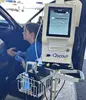
Loading the PBCU on a Boeing 747 at Dulles International Airport
Who Participated?
The exercise brought together an unprecedented network of partners. More than 60 organizations took part, representing:
Federal agencies, including HHS, U.S. Department of State, U.S. Department of Transportation, U.S. Department of Justice, and the U.S. Department of War
The National Emerging Special Pathogens Training and Education Center (NETEC), the coordinating body for the National Special Pathogen System
Hospitals and emergency medical services agencies
State and local public health, emergency management, and law enforcement agencies
Airport emergency managers and aviation service providers
International partners in Canada
Exercise activities took place across six cities—Washington, District of Columbia; Baltimore, Maryland; New York City, New York; Raleigh, North Carolina; Atlanta, Georgia; and Toronto, Canada—at airports, hospitals, and emergency operations centers. This wide geographic footprint reflected the complexity of real-world responses that often span jurisdictions, regions, and national borders.

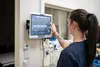
Mock patients and care team members onboard the PBCU enroute from Canada to the United States
Why Was This Exercise Important?
Past outbreaks—such as Ebola, Marburg, and Sudan virus disease—have shown that the ability to rapidly and safely transport infected patients can save lives and prevent further spread of disease. While earlier exercises validated international transport into the U.S., Tranquil Passport addressed a critical gap: domestic transport of multiple high-risk patients over long distances.
By exercising newly developed plans and equipment, the nation was able to:
Validate a first-of-its-kind federal capability for domestic HCID transport
Test decision-making and coordination during a complex, multi-patient mission
Identify strengths and gaps before a real emergency occurs
Exercises like Tranquil Passport help ensure that when a real outbreak happens, systems are already in place—and people are prepared to act.

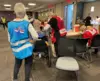
A mock pediatric patient is transferred by an EMS team
What Impact Did the Exercise Have?
The exercise demonstrated that patient care teams could successfully treat and monitor patients inside the PBCU during transport, while maintaining strong safety practices. It also produced valuable insights that will strengthen future preparedness, including opportunities to:
Expand and train specialized transport teams
Enhance health and safety protections for responders
Improve coordination and communication across agencies and regions
Clarify roles, responsibilities, and decision-making processes
Optimize patient care, including support for children and other high-risk patients
These lessons will directly inform improvements to national plans, training programs, and operational procedures.
Looking Ahead
The Tranquil Passport exercise showed what is possible when agencies and partners work together toward a shared goal: protecting lives during the most challenging public health emergencies. By testing capabilities before they are needed, HHS and its partners are strengthening the nation’s readiness to respond swiftly, safely, and effectively to future infectious disease threats.