





Disaster Medical Assistance Teams
NDMS Disaster Medical Assistance Teams provide high-quality rapid-response medical care when public health and medical emergencies overwhelm state, local, tribal, or territorial resources. In the aftermath of natural and technological disasters, acts of terrorism, and during disease outbreaks, DMAT members are on location protecting health and saving lives. DMAT members also serve behind-the-scenes to provide medical support at national special security events like the inauguration.
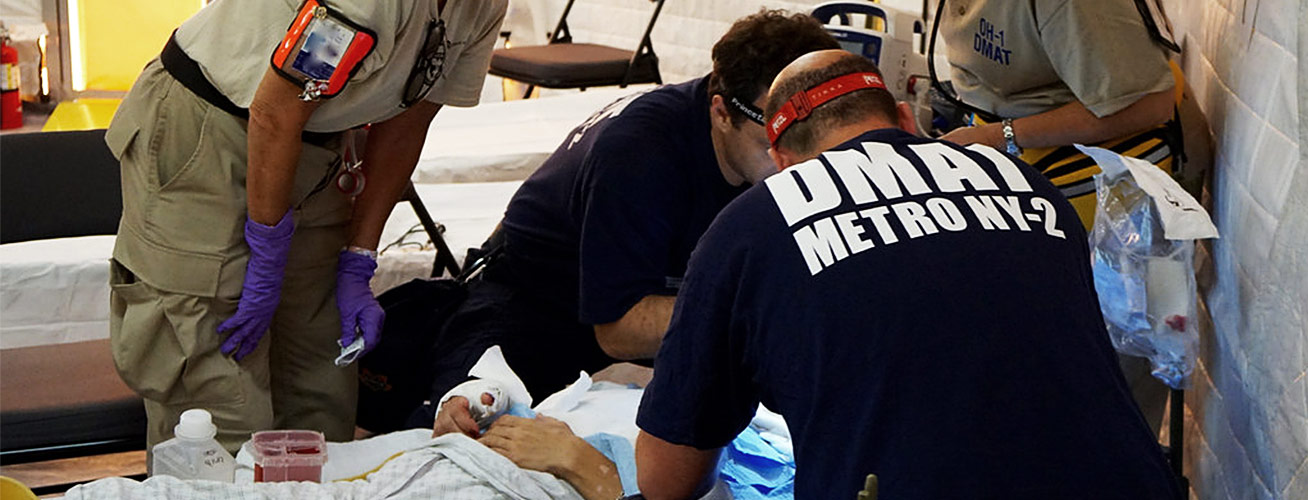
Highly adaptable, DMAT members are trained to fill a variety of impactful roles, from performing medical triage and emergency care to supporting infusion centers and vaccine sites to decompressing hospital emergency rooms to supporting patient movement and more.
DMAT members work together tirelessly, frequently in austere conditions, to provide medical care and support when it is needed most.
DMAT team members include
Advanced clinicians (nurse practitioners/physician assistants)
Physicians, medical officers
Registered nurses
Respiratory therapists
Paramedics (EMTs)
Pharmacists
Safety specialists
Logistical specialists
Information technologists
Communication and administrative specialists
DMAT Capabilities
DMATs perform patient-care functions in a variety of mission scenarios based on the identified standards of care, including but not limited to:
Triage/Pre-Hospital Care: Evaluating patients based on the seriousness of their illness or injuries to determine the most effective and efficient plan of care.
General Emergency Medical Care: Providing care at least equal to the services of a basic hospital emergency department.
General Medical Care: Providing primary care services where access to usual care is limited or unavailable.
Hospital Decompression: Providing medical care within an existing hospital that has limited staff or is otherwise unable to provide adequate care to the number of people needing medical attention.
Support of Patient Movement: Assessing, stabilizing, and preparing patients for transportation.
Mass Prophylaxis: Providing vaccinations or taking other actions to support disease control efforts.
Caring for Patients in Hard-hit Communities
DMATs address a wide range of patient care needs. These teams have provided excellent pre-hospital care, supported mass-vaccination efforts during the COVID-19 pandemic, and supported hospitals in communities nationwide.
Triage & Pre-Hospital Care
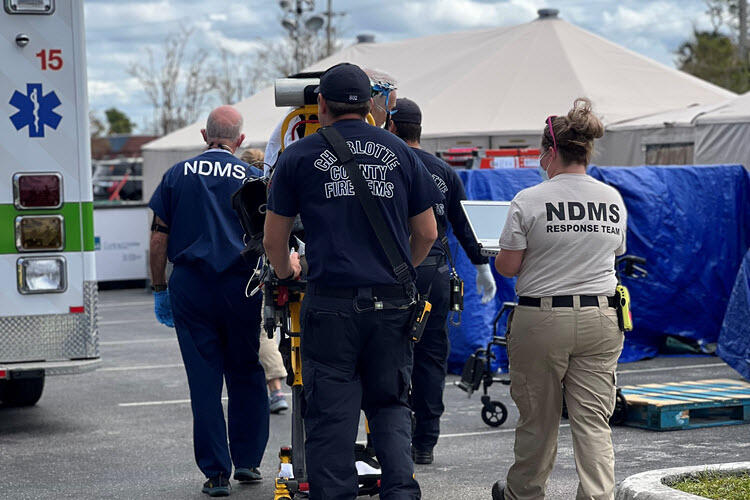
Evaluating patients based on the seriousness of their illness or injuries to determine the most effective and efficient plan of care.
Emergency Medical Care
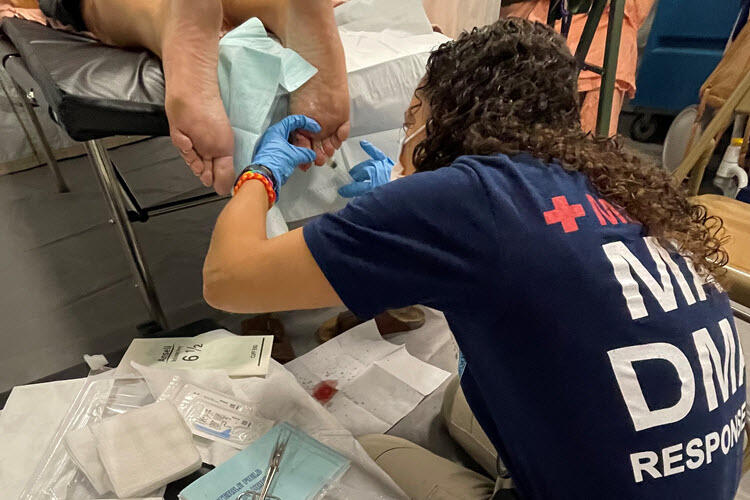
Providing care at least equal to the services of a basic hospital emergency department.
Medical Care
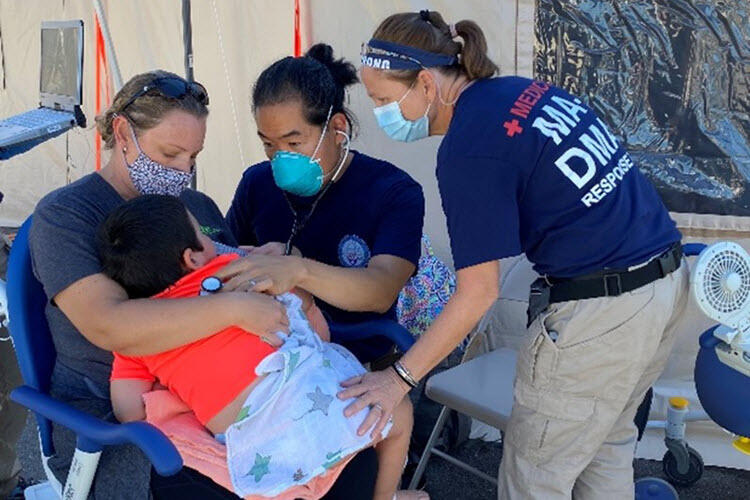
Providing multi-disciplinary medical care where access to usual care is limited/unavailable.
Hospital Decompression
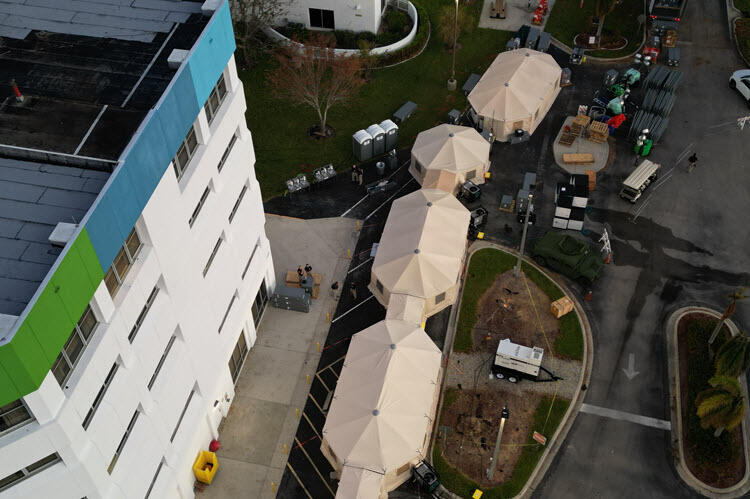
Providing medical care within an existing hospital that has limited staff or is otherwise unable to provide adequate care to the number of people needing medical attention.
Patient Movement Support
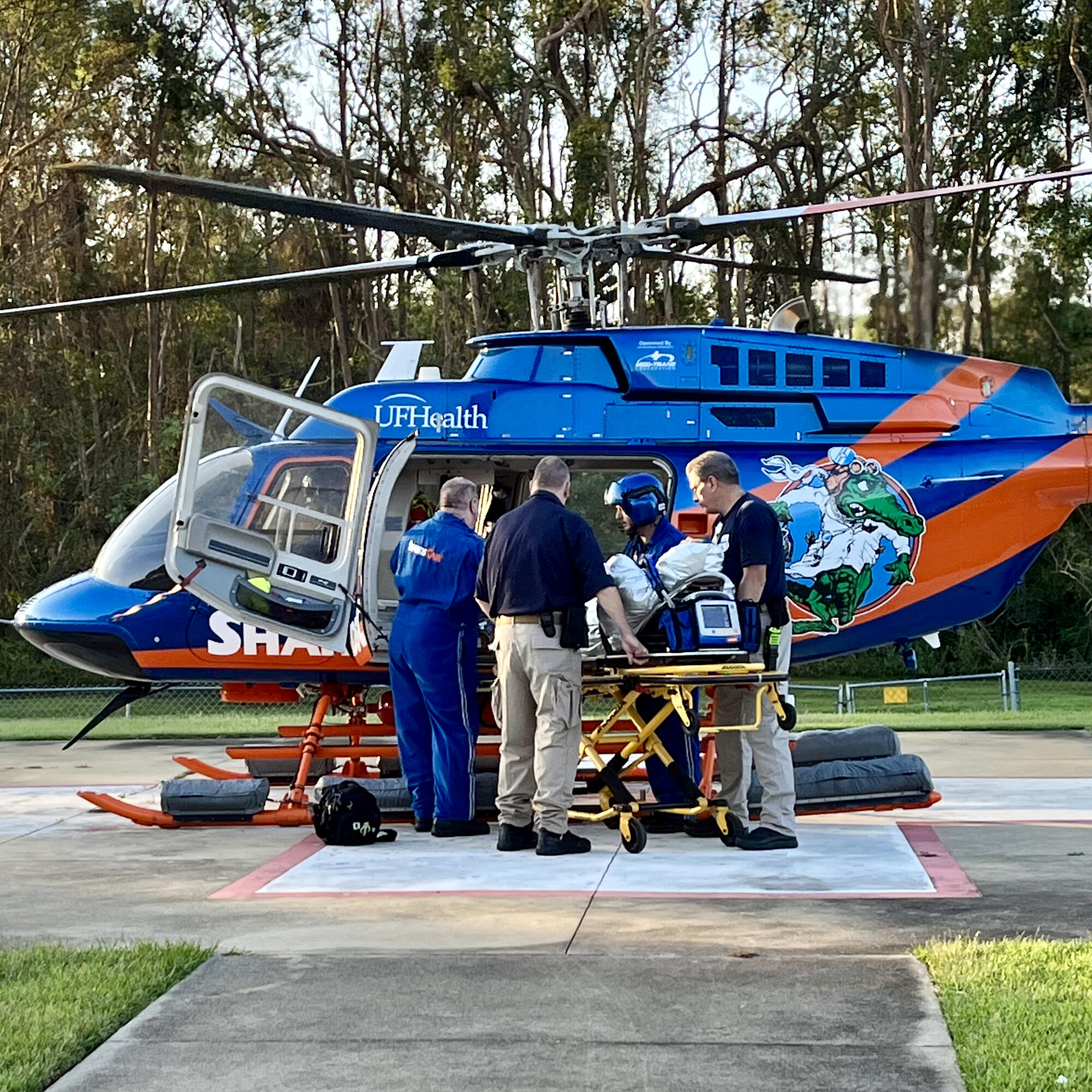
Assessing, stabilizing, and preparing patients for transportation.
Mass Prophylaxis
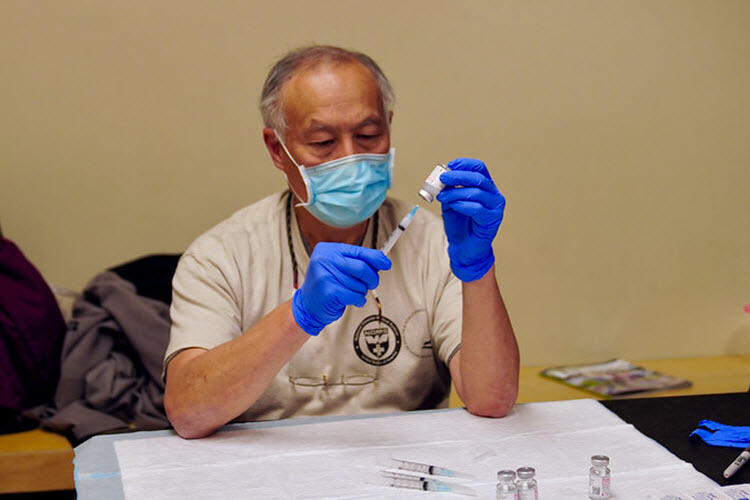
Providing vaccinations or taking other actions to support disease control efforts.
Frequently Asked Questions
NDMS offers unique opportunities for health care providers to expand their professional expertise by responding to the full spectrum of disasters under the auspices of the U.S. government, specifically the U.S. Department of Health and Human Services, Administration for Strategic Preparedness and Response. NDMS teams have cared for those affected by earthquakes, hurricanes, terrorist attacks, and epidemic diseases. NDMS also deploys personnel for national security special events, such as a presidential inauguration or State of the Union address. The NDMS has deployable multi-disciplinary teams with the capability for medical care (emergency care, operative care, critical care, and evacuation), veterinary care, and mortuary care.
NDMS is comprised of four specialty team types: Disaster Medical Assistance Teams (DMAT), Trauma and Critical Care Teams (TCCT), Disaster Mortuary Operational Response Teams (DMORT), and National Veterinary Response Teams. (NVRT). NDMS also supports Victim Information Center Teams (VIC).
No. Each team member is a federal intermittent employee. Intermittent employees are not full time nor part time employees. Similar to the National Guard and Reserves, intermittent employees work on an irregular or occasional basis and are compensated only for the time deployed to support a response. The number of times an individual deploys will depend on their personal and professional commitments and mission needs. When not deployed, many NDMS personnel work full time or part time as a health care providers in their own communities.
NDMS intermittent federal employees are protected by the Uniformed Services Employment and Reemployment Rights Act (USERRA). USERRA is intended to ensure that persons who serve or have served in one of the uniformed services, including NDMS: 1) are not disadvantaged in their civilian careers because of their service; 2) are promptly reemployed in their civilian jobs upon their return from duty; and 3) are not discriminated against in employment based on past, present, or future service.
Applicants may apply to either of the two medical teams (DMAT OR TCCT), or the specialty veterinary or mortuary teams. NDMS advertises and accepts applications for available team positions on USAJobs.
If you are interested in becoming a part of NDMS, you can learn about the application process and find a list of open opportunities on our website. You can also look for open opportunities by going to https://www.usajobs.gov/ and searching the keyword "NDMS." You can save your search on USAJOBS and request to receive updates on a daily or weekly basis. Once you see an opportunity that is right for you, apply to join. Positions typically stay open for about two weeks, and new positions are posted frequently.
Stories from the Field
Christian "Kiki" Quarry
Registered Nurse
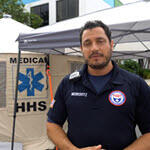
Joshua Moskovitz, MD
Physician
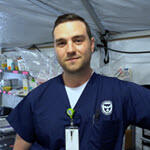
Brian Dunaway
Registered Nurse
Jeff Hersh, MD
Emergency Medicine and Internal Medicine Physician
Lynda Pacquette
Emergency Department and Trauma Nurse
Don Hughes
Fire Chief