HCC and MRC Partnership in New Mexico Prevents Hospital Surge
HCC and MRC Partnership in New Mexico Prevents Hospital Surge
Structure and Function of New Mexico's MRC and HCC Partnership
Albuquerque, NM
2019
The New Mexico Medical Reserve Corps (NMMRC), which has been established through ASPR's Emergency System for Advance Registration of Volunteer Health Professionals (ESAR-VHP) program, has statewide and inter-coalition mutual aid partnerships with its health care coalitions (HCC). Mutual aid agreements facilitate the rapid sharing of emergency aid and resources among governments and organizations at all levels. Each of the four New Mexico (NM) coalitions has a Medical Reserve Corps (MRC) unit, either within the coalition or in partnership with the coalition, to support regional response. NMMRC coordinators attend coalition meetings to report on what volunteers are doing and their capabilities.
NM uses a coalition fiduciary nonprofit (501(c)(3)) to manage funding from the Hospital Preparedness Program (HPP). This structure enables the MRC and coalitions to collaborate on activities that HCCs would be unable to do on their own, such as accept donations of supplies.
HCCs and NMMRC units work together to develop, and register with the lead state emergency management agency, pre-planned Mission Ready Packages for response deployment throughout the state and nationally through EMAC. Reimbursement and travel prepayment for HCC-affiliated MRC volunteers is facilitated by the coalition's fiduciary nonprofit.
Value of the HCC and MRC Partnership
The HCC and NMMRC partnership helps coalitions, which traditionally focused on planning, serve a response-oriented role. For example, NMMRC supported coalitions during a presidential visit to New Mexico by providing medical assistance and being present for response support in the event of a mass shooting. In addition, NMMRC has also been assisting in hospitals on the front lines of the COVID-19 pandemic. The partnership has also expanded opportunities for MRC recruitment.
The relationship building that has occurred because of this partnership enables the state to do more with less. They can share resources, staff, and training opportunities. By building strong relationships, coalitions and MRC partners in NM can better plan, train, exercise, and respond together.
HCC and MRC Partnership in Action
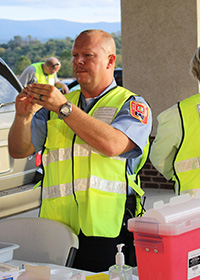
Event: In 2019, migrants seeking asylum in the U.S. were temporarily housed in shelters provided by volunteer organizations and charities. The Albuquerque Healthcare Coalition MRC and NM Integrative Wellness MRC provided medical assistance, translation, and operational support at shelters and medical clinics set up to assess the health of migrants.
Response: The MRCs received donated medication from Americares, a health-focused relief and development organization. The donations allowed them to provide treatment to migrants in the clinics rather than transporting them to a hospital.