





Care, Coffee, and Camaraderie: Upper Merrimack Valley Medical Reserve Corps Volunteers
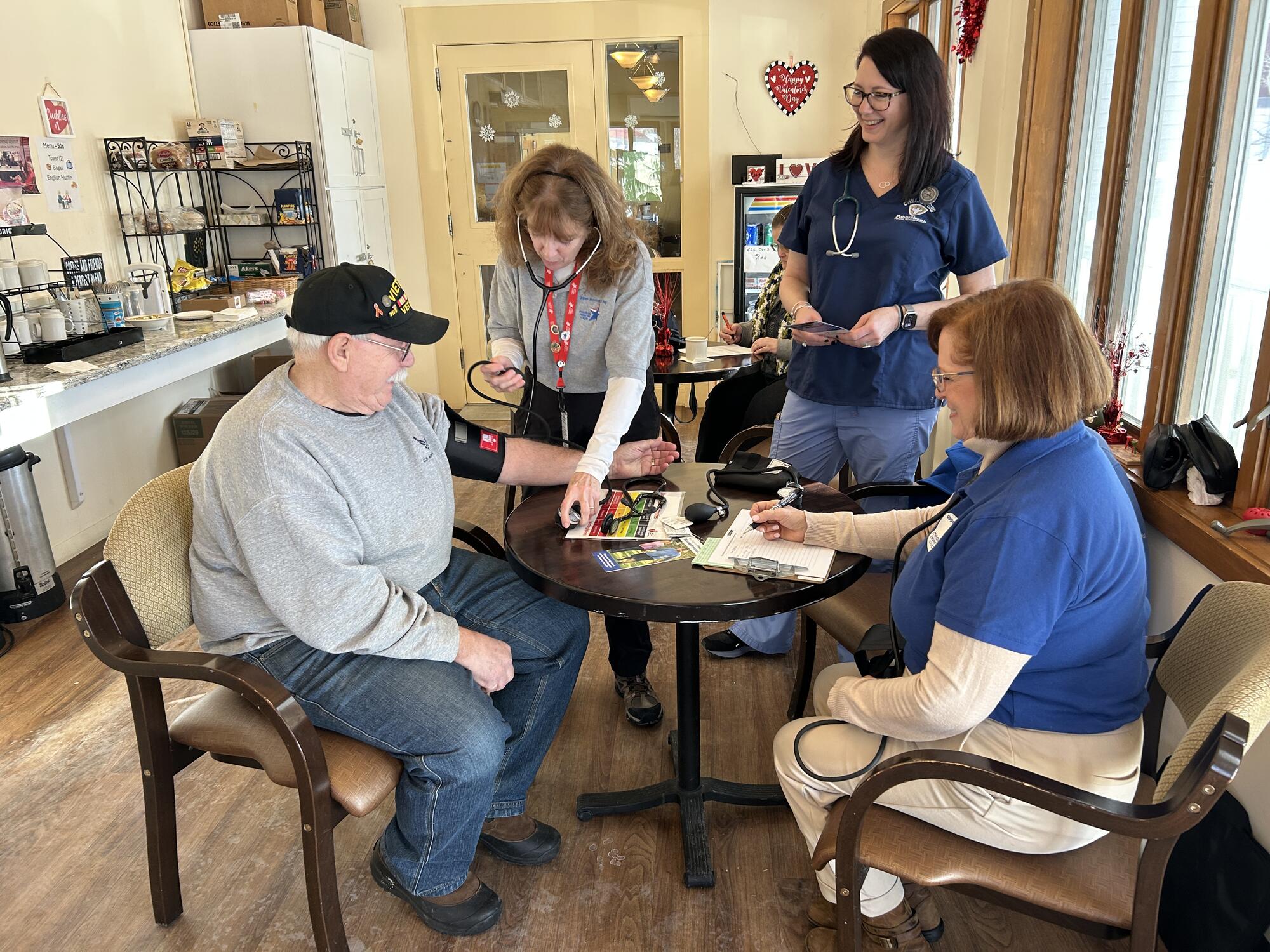 Veterans in the Upper Merrimack Valley of Massachusetts have dedicated years of service to our country. For the past several years, the Upper Merrimack Valley Medical Reserve Corps (UMV MRC) has honored that service by offering free monthly health screenings to help ensure these veterans receive the care and attention they deserve. Every month, veterans from across the Upper Merrimack Valley region come together for a breakfast gathering at the Chelmsford Senior Center, hosted by the Council on Aging and the town’s Veterans Agent. This program was launched about 20 years ago to reduce isolation by increasing opportunities for veterans to participate in community activities. Community partners, such as the chief of police or a state representative, come to show their appreciation and make themselves available to veterans as resources.
Over the years, attendance at the breakfast has grown, and between 60 to 90 veterans now attend each month. That’s when Darcy Beall RN, a public health nurse with Chelmsford Health Department and MRC volunteer, knew it was time to “call in reinforcements from MRC.” In 2022, the Chelmsford Health Department called on the Upper Merrimack Valley Medical Reserve Corps for help, and volunteers have supported these gatherings ever since. MRC volunteers provide free health screenings, including checking blood pressure and pulse, and answering general health and medication questions. Several of the MRC volunteers who assist have become regulars and have gotten to know the veterans personally, often greeting veterans with warm smiles and heartfelt hugs.
Each month, the gathering offers more than health screenings; it provides connection and a healthy start to the day. Veterans are welcomed with a nutritious breakfast featuring protein-rich scrambled eggs alongside fruits and vegetables, reinforcing that caring for health includes both preventive screenings and wholesome food. The shared meal creates space for conversation and camaraderie before volunteers begin medical checks.
For Upper Merrimack Valley MRC Coordinator Nancy Burns, the experience is deeply meaningful. “Few activities are as gratifying as empowering our unit’s caring volunteers to serve a population that has sacrificed so much for our nation,” she said. The nurses bring “significant medical knowledge and skills in patient care” to support retired military personnel, she added, and “everyone involved clearly benefits from these human connections.” Over time, the monthly breakfasts and screenings have become something veterans look forward to; strengthening both their health and their sense of community.
These hypertension screenings can make a big difference in helping to catch issues early and connect veterans with the care they need before more serious complications happen. For many veterans, high blood pressure isn’t just a common condition. Hypertension can be a gateway to more serious health problems, especially when combined with other health issues and limited health care access.
Veterans face a higher risk of developing hypertension because of their experiences during deployment. Chronic stress leading to post-traumatic stress disorder (PTSD), sleep disruption, physical injuries from combat, and exposure to chemicals are factors that the U.S. Department of Veteran Affairs (VA) has linked to an increased risk of developing hypertension. The Veterans Health Administration found that nearly half of veterans receiving care at the VHA between 2016-2019 had been diagnosed with hypertension.
One of the recent breakfasts happened on the heels of the 8th largest snowstorm in the region’s history. The MRC volunteers came through the ice and snow to show up for their neighbors, understanding that medical needs don’t pause for bad weather. For veterans, seeing the same MRC volunteers show up, storm or no storm, also sends a powerful message to them as people who have served our country to protect our freedom: You are valued, your health matters, and your community stands with you.
The impact of these monthly gatherings reflects the strength of the broader Medical Reserve Corps network nationwide. Supported by the Administration for Strategic Preparedness and Response (ASPR) at the U.S. Department of Health and Human Services, the MRC connects local volunteers with the training, coordination, and partnerships needed to support their communities. Whether responding during emergencies or showing up month after month for initiatives like these veteran breakfasts, MRC units are part of a national effort to strengthen community health, resilience, and preparedness.
To learn more about the Medical Reserve Corps and join your local unit, visit https://aspr.hhs.gov/MRC.